Whether you’re considering an HVAC career or are already an established technician, industry statistics provide a snapshot of the industry’s current positioning.
The emergence of AI has instilled fear about the long-term viability of the trades, but the data paints a remarkably favorable picture.
Raw data eliminates bias and presents an objective analysis of where the industry stands and projects where it’s headed.
Quick Statistics for the HVAC Industry
Key data points for contractors & marketers
$258.96B
Estimated global HVAC market size
7%
Projected annual growth rate (CAGR) for U.S. residential HVAC
$28.75/hr
Current median hourly wage for HVAC technicians
70%
HVAC companies unsatisfied with their current SEO provider
34,400
Annual job openings projected over the next 8 years
75%
U.S. households that use central air conditioning
67%
Southern households that run their AC all summer
$350
Average cost for a standard HVAC repair
Florida
Leading state for HVAC employment and job growth
40%
Share of U.S. power generation fueled by natural gas
10 Yrs
Average lifespan of a residential thermostat
The Global HVAC Market is Estimated at $255 Billion
The global HVAC systems market is estimated at $258.96 billion with a projected 7% CAGR over the next nine years. Ongoing climate shifts and rising concerns about indoor air quality are driving demand.
These numbers suggest that HVAR services will remain essential for homeowners, strengthening job security for those in the industry.
The Median HVAC Technician Wage is $28.75 Per Hour
The national median hourly wage for HVAC workers has increased to $28.75 per hour, which translates to roughly $60,000 annually.
Entry-level roles still often start around $19-$22 per hour. However, high-cost-of-living areas like Alaska, California, and Massachusetts can drive annual salaries up between $80,000 and $100,000.
70% of HVAC Companies are Unsatisfied With Their SEO Provider
Roughly 7 out of 10 HVAC business owners report being unsatisfied with their SEO and digital marketing providers. The primary frustration points are a lack of billing transparency and vanity metrics, such as high traffic reports without noticeable increases in booked appointments.
Despite their concerns, many HVAC contractors continue to invest in marketing, recognizing it as a critical component of growth in their local market.
34,400 new HVAC Jobs will Be Created by 2034
The Bureau of Labor Statistics (BLS) projects a 34,500 increase in employment by 2034. The increase in jobs will be fueled by a combination of new construction and a massive wave of retiring Baby Boomers.
These openings signal an opportunity for younger generations to enter the trades, an appealing proposition in an economy expected to be impacted by AI.
75% of US Homes Have Central Air
Current data shows that 75% of U.S. households utilize central air systems or central heat pumps. While northern states still have a higher concentration of window and portable units, the national trend is moving toward high-efficiency central systems.
Though once considered a niche skillset, many modern technicians are gaining expertise in ductwork and central split systems to meet consumer demand.
67% of Southern Households Leave Their AC Running All Day
Air conditioning isn’t a luxury in the South; it’s a utility. That’s why over two-thirds of Southern households leave their units running continuously throughout the summer months. For HVAC techs, this means a high volume of wear-and-tear repairs and emergency replacements.
Interestingly, only about 42% of homeowners invest in annual maintenance, creating a significant untapped opportunity for new revenue.
The Average American Pays $350 for HVAC Repair
High-ticket HVAC jobs, such as compressor or coil failures, can exceed $2,500. However, the average repair service call comes out to around $350.
The typical homeowner can expect to pay between $150 and $600 for common repairs such as capacitor replacements, fan motor repairs, and refrigerant leaks.
Florida Leads The U.S. in HVAC Jobs
If you’re looking for the best state to find HVAC work, it’s between Florida and Texas. Florida currently employs the most HVAC technicians (over 38,000), followed closely by California and Texas.
These states lead the nation in new job openings due to population growth and inherent climate challenges, particularly in the summer months.
88% of U.S Homes Have ACs installed
Air conditioning has reached near-universal adoption in the United States, with 88% of homes having some form of cooling. This saturation fosters a replacement market cycle, as units installed 10-15 years ago reach the end of their lifespan.
As a result, original equipment manufacturers (OEMs) anticipate a 20-30% opportunity for new unit sales over the next year.
Natural Gas Still Powers 40% of the Grid
Natural gas remains the dominant source of U.S. power generation at 40% despite the rise of solar and wind. However, these days are numbered as the electrification of homes is already underway.
An increasing number of homeowners are transitioning to electric heat pumps to reduce their carbon footprint and gain federal tax rebates, shifting the industry’s focus toward hybrid solutions.
The Average Home Thermostat Lasts 10 Years
Standard thermostats generally maintain accuracy for about a decade. However, the 10-year mark is rarely reached today because of the “Smart Home” trend.
Most homeowners are opting to replace their thermostats early in favor of AI-powered scheduling and remote smartphone control, a choice often further incentivized by utility company rebates.
Take Your HVAC Company Into the Future
At HVAC Webmasters, we help contractors prepare for sustained growth. While technology and regulations evolve rapidly, the demand for skilled heating and cooling professionals has never been higher.
Our agency provides the digital marketing and SEO experience required to ensure your business is the one homeowners find when those 88% of AC units need repair or replacement. Together, we can maximize your success.
Author: Nolen Walker
Nolen Walker is the founder of HVAC Webmasters and the creator of DataPins™, a Local SEO platform for HVAC companies. He has over 16 years of experience helping HVAC businesses grow through organic search, Google Maps, and AI-driven visibility.
Content management can be a huge chore, especially if your HVAC company’s website is regularly updated with new pages and posts. To streamline the process, selecting the right content management system is important.
Key Takeaway
As the founder of HVAC Webmasters, a digital marketing agency for heating and cooling professionals, I recommend using WordPress as your CMS. Over the past 14+ years, my clients have received a WordPress website with their monthly services.
In the following post, I will outline the best content management systems for HVAC websites based on my 14+ years of experience working with HVAC companies on digital marketing campaigns.
What is a Content Management System?
A content management system is a software suite that allows you to create, publish, update, and manage your website’s content.
Content includes everything from blog posts to your About Us page to images and online forms – basically anything that appears on your website. The best content management systems are essential for many industries because they allow you to manually design, publish, and update your website.
My Top 6 CMSs for Heating & Cooling Companies
1) WordPress
WordPress is an open-source CMS that offers a free version and a premium paid version. As the most well-known CMS, WordPress integrates with nearly 60,000 plugins, including the Yoast SEO plugin, which helps you optimize your content for maximum digital exposure.
WordPress also features various themes to help your website stand out without breaking your back on coding. It’s user-friendly, and you can master the dashboard in just a few days.
2) Joomla
Joomla is a free, open-source CMS that doesn’t require in-depth technical knowledge to utilize it effectively. It is intuitive and user-friendly, and you can quickly grasp the essential functions.
Open-source software can be necessary for HVAC contractors because it gives you access to a vast array of plugins, custom templates, and tools you may need for your business. For example, with Joomla, you can add online form plugins so your customers can schedule appointments online.
3) Kentico Kontact
Kentico Kontact is an excellent option if you have multiple sites and a mobile site for your company. It allows you to use your content anywhere easily and uses Cloud storage to simplify implementing your content on various sites. Kentico offers free and paid versions.
Kontact is a headless CMS that gives the content you create more fluidity because it is stored as data instead of being tied to a web page. The downside is that you will need a good amount of experience and design knowledge to utilize it effectively.
4) HubSpot CMS
Hubspot CMS provides helpful in-house tools for optimizing your site. For example, you can use an in-house A/B tester to see which landing pages earn more clicks and which need tweaking.
Hubspot CMS also assists with SEO, which, let’s face it, everyone can use help. Building a page from scratch is also very easy on this platform: a simple drag-and-drop page builder and editor you can use if you have little to no design experience.
5) Contentful
Contentful may be a good option if you have multiple websites for different areas you service or a slew of landing pages tied to your PPC ads. Contentful makes it easy to create and organize different content in a centralized software suite and then distribute it to various online channels.
However, Contentful has two downsides. One, it is a headless CMS, so you must be somewhat tech-savvy. Two, there is no free version.
6) Magnolia
Magnolia’s CMS mechanics are too complex to discuss here, as the company uses a lot of technical jargon to describe its processes. For this reason, it’s not a CMS that I would recommend to a newer HVAC company looking to launch a business website quickly.
However, well-established enterprises or franchises in the heating and cooling space may want to consider Magnolia’s benefits. Its primary appeal is something called “decoupled architecture,” which means it seamlessly integrates with additional technologies that your company may utilize.
Next Steps in Choosing a Content Management System
The best content management systems allow you to design and update your website yourself. However, it always helps to have a professional in your corner for everything else. As I mentioned, each client who signs up with my agency, HVAC Webmasters, receives a custom WordPress website with a CMS.
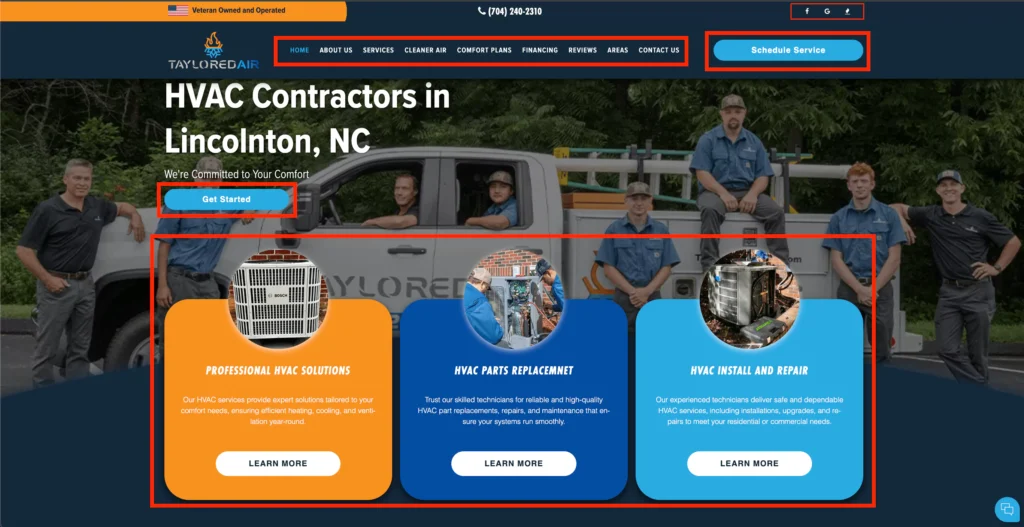
User Experience or UX is the ease with which visitors interact with your HVAC website, including navigation, information, and efficiency.
The goal of UX is to meet the user’s needs and encourage them to take decisive action on your website. Furthermore, UX influences behavioral metrics such as dwell time, time on site, bounce rate, and others.
In totality, these metrics reflect the usability of your website to search engines.
What is User Interface for HVAC Websites?
User Interface or UI is the presentation and appearance of your HVAC website, including its design, theme, and general design framework.
UI contributes to UX because well-crafted interfaces enhance the user’s overall experience. In addition, UI contributes to a website sales funnel by helping users seamlessly complete a call-to-action.
The Influence of UX & UI on HVAC Consumers
Have you ever visited a website and become frustrated because it was challenging to navigate or because you couldn’t find the information?
Conversely, when you were on a website, everything you came for was available with just a few clicks.
These interactions are examples of User Experience and User Interface (UX and UI): the former being a bad example and the latter being a good example.
UX and UI are closely related to website design, which may be a subject outside your experience as an HVAC tech or contractor.
However, they are vital to your company’s success because they are closely related to marketing and lead generation.
This guide details HVAC user experience and interface to help companies maximize their digital presence.
Differentiating UX and UI
On the surface, the user interface and user experience look similar. They are very closely related; however, knowing the difference is essential.
UI is a subset of UX. UX considers how a person feels when on your website, while UI deals with the more specialized technical aspects of how the user interacts with the website.
You can think of it in these terms: UI is relegated to technical aspects, while UX deals with complex technical and human aspects of website design and function.
What Goes Into Good UX and UI?
Again, you may not have much in-depth knowledge of UX and UI design, but you should know what it takes to create a site that gives visitors what they want. The process of UX and UI design should include:
Planning
Whether you are tackling UX and UI yourself or working with a designer, it’s crucial to establish well-defined goals for your HVAC website.
You may offer HVAC services, and you may sell HVAC equipment. So your goal would be to promote your products and your services.
You may only provide HVAC services, in which case the purpose of your website would be to promote only your services.
You may have a blog intended to educate people on HVAC services, so you’ll want to get as many eyes as possible on your posts. Whatever the case, you have to be aware of your site’s goals.
Defining Personas
In UX design, a persona refers to the characteristics and behaviors of people likely to visit or use your website.
It’s essential to determine your persona as clearly as possible so you can design your website according to their technical proficiency and preferences.
For example, if your target market is middle-aged homeowners, you will want to create your UX around that persona.
Mapping
Now, it’s time to take your UX goals and personas and use them to create a map that will guide them toward action.
Mapping for an HVAC website may look like a homepage, service page, contact page, appointment page, etc. You will want to create a flow of clicks based on who is likely to use your site and their needs, goals, and behaviors.
Page Schematics
Once you have a map (or two) set up, it’s time to turn it into a visual schematic and project how users will experience the site.
You can use plenty of tools to create the page schematic of your website, but no matter which device you use, the goal remains the same: create a basic framework for your website that outlines how the visitor will navigate it.
Page schematics illustrate the layout of your website. The schematic should be created and closely scrutinized before actual development begins.
You must work out page sizes, content layout, and navigation elements at this stage.
Site Testing
Site testing can provide you with useful information before your website goes live.
You may not always have the luxury to test a prototype of your site with actual users before it goes live, but if you do, take advantage.
Site testing involves gathering a small group of users (personas) and taking into account their input as they navigate the basic prototype of your site.
Was it easy for them to see all the pages? Did they get the information they were after? Were they able to take specific actions? Was the site responsive?
A/B Testing
Your job continues once you have completed all the steps mentioned above and your site goes live.
Real-time testing should be conducted regularly, also known as A/B testing, and it can help you make quality HVAC user experience upgrades to your site.
A/B testing involves running your current site against a variant and seeing which performs better (which gets more clicks, more traffic, engages people for longer sessions, etc.).
A/B testing should run for at least seven days to get a good sample size and an idea of what can be improved.
Website Design for HVAC Companies
All in all, your UX design should be marketing-oriented. Your website should be the primary source of leads for your HVAC business.
Here at HVAC SEO Webmasters, we design websites that are not only focused on UX and UI but ones that also help you gain new customers.
When customers book your HVAC services, your website has achieved its goal, and your marketing budget provides a substantial ROI.
I regularly tell my HVAC clients that Google Reviews are the most important form of customer feedback for a Local SEO strategy.
As the founder and CEO of HVAC Webmasters, I’ve launched thousands of digital marketing campaigns, and my data tells the story of the importance of Google reviews.
Key Takeaway
Google reviews appear beside your Google listing on Google Maps and Search and often influence users’ perceptions of your HVAC company. Businesses can request reviews using the URL short link available in their Google Business Profile dashboard.
Google Business Profile Reviews directly influence SEO because they increase your company’s chances of appearing in the Local Map 3-Pack for relevant queries.
Based on my many inquiries regarding this subject, I am presenting my comprehensive guide to Google Reviews for HVAC companies.
The insights within my guide are based on 14+ years of first-hand experience helping HVAC companies increase visibility on Google search results.
The Impact of Google Reviews on HVAC Companies
While diversifying reviews on multiple platforms makes logical sense, Google is the undisputed powerhouse of customer feedback.
When launching a reputation management campaign for your local HVAC business, Google reviews should be your primary focus because they will directly impact your lead generation and sales.
Google Reviews Tips and Tricks
HVAC companies lacking Google reviews are either brand-new, have few customers, or possess insufficient technology to streamline customer feedback.
Established companies that rely on traditional word-of-mouth marketing have often missed out on powerful opportunities to accumulate Google reviews and grow their company’s online presence.
I recommend using my reputation management tool, DataPins, which I developed and invested millions in. My tool sends automated review requests to your HVAC customers.
While DataPins will address most of your needs when increasing Google reviews, I can also outline other tips and tricks to streamline your campaign further.
The Process Matters
You must implement a process when trying to scale your company’s Google review frequency. Technology is the best way to ensure the process becomes repeatable.
As I mentioned, the DataPins tool will automate review requests to your customer’s email, and text inboxes with a Google review link.
A simple investment in this technology creates an ongoing process that will significantly benefit your HVAC company’s long-term visibility.
Honesty is Transparent
Never buy into narratives about manipulating your review count by asking family members or coworkers to leave a review. Tactics like these can result in a suspension of your Google Business Profile.
Consumers respect honesty more than anything, so legitimate reviews from real customers greatly influence your online conversion rates.
Consumers understand that it’s impossible to please everyone, no matter how hard you try. Having a few bad reviews here and there isn’t the end of the world.
However, you have to make sure you have the right balance.
Replies are Valuable
The rate at which you reply to your Google reviews also affects how Google ranks your business on relevant searches.
This will affect your rankings if you are not responding to any of your reviews or taking weeks to reply to them.
It will also affect how your customer base views your business. They see replies as a sign that you care about the customer experience, instilling more trust in your brand.
How to Get More Google Reviews
My DataPins reputation management software is the best way to get more Google reviews. However, you can also further engage in other processes to increase your reviews on the powerful Google platform.
Below, I outline my list of ways to get more reviews on your Google Business Profile:
Use DataPins
DataPins is a local SEO and reputation management tool for HVAC companies. The software allows contractors to perform jobsite check-ins, which are published automatically on the corresponding web page.
The tool also handles your reputation management by sending automated review requests through SMS (text) and email so customers can respond at their convenience.
Get a Short Link
People don’t want to go through a gauntlet to leave a review, and many would-be reviews drop out because of a complicated process.
To make it easier for people to leave you a Google review, get a review link. Once you have it, you can use it on your site, social media posts, marketing emails, and even texts.
Ask your Customers
In-person review requests are still influential. People who have been pleased with your service are more receptive to review requests.
Let your customers know how much their reviews can help your business. Again, make it easy for them. Have a link ready to send or a QR code that takes them directly to the review page to scan.
Ask Suppliers
Customers aren’t the only source for reviews. As HVAC contractors, you probably work with material suppliers, manufacturers, and other contractors. You can also contact these people for reviews.
Update your GMB Listing
Regularly updating your Google Business Profile (aka GMB listing) encourages customers to leave more reviews as they can easily find your brand and won’t mistake it with similar companies.
Reply to Reviews
Replying to most of your reviews is essential for garnering new ones. It shows new and existing customers that you care about their experience and aren’t hesitant to engage with them.
It is imperative to respond to negative reviews. Avoid being confrontational. Express your regret and ask how you might do better in the future.
Streamline Your Google Reviews Process
Streamlining your reputation management process requires investing in a software solution to automate the necessary processes.
My agency, HVAC Webmasters, exists to help professional companies utilize the right tools and tasks for online visibility.
My team at HVAC Webmasters offers complete reputation management services. I will help turn your existing reviews into lead-generating machines and generate a steady stream of new reviews for your business.
As a digital marketing agency for HVAC companies, our team at HVAC Webmasters uses Google Analytics 4 (GA4) to measure and evaluate our clients’ performance and identify areas for improvement.
GA4, the latest version of Google’s proprietary analytics platform, provides the most accurate data of any website measurement tool.
Google Analytics 4 enables HVAC companies to measure and track website traffic, on-site conversions, and other metrics to indicate user behavior.
Key Takeaway
Every HVAC company with a website should install the Google Analytics 4 tracking code to measure its site’s performance.
What is Google Analytics 4?
Google Analytics 4 is a free online tool that allows HVAC businesses to track how visitors use their websites.
The information provided by Google Analytics 4, such as custom events and traffic acquisition sources, can help companies improve their websites and refine their digital marketing campaigns.
Why HVAC Companies Need Google Analytics
Despite ChatGPT and other AI platforms shifting search behavior, Google has retained most of the search engine market share.
Consequently, measuring your website’s performance, particularly on Google, is fundamental to a successful digital marketing campaign.
GA4 Benefits for HVAC Websites:
Monitors users across all devices and platforms
Tracks traffic sources (direct, referral, organic, ads, social media, etc.)
Pairs traffic with revenue via events and conversions
Provides predictive metrics such as churn and potential revenue
Integrates with Google Ads and various other digital marketing platforms
Note: The previous version of Google Analytics (Universal Analytics) no longer connects data as of July 1, 2023
Installing GA4 on Your HVAC Website
The first step is creating a GA4 property within your Google Analytics account. After the property goes live, simply install the GA4 tag (G-Tag) in your website’s header code.
WordPress makes this simple through plugins such as Tag Manager or Google Site Kit. Our team at HVAC Webmasters can install this code on your behalf.
What HVAC Websites Should Track With GA4
Google Analytics 4 measures everything a website visitor does from scrolling to clicking to submitting a contact form.
The amount of information can be overwhelming for beginners, so start by focusing on the following metrics:
Traffic Acquisition
Traffic is the most essential component of website performance. For example, is your HVAC website getting visitors from Google organic, Google Maps, Google Ads, Facebook, Instagram, YouTube, etc.?
The Traffic Acquisition Report allows HVAC contractors to compare SEO and paid performance and drill down into top-performing keywords and landing pages.
Engagement Overview
GA4 reveals whether users are staying on your website for 10+ seconds, viewing multiple pages, and converting through a contact form or other call to action.
Pages with low engagement are prime candidates for improvements, which can be attained by adding new visuals (like original photos) and rewriting text for more clarity and relevance.
HVAC companies can set up specific events within GA4, such as phone calls, form submissions, and online bookings.
Furthermore, Google Analytics can track which landing pages are driving conversions (e.g., Geothermal HVAC Services), which provides insights into your entire business model.
Demographics and Devices
GA4 can track the general locations of your website visitors down to the specific city and device they are using.
For example, mobile users in Miami, FL, finding your website homepage via the Google Map 3-Pack is a significant KPI for a Miami-based HVAC company.
GA4 Event Tracking Examples for HVAC Websites
Google Analytics 4 moves website performance valuation from goals to events and conversions. Below are some common examples of the events that a standard HVAC company website would track:
phone_click (click-to-call)
form_submission (service inquiry)
schedule_service (booking request)
video_play (e.g., youtube videos)
Improving SEO With GA4 Data
The primary benefit of Google Analytics 4 is identifying areas where you can improve your HVAC SEO performance.
HVAC companies can evaluate user behavior, conversion paths, and other insightful data, such as:
Landing pages that are driving the most HVAC leads
Whether your Google Business Profile is driving website traffic
City or service pages that are causing visitors to exit your site
Referral traffic from social media and email campaigns (brand signals)
Help With GA4 for HVAC Companies
Our agency, HVAC Webmasters, provides complete installation and configuration of Google Analytics 4 as part of our monthly marketing services.
While GA4 provides more compelling and informative data than its predecessor, it is also far more confusing for people outside of the digital marketing industry.
Our 14+ years of first-hand experience allow us to set up custom events and track conversions. We can also create custom HVAC marketing dashboards that allow you to view the data that concerns you most.
Fill out this form for a free Google Analytics 4 consultation.
I’m Nolen Walker, the founder and CEO of HVAC Webmasters, a digital marketing agency for heating and cooling professionals. Over my 10+ years of first-hand experience, I’ve found that HVAC retargeting ads are more affordable and effective than traditional paid advertisements.
Consumers who have previously interacted with your brand are more likely to convert than cold users. Retargeting ads effectively complement your customer acquisition efforts and help your potential customers move down the sales funnel.
I’ve written a guide on retargeting and remarketing for HVAC companies to better understand the great potential of this underutilized advertising strategy.
What Are Retargeting Ads?
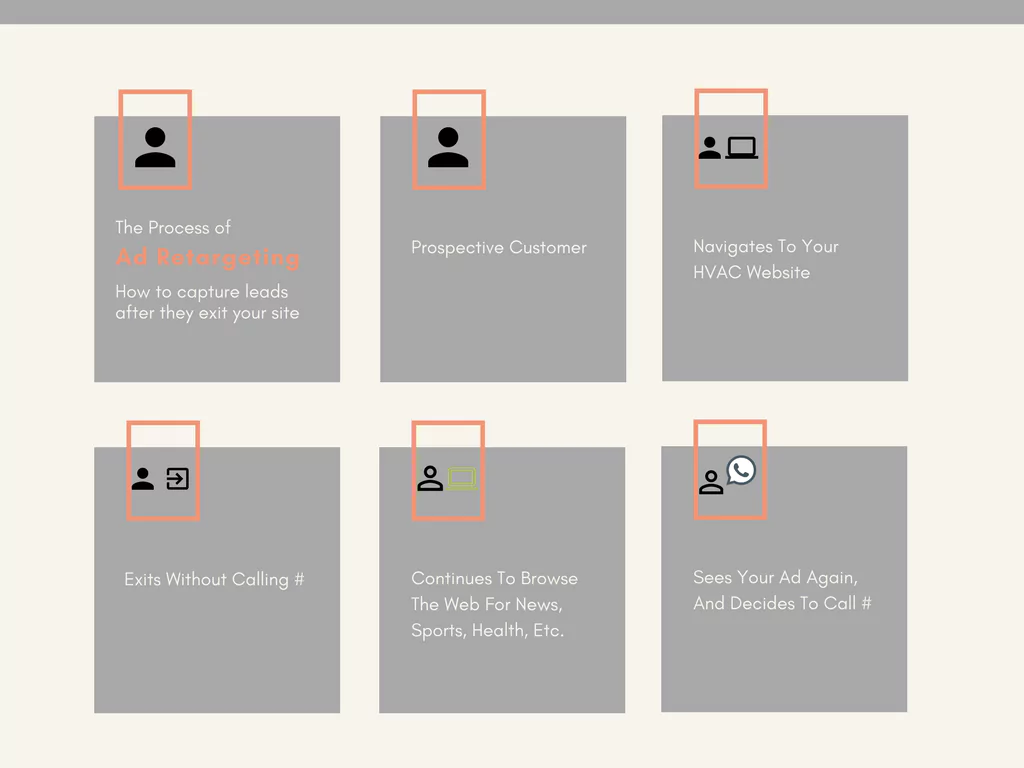
Retargeting or remarketing ads are display advertisements shown to internet users who have previously demonstrated interest in your HVAC service.
Their previous interest is most frequently tracked through browser cookies in the form of website visits and user engagement.
Retargeting Ad Examples
Let’s take a simple example. You are online shopping for an anniversary gift for your wife. You’re looking at some diamond necklaces and visiting a few sites.
After looking at five different sites and being unable to decide, you decide to call off the search for the day.
The next day, you resume your search and notice that you see ads from websites you visited searching for an anniversary gift. In this hypothetical situation, you were made the target of a retargeting ad.
A retargeting ad uses cookies or pixel identification to track web browsers who have visited your website but did not make a transaction or fill out any information form.
Then, it shows them ads for your website on other platforms as they browse the internet, even as they browse away from your website.
Retargeting ads are beneficial for two primary reasons:
Effective: Studies have shown that conversion rates rise when a customer has interacted with your brand but not made a purchase andsees your ad as a retargeting strategy.
Affordable: The cost per conversion on retargeted users is considerably lower than traditional ads.
Furthermore, retargeting ads get higher click-through rates than typical display ads because they are displayed to people who have actually shown interest in your service.
Long-Term Impact of Retargeting Ads
Retargeting ads play a vital role in your sales funnel. Not everyone who visits your website will be ready to purchase your HVAC services.
Not everyone visits a website for the same reasons. Some people are indeed ready to buy immediately. These are what are known as prime leads.
In the HVAC industry, a prime lead may be someone who visits your company’s website and needs emergency HVAC service.
In other words, they are on your website for the specific purpose of paying for your services.
Others are conducting research. They may need an HVAC service soon, but the work isn’t urgent.
These people are likely to visit your website, see what services you offer, find out which areas you service, determine whether you offer free estimates, and may even jot down your phone number.
Retargeting ads are essential to keeping your business and brand at the forefront of potential customers’ minds.
As they browse the web away from your website, they will see an ad for your company and remember that you are an option for their heating, ventilation, and air conditioning (HVAC) needs.
How to Create Effective Retargeting Ads
Creating effective retargeting ads boils down to the ad creative and the ad targeting. See more below.
Here are some of the most effective methods of ad retargeting:
Creative: The copy and visuals for retargeting ads should speak to consumers who’ve previously interacted with your business
Search Intent: You can make your ad display to specific people who have conducted certain online searches. This method uses keyword tracking. In other words, you might target someone who has recently searched online for “air conditioning replacement.”
Email: If you have had email correspondence with a potential customer but didn’t make a sale, you can target these specific people with ads reminding them of your services.
To retarget ads to people who have visited your site, you can craft your ad based on the specific pages they browsed. For example, you tracked a potential customer who visited your page on air duct cleaning.
You can target that person specifically for that service.
In this case, creating an ad that promotes a special discount you’re offering on duct cleaning may be most effective. Limited-time offers are typically effective in these situations.
In fact, with retargeting ads in general, it’s essential to make an offer that will entice the potential customer to return to your site.
Limited-time offers may help spur them to action. Free service add-ons related to the visited service page may also be helpful.
Create Unique Landing Pages
Consider where your potential customers go once they click on your retargeting ad. Hint: It shouldn’t be on your homepage.
Instead, remarketing should correspond with the specific message of the ad, which should direct users back to the page they visited on your site in the first place.
Crafting service-specific landing pages is just as crucial to creating enticing retargeting ads. When a person clicks on an ad, it should take them to a place where they can learn more about the service they’re interested in.
Choosing a Retargeting Platform
You should advertise on four major platforms: Facebook, Google, YouTube, and Instagram.
Google is essential because you get space in the actual Google search results when you advertise with them. Google also partners with many websites where your ad can be displayed.
Facebook is also notorious for its remarketing campaigns due to its pixel technology. You can run Facebook Ads campaigns exclusively for users who’ve visited your HVAC company’s website.
Retargeting Services for HVAC Companies
Retargeting ads (also known as remarketing) require a lot of thought and planning. So, if you need expert help crafting and setting up your HVAC retargeting ads on the most prominent platforms, my agency can help.
My team at HVAC Webmasters offers ad services, digital marketing, and SEO services. I know what it takes to drive more traffic to your site and convert more leads for your business.
For HVAC companies, a CTA is an online device that prompts or encourages users to take action. The most common HVAC calls to action are phone number links or push-to-call buttons. A website visitor who clicks a phone number link converts from traffic to lead instantaneously.
HVAC CTA Tips
Strong CTAs are clear and concise. Users respond to urgent calls and don’t have time to read through a bunch of filler.
Getting right to the point encourages user action while discouraging overthinking. Remember, in 2025, consumers won’t tolerate BS. The goal is to direct them to buy your HVAC services on the spot.
Tip #1: Invoke Enthusiasm
Some words inspire users to take action, while others bore them into inaction. Understanding language is key to crafting the perfect CTA for your heating and cooling website or advertisement.
For example, “save 60% on your first service” inspires consumers immediately. Conversely, “get in touch with our sales rep” only leaves them wanting more.
Tip #2: Create Urgency
Prospects often will wait to make a final decision so that they can compare your prices to competitors and seek out 3rd party opinions.
Of course, creating an excellent online reputation can lead those actions right back to your website. But creating urgency with your CTA ensures they’ll never leave in the first place.
For example, putting a time limit on your special offer encourages them to take immediate action.
Tip #3: Make CTAs Responsive
Some users may access your HVAC website through their smartphones or tablets. Some still use their desktop computer or laptop.
A compelling CTA must appear ideally on each device type, and responsive design makes it happen.
Losing even one of those devices can reduce your conversions enough to blow your revenue significantly.
Tip #4: Enhance CTAs with Social Proof
Most users won’t click on a CTA without some social proof. It helps to use statistics or numbers to prove your company’s worth.
For example, showing that 99% of clients become repeat customers fosters credibility.
You can also use pricing comparisons showing that your services save customers an average of 35 dollars per job.
Tip #5: Click to Call Functionality
Smartphones represent the top device for potential clients.
Creating a linked CTA that connects the user to your phone line is one way to streamline the sales process.
For example, a giant button in your website’s header, reading: Call Now, can connect from their phone to your phone in just seconds. Yes, technology can do some pretty amazing things.
Call To Action Examples
HVAC companies can publish a wide range of CTA types. For example, you might prefer that customers email you or submit a contact form.
Other contractors may want direct phone calls to their office line. Either way, you can craft your call to action to fit your company’s needs and preferences.
Let’s look at some HVAC call-to-action examples to create inspiration for your next venture.
Phone Number Link
The phone number link is straight to the point. Typically, a phone link is accompanied by a line of text, creating trust or urgency.
The linked number is self-explanatory for users and frequently leads to increased call volume for local HVACR companies.
Request a Quote
Requesting a quote is an ideal CTA for contractors who prefer the form submission. You can get basic information about your prospects before speaking with them over the phone.
This way, you have more knowledge and can provide them with a personalized sales pitch, almost certainly to convert them.
Encouraging prospects to request a quote gets them invested in your company early in the conversion process, making it more likely they will become customers.
Request a Call
Like the request for a quote, requesting a call allows users to leave their phone number for a later callback.
Some heating and cooling companies prefer scheduling the best times instead of taking calls 24/7.
Depending on staff size, the request for a call CTA could be highly beneficial and increase company efficiency.
A prospect’s phone number is the most valuable contact information you can get in the lead generation process. Customers who submit their phone numbers are far more likely to invest in your services.
Contact Us
The Contact Us form is the most traditional call to action. Of course, its effectiveness often depends on the rest of your website.
Is your homepage telling a story? Does it encourage trust and authority for future clients? If both things ring true, then the Contact Us form works wonders.
However, remember that the Contact Us form is useless without a strong homepage.
Some prospects are not ready to call your company on the spot. Providing traditional contact forms encourages customers to take action before they are prepared to call.
Review Us
Not all calls to action must encourage direct contact. Sometimes, you need CTAs for existing clients to perform other actions. An excellent example of this is the Review Us call to action.
Generating Google reviews is vital to your reputation and can help increase conversion rates across the web.
Placing a review CTA on your website’s homepage encourages good things for your authority.
“Review Us” buttons are easy ways to generate actions from existing customers.
Savings / Discounts
Consumers often associate action with money. If they can save money, they are more willing to take action.
Savings or discount-style CTAs are effective in encouraging swift action from future clients.
You can design a variety of savings CTAs as long as each shows customers how they’ll save money by using your service.
Showcasing savings and discounts creates an urgency for potential customers who may choose to act faster.
Working With HVAC Webmasters
Installing CTAs on your website requires web design experience and other technical skills. HVAC Webmasters can help your company project the best version of itself to future clients.
We’ve assisted hundreds of HVAC contractors in generating high-quality HVAC leads over the past decade.
Some of our services include:
DataPins: We include a reputation management tool that enhances social proof for stronger CTAs.
Responsive Design: We ensure your CTAs show up effectively across all devices.
Website Redesign: We take existing websites and improve user experience and visual appeal
Click-To-Call: We implement click-to-call functionality for phone number links
HVAC companies can’t do everything on their own. Partnering with an industry-specific marketing agency like HVAC Webmasters can empower you to focus on performing the best services.
We help you get more customers through your website, organic search, and reputation management.
We even help you automate the local SEO process through Jobsite check-ins and user-generated content for your specific web pages.
Communication & Reviews Survey: What Homeowners Want From HVAC Contractors Online
We surveyed more than 1,200 homeowners and property owners across the continental US to understand how they find, evaluate, and choose HVAC contractors — and how they prefer to make contact. Four surveys examined website features, contact preferences, device usage, and first-impression behavior.
1,200+ respondents4 surveys conductedAges 35–65+Continental USVia Google SurveysMale & female
43%
Ranked Customer Testimonials #1
75%
Would Use Mobile to Contact HVAC Pro
58%
Prefer a Direct Call for First Contact
42%
Prefer Email, Form, or Direct Message
81%
Of Americans Research Before Deciding (Pew)
91%
Of Decisions Influenced by Positive Reviews
Survey Process & Questions
How the research was conducted and what we asked
Using Google’s survey platform, we deployed four separate surveys to a sample of 300+ respondents each, targeting homeowners and property managers aged 35 and older across the continental United States. Respondents were split into four age groups — 35–44, 45–54, 55–64, and 65+ — and results were analyzed by both age and gender.
Question 1
You discover a new, well-rated heating/AC company on Google Search. The company’s phone number and website are both listed. Would you immediately call, or visit their website first?
Question 2
You’re on the website of a heating/AC company you’ve never used. Which feature makes you feel most comfortable choosing their services?
Question 3
You’re about to contact a heating & cooling service for the first time. Which contact method would you prefer most?
Question 4
Which device are you most likely to use when you contact a heating/AC service?
Finding 1: Testimonials Take Priority
43% of respondents ranked happy customer testimonials as the most important website feature
43%
Of polled consumers ranked customer testimonials as the #1 comfort feature when evaluating an unfamiliar HVAC company’s website — outpacing clear service descriptions, HomeAdvisor badges, owner photos, and project videos combined.
2020 HVAC Webmasters Consumer Survey — Question 2, n=300+
When asked which website features made them most comfortable choosing an unfamiliar heating and AC company, respondents consistently ranked testimonials and clear service descriptions at the top — across all age groups and both genders. The margin for testimonials widened further among women surveyed.
Website Feature
Overall Rank
Women’s Rank
Men’s Rank
Pattern
Testimonials from happy customers
#1 — 43%
#1 (wider margin)
#1
Dominant across all segments; widest gap for women
Clear descriptions of services
#2
#2
#1 / #2
Especially important to men and younger demographics
Approval badges (e.g. HomeAdvisor)
#3
#3
#3
Recognized but not decisive for most respondents
Pictures of company owner & crew
#4
#4
#4
Valued but secondary to social proof and information
Videos of recent projects
#5
#5
#5
Lowest-ranked feature; consistent across groups
10
Reviews read before trusting a business — the average US consumer reads through 10 reviews before deciding whether to trust a local service company. Younger consumers tend to read even more.
Statista research cited in original study
Keep collecting reviews. Every new review adds to your credibility with consumers who haven’t used your service yet — and Google weights recency.
Feature testimonials prominently on your website, not just on Google. Even curated site testimonials boost conversion confidence for first-time visitors.
Don’t neglect your Google Reviews profile. Map pack listings display aggregate star ratings, and those numbers are part of the first impression before a visitor even lands on your site.
Finding 2: Consumers Research Before They Call
The majority of surveyed consumers said they’d visit the website before calling — even with a phone number right in front of them
When given a scenario where they’d discovered a well-rated HVAC company on Google Search — phone number and website both visible — the majority of respondents said they would visit the website before picking up the phone. This held true across all age groups studied.
Majority
Would visit website before calling
Minority
Would call immediately
81%
Of Americans rely on own research first (Pew)
81%
Of Americans say they rely on their own research before making an important decision — more than they rely on friends, family, or industry professionals combined.
Pew Research Center, 2018
What this means for your website: A map pack listing with a strong star rating is not the finish line — it’s the starting gun. The majority of prospects clicking through want to read about your services, verify your legitimacy, and form an impression of your company before they pick up the phone. A website that fails at that job loses those leads before they ever become a call.
Write full service pages for every solution you offer. Bullet lists on a homepage homepage don’t satisfy a consumer doing real research — and they don’t support SEO either.
Keyword-optimized service pages do double duty: they improve rankings for specific search terms and give prospective customers the detail they need to convert.
Treat your website as a first-impression tool, not just a contact card. The consumer who visits before calling is looking for reasons to trust you — make sure they find them.
Finding 3: Mobile Is the Contact Device
3 in 4 respondents said they’d use a mobile phone to contact an HVAC company
Mobile phone
75%
Desktop / laptop
~13%
Tablet
~9%
Voice assistant
4%
Gender split on desktop: Men were nearly twice as likely as women to reach out via desktop — approximately 17% of men vs. 8% of women. Tablets were used by 8–10% of respondents. Voice assistants came in last at 4%, though this was an emerging category in 2020 and the landscape has since shifted.
Google recognized this shift when they moved to mobile-first indexing in July 2019. These survey results confirm the real-world behavior behind that decision — HVAC consumers are searching, researching, and contacting service providers on their phones.
Clickable/tap-able phone numbers on every page — a mobile visitor shouldn’t have to copy and paste your number to call.
Hamburger / sandwich menus that work cleanly on small screens without obscuring content.
Large, legible font sizes — small text on mobile is a conversion killer, especially for a 35–65+ audience.
CTAs that are visible without scrolling — on mobile, above-the-fold real estate is limited and critical.
Finding 4: 42% Want Something Other Than a Phone Call
More than 4 in 10 respondents preferred email, contact forms, or direct messaging for their first interaction
Direct calls are the plurality preference — but a 58% majority still leaves a significant segment of prospects who want to reach out differently. Contractors offering only a phone number are creating friction for the 42% who prefer written contact.
Direct call
58%
Email link
20%
Contact form
14%
Direct message / DM
8%
Age note: The 8% who preferred direct messaging were concentrated in the 35–44 age bracket — the youngest segment surveyed. This preference for asynchronous contact methods is likely to grow as that cohort ages into the core homeowner demographic over the next decade.
58%
Prefer Direct Calls
Still the clear plurality. A prominently displayed, click-to-call phone number remains the single most important conversion tool on any HVAC website — especially on mobile.
34%
Email or Contact Form
Email links (20%) and contact forms (14%) together account for a third of respondents. Both channels should be easy to find and functional across all devices.
8%
Direct Messaging
Primarily among younger respondents (35–44). GBP’s messaging feature and live chat tools directly address this segment — and this number is likely higher today than in 2020.
Make contact options visible — don’t bury your email or contact form in the footer. Consumers who prefer these methods won’t hunt for them.
Enable GBP messaging on your Google Business Profile. The 8% who wanted direct messaging often expects the ability to text or message before calling.
Test and monitor each channel. Knowing which contact methods your customers actually use lets you optimize for the ones that work — and identify gaps in your current setup.
Summing It Up
Four findings, two themes: comfort and contact
The data from these four surveys consistently points to two underlying consumer needs. The first is comfort — consumers need to feel confident in an unfamiliar contractor before they’ll take action, and they build that confidence through testimonials, service detail, and visual credibility signals. The second is contact — once comfortable, they need frictionless, device-appropriate ways to reach you in the format they prefer.
Finding
Key Number
Core Implication
Primary Action
Testimonials #1 comfort feature
43%
Social proof drives first-time trust more than any other website element
Build a systematic review request process; display testimonials prominently
Consumers visit website before calling
Majority
Your website is doing sales work before any human interaction begins
Write full, detailed service pages; treat website content as a conversion tool
Mobile dominates contact devices
75%
Most HVAC consumers contact you from a phone — your site must work flawlessly on mobile
Tap-to-call numbers, mobile menu, large text, visible CTAs throughout
42% prefer non-call contact
42%
A phone number alone isn’t enough — a meaningful share of prospects wants other options
Enable email, contact forms, and GBP messaging; make all options easy to find
Methodology & Notes
This research was conducted by HVAC Webmasters using Google’s consumer survey platform. Four separate surveys were released to a combined sample of 1,200+ respondents across the continental United States. Each individual survey targeted 300+ participants. Respondents were limited to ages 35 and older to represent the primary homeowner demographic likely to require HVAC services.
Results were segmented by four age brackets (35–44, 45–54, 55–64, 65+) and by gender.
Nothing speaks to the personality of a brand more than its slogan. You could even say that your slogan is the auditory representation of your company and an unofficial promise of service quality. Choosing the right catchphrase can make all the difference in how people perceive your team. So choose right!
Today, we’ll explore the elements of a kick-butt slogan by analyzing some of our favorite catchphrases. Some of these may be taken, but others are still up for grabs that we know of (and we won’t mind you stealing them). Glean some inspiration, take notes, and get excited about your own future HVAC slogans!
A Quick Note on Slogans
As Hubspot’s Lindsay Kolowich points out, “The best taglines use words that are positive and upbeat.” While it’s easy to run campaigns based on fear and negative emotions, the vast majority of memorable slogans strive to inspire and encourage instead. Try to keep that in mind as you move forward.
Many contractors and businesses feel the need to be clever or funny with their HVAC slogans. While wit and humor certainly make a slogan all the more memorable, not every catchphrase needs to invoke laughter. As a matter of fact, many of the most powerful lines that stick with us (ex: “Just Do It” & “Because You’re Worth It”) focus on other powerful emotions.
Finally, remember this: your company slogan isn’t your spouse. You’re not married to any particular catchphrase. If you believe that it’s time to move on from a particular slogan and start again, go for it! Unless you have a ridiculously memorable and well-known phrase already, there’s almost always an opportunity to improve.
22 HVAC Slogans We Love
Existing Catchphrases from the Industry
#1: It’s Hard to Stop a Trane
Perhaps the most well-known of HVAC slogans, Trane clearly has an advantage when it comes to wordplay. With that being said, your company name plays a huge role in the type of catchphrases best suited for your slogan. This particular choice conveys a sense of power, durability, and reliability. It’s particularly suited for advertising original installations and replacements, but it’s just so much fun in general.
#2: Whatever it Takes
Three words. Bryant Heating & Cooling Systems conveys so much in this very short slogan. The generality of this catchphrase makes it suitable for almost any service-related subject too. Want to talk about repair service? “Whatever it Takes”. Want to showcase financing options that make Bryant products more accessible? “Whatever it Takes.”
This catchphrase is clear proof that short can still be powerful!
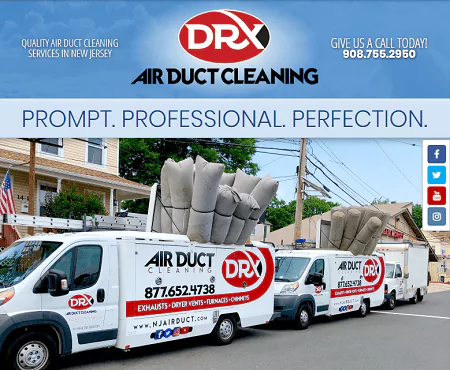
#3:Prompt. Professional. Perfection.
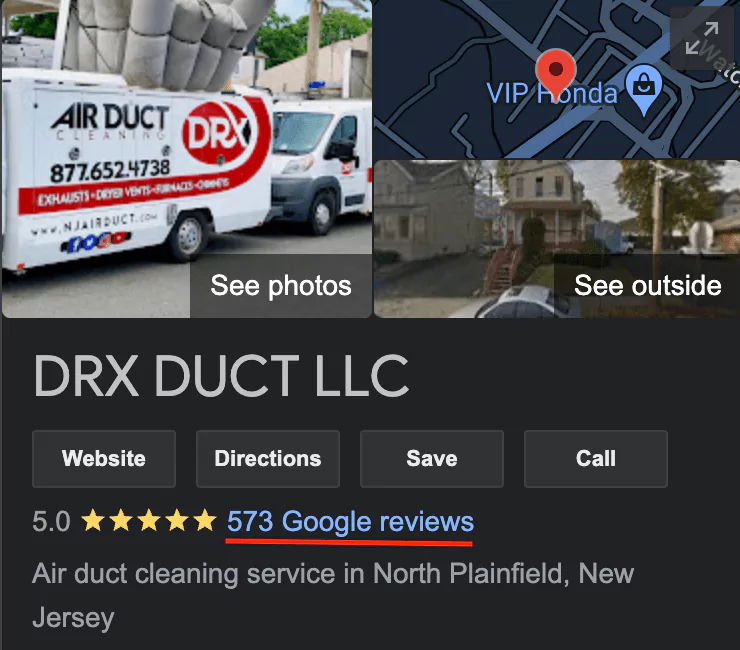
Another short entry in a list with much longer phrases, this slogan from DRX Duct jumps right to the point. These three values (promptness, professionalism, and perfection) are what it wants to be known for. It simultaneously acts as a commitment to service and a promise of what would-be clients can expect.
Throw some alliteration into the mix, and DRX presents a very powerful, memorable slogan. Again, wordplay isn’t the most important factor in crafting a catchphrase, but it certainly helps!
#4: We Shatter Expectations!
Before moving on to longer entries, here’s one last concise slogan that we adore! While Cajun Comfort already has a very memorable name, they take a very bold stance on service quality. After all, it’s not every day that a company can claim to shatter your expectations!
Just keep in mind, a slogan like this is a hardline commitment to outstanding customer service and results. If you (and your technicians) aren’t committed to consistently providing courteous and timely service, this type of slogan could fall flat on its face. Should you stick the landing, however, it’s one more element supporting your HVAC SEO.
#5: Keeping You Cool is Our Business
Some of the best HVAC slogans focus on what the consumer is feeling, not on what your business is providing. However, Air Pro (of Florida) outdoes itself by combining both of these elements into a very capable slogan. While this one may be a little bit on the nose, it’s certainly a fun addition to our list of quality catchphrases.
#6: We’re Not Comfortable Until You Are!
While not the most original, Anderson Automatic’s slogan effectively communicates its commitment to client satisfaction. For consumers who’ve experienced the frustration of an HVAC technician leaving before the job is complete, this commitment instills a soothing peace of mind. Once again, here’s a slogan that targets the consumer’s feelings instead of focusing on traditional brand promotion or service bragging.
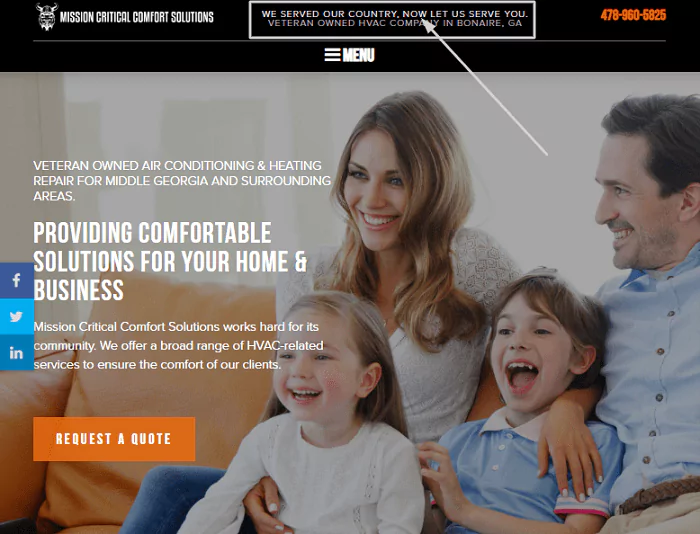
#7: We Served Our Country. Now Let Us Serve You.
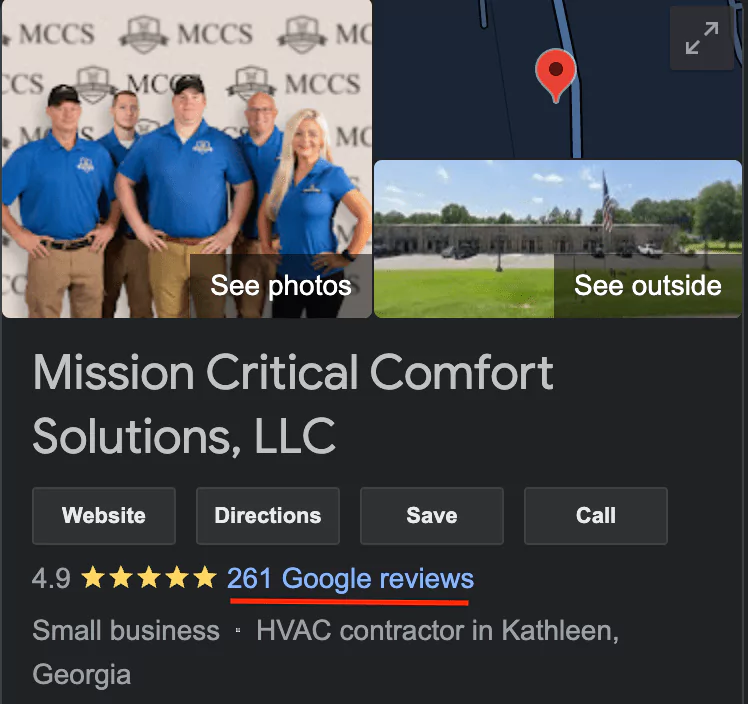
What a powerful appeal! Mission Critical Comfort Solutions is a veteran-owned HVAC team based out of Georgia. Not only does their slogan immediately showcase their heritage, but it also points out their dedication to service. This slogan provides special opportunities to connect with other veterans and military members in the community.
Lines We Like From Other Marketing Professionals
#8: The Hottest HVAC Techs in Town. The Coolest Team Around!
This one is actually a combination of two slogans from DP Marketing Services, and we love the contrast the two lines create when pulled together! Not only does the catchphrase create a sense of locality, it also generates a fun perception of the team behind the company. How people perceive your company can be just as important as what you project in advertising (perhaps even more so)!
#9: Don’t Sweat it, Call ______
One of several fill-in-the-blank slogans we’ll explore today, this one has very real implications for our community in DFW, TX (and other hot environments). DP Marketing Services strikes again with a line that immediately connects with the senses and would-be clients’ history with air conditioning emergencies. While it might not hit home in colder regions, this slogan certainly works down in the South.
Localized Slogans are Also Great Ways to Connect With People.
Stealable HVAC Slogans – Fill in the Blanks
#10: No One Does Repairs Like ______
Positioning is the process of establishing how you wish your brand to be viewed by others. With this particular fill-in-the-blank slogan, a company may position itself as a specialist in HVAC repair services. In larger metropolitan areas, this could make your team the go-to business for emergencies. It’s also a very simple slogan that anyone can understand.
#11: You Can’t Get Cozier Than______
Now we break into the key adjective slogans! With this type of catchphrase, the emphasis gets placed on the words you want most associated with your brand and/or services. In this case, we target the warm, fuzzy feelings linked to the word “cozy”. The word applies in hot, cold, or temperate environments, creating an ideal phrase for any contractor!
#12: Such Great Care, It Can Only Be______Air
This catchphrase is particularly well-suited for any company with “Air” in the title. Want to position your company with the customer service elite? Prefer your slogans have rhyme? Then this could be perfect for your business.
#13: Some Like it Hot. Others Like it______!
If you don’t mind a little double meaning in your HVAC slogans, this funny entry could be a catchy line for your business! Again, it’s best suited for warmer environments where AC repairs and maintenance are the dominant service category. Just make sure your community appreciates this sense of humor, or you might receive a lot of criticizing calls.
Some Companies Like to Focus on Their Service Diversity.
Action-Based HVAC Slogans
#14: Fast Repairs. Even Faster Relief.
This is another repair positioning slogan, ideal if you have a high volume of maintenance and replacement calls. It’s also quite the commitment to rapid response and solutions. However, if you have the trucks, manpower, and the will to provide lightning-fast service for your clients, this could be the perfect slogan for you!
#15: Too Hot? We’ll Beat the Heat.
Not everyone can beat the heat by themselves, and this play on words addresses those tough situations. It also helps potential clients qualify themselves for your repair services, which makes them more likely to convert from caller to client. If you operate in a warmer climate and primarily focus on air conditioning services, this is your slogan!
#16: When the Cool Air Stops, We Start.
Another reference to the panicky situations people face when the AC unit suddenly breaks down, this slogan positions a company as a rapid repair expert. If you want to personalize the phrase, even more, swap out “the” with “Your” to up the consumer stakes! Just make sure your phone is ready for all those repair calls.
#17: Only One Call Away From Cozy
Perhaps our favorite original entry to this list, we return to the happy, fuzzy adjective “cozy.” This time, however, we’re placing greater emphasis on the consumer’s role in their own relief. In a way, this HVAC slogan serves as a call to action, encouraging people to call your business. It also mentally shortens the distance they have to cross to find the solutions they need.
#18: The Cool Air You Love, For Less
Speaking of encouraging people to call, few things motivate a consumer more than good deals. If you have a killer service package that people love, this could be an awesome catchphrase for your business. As always, just make sure your company is in a position to support this claim.
#19: Craveable Comfort
Finally, a simple slogan dedicated to creating the comfortable environment your clients desire. This one’s perfectly suited for AC and furnace system upgrades and replacements. It’s also small enough to fit on any merchandise you can come up with, something you may desire as your company expands in the future.
Emergency Service Hours Can Make for an Excellent Slogan Focus.
More “Fresh” HVAC Slogans from the Webmasters
#20: Breathe in the Fresh Air
This starts off our final category of duct-centered HVAC slogans. Because duct cleaning often comes with its own unique challenges, goals, and priorities, it helps to have a catchphrase that aligns would-be clients with those values. Ultimately, fresh air is the goal of duct service. This slogan cuts straight to the benefit that clients can earn by contacting your business.
#21: Clean Ducts. Clean Air. Clean Home!
A more systematic journey bundled up into six words, this slogan allows clients to visually picture each aspect of the duct cleaning process. First, the project. Next comes the rejuvenated air. Finally, all the hard work and investment pays off with a clean home, something anyone can appreciate.
#22: You Can Feel the Fresh!
While a little more abstract than the rest of our HVAC slogans list, this phrase instantly captures the imagination. It also incorporates sense language, making people remember how it feels to have cool, fresh airbrush across their skin. If you have a mind for the sophisticated and a business for AC-focused positioning, this slogan could be a refreshingly original choice for your company!
Generic HVAC Slogans
#23: A Cool Team You Can Trust.
#24: Our mission is your comfort
#24: We are ready when you need us.
#25: Heroes of AC & Heating
#26: Save, Relax, Enjoy
#27: Craft Not Trade
#28: Elite Service at a Comfortable Price
#29 We’ve Seen it All; Give us a Call
#30: Live in Comfort Year-Round
#31: Bargain Price, Premium Services
#32: Keeping Things Cool
#33: Mission Satisfaction
#34: When Things Get Hot, Claim Your Spot
#35: Comfort is Our Mission
#36: Live Comftarably All Year
#37: Eliminate Stress, Add Comfort
#38: Melt Away Your Worries
#39: We Always Keep Your Cool
#40: We Bring The Heat (Or The Cool)
#41: We Make Things Cool in a Hurry
#42: We Rule The Cool
#43: Don’t Sweat, We Treat The Threat
#44: Keeping Your Home Cool
#45: The Heating and Cooling Solution
#46: Any Reason, Any Season
#47: The AC Repair Team
#48: Your Trusted HVAC Loyalists
#49: From Our Family To Yours
#50: Home is Where The Comfort Is
#51: Hook in The HVAC Repair
Final Thoughts on HVAC Slogans
Even the most catchy, perky slogans can fall flat if they aren’t utilized correctly. If you want your newfound branding to succeed in earning those HVAC leads, there are a few lessons you’ll need to heed.
How to Launch Your New Slogan
Be consistent.
Make it visible.
Get dedicated.
Keep your slogan promise.
Advertise.
Go digital.
Make Sure You Can Back Up the Promise Your Slogan Provides!
Consistency is key to launching a successful slogan. If your marketing materials are using outdated messaging with conflicting catchphrases, people won’t remember your new one. On that note, be sure it’s clearly visible on merchandising, trucks, and other frequently seen marketing tools. You’ll need to be sure about this new slogan, because you’ll most likely be stuck with it for a while.
Taking Your Slogan Digital
Of course, your website and local search listings are a perfect place to show off your fresh new catchphrase. Ideally, you’ll want it front and center above the fold of your homepage. That way, all of your online visitors can quickly learn what you’re all about!
If you don’t have your own website yet, our team at HVAC Webmasters would love to help you! We design and custom-build websites for maximum local search impact. In fact, our clients regularly enjoy page-one rankings for dozens of keywords, earning higher traffic and better leads.
HVAC advertising is no longer just about “getting your name out there,” it’s about earning consumer trust and converting high-intent prospects.
As more companies invest in digital advertising, consumer standards have risen simultaneously. Homeowners expect instant results and quickly evaluate whether a company presents verified authority and user-friendly scheduling.
The companies succeeding with paid advertising aren’t relying on luck. They are establishing their companies as the most visible, vetted, and easiest-to-hire option in their given service area.
Regardless of whether you’re a newer company or well-established, your modern advertising strategy must evolve alongside Google’s tightening verification standards and AI-driven consumer behavior.
From earning a Google Verified badge to deploying predictive neighborhood farming, here are a dozen can’t-miss HVAC advertising ideas to help you stand out from competitors.
Idea #1: Leverage Seasonal Conditioning
Timing is not merely a factor in the HVAC industry; it’s the whole game. Modern technology enables Predictive Seasonal Marketing to capture entire markets before major temperature shifts.
Capturing high-margin maintenance and system replacements reduces the stress on your emergency-only calls. By launching a seasonal campaign 6 weeks before summer or winter hits, you secure your spot as the first-to-mind provider when the fluctuations become highly noticeable.
Seasonal success depends on the following three pillars:
Pre-Season Tune-Ups: Target high-intent queries like “AC Tune Up (City)” in March and April to fill your schedule with low-stress, high-conversion maintenance bookings.
Membership-Driven Retention: Convert seasonal customers into year-round service agreements, creating recurring revenue and reducing overreliance on one-time emergency calls.
Hyper-Local Weather Targeting: Deploy automated ad scripts that increase bidding the minute weather forecasts reach a predefined temperature threshold.
Idea #2: Use Precise Neighborhood Farming
Direct mail traditionally casts a wide net, which ultimately wastes dollars. Today, HVAC companies can use data-driven predictive analytics to send mailers only to homes with HVAC units over 10 years old or to neighborhoods recently hit by notable temperature changes.
By layering your mailing list with real-time data, you hit homeowners with solutions for problems they are already worried about. This can increase direct mail response from a 1% gamble to a high-ROI strategic targeting strike.
Using data can benefit your bottom line and help generate HVAC leads more efficiently without overspending on broad direct mail campaigns.
Idea #3: Balance High-Intent Search Marketing
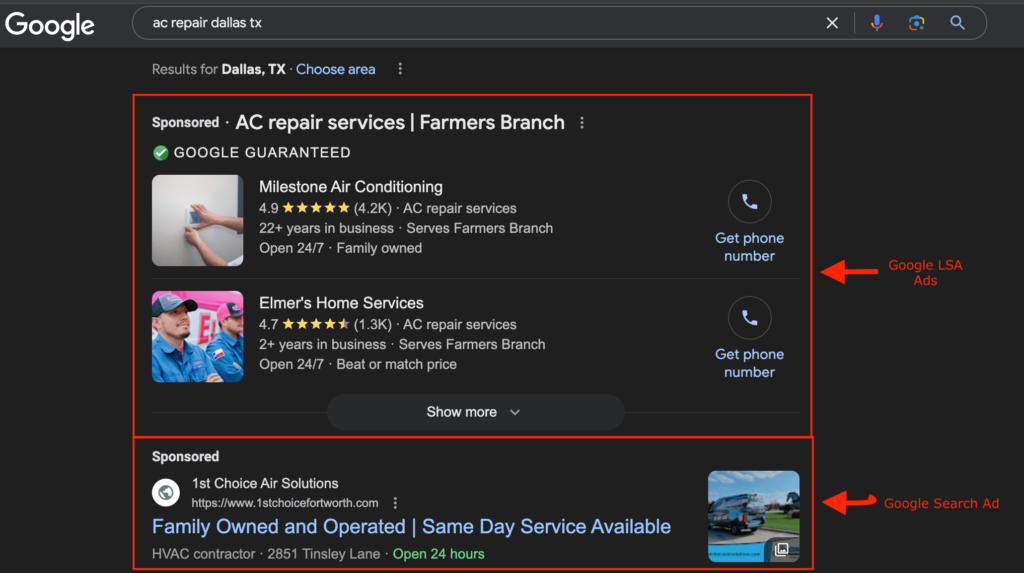
Modern HVAC advertising has expanded beyond traditional Pay-Per-Click (PPC) into Pay-Per-Lead through Google Local Services Ads (LSAs).
Google’s LSA program eliminates the frustration of traditional search ads, which require you to pay for clicks that never take the next step.
Today, a balanced strategy works best, which combines LSA, organic SEO, and traditional Google Ads for specific high-ticket keywords such as “AC Replacement” and “Heat Pump Installation.”
Here is my recommended strategy:
Organic Foundation: Don’t choose between Paid Ads and SEO; your goal is to show up in both organic and paid positions.
Conversion Over Clicks: Prioritize your budget on buying a lead instead of buying traffic
Negative Keyword Scrubbing: Use advanced AI-driven negative keyword lists to eliminate queries like “HVAC jobs” and “How to fix my AC,” which drain your ad budget.
Not every company is ready to dish out a massive ad spend. You can gradually strengthen your online visibility with targeted, hyper-local campaigns, which help bridge the gap as your HVAC SEO campaign materializes.
Idea #4: Invest in Your Business Website
Homeowners are on high alert for lead-generation websites that sell their data. If your site looks outdated, spammy, and uses stock photos, it’s lowering your conversion rate in real time.
Here are the qualities of effective and contemporary HVAC websites:
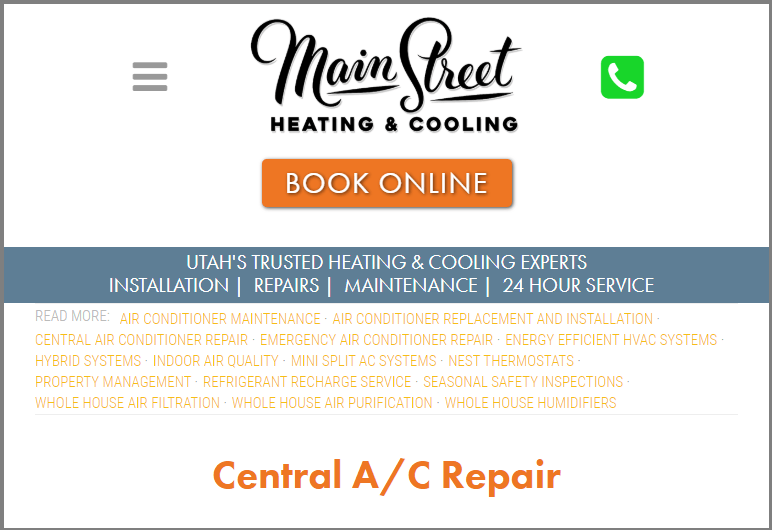
Original Photos: Stock photos of smiling models in pristine jumpsuits are a red flag. Modern websites feature high-resolution photos of staff members, technicians, branded trucks, and office signage.
Sticky Headers: Your phone number and Book Now button should be pinned to your website’s header, keeping visitors one click away from converting.
Dynamic Lead Capture: Instant quote estimators and other dynamic tools are more effective at capturing the user’s information than static contact forms. The immediate value proposition inspires homeowners to take action.
Idea #5: Optimize Landing Pages for Mobile Users
Since most homeowners find your ads on their mobile devices, your ads and corresponding landing pages must provide an excellent user experience.
Sites or pages that take more than 2 seconds to load or require pinching or zooming to find critical contact information are giving leads to nearby competitors.
HVAC companies often make the mistake of setting their website homepage as their landing page, which increases bounce rates and decreases conversions. Instead, you’ll want to publish a dedicated page for the corresponding ad so users find the most relevant information when they click through.
High-conversion landing pages are stripped down and hyper-focused on conversion. Each landing page should feature one clear offer, one specific service area, and one primary call to action
Idea #6: AI-Driven Instant Scheduling
Modern HVAC websites should implement AI scheduling agents that integrate directly with your CRM (e.g., ServiceTitan or HouscallPro), allowing customers to see your availability in real-time and secure a time slot without speaking to a human.
Too many HVAC websites still rely on chatbots, which create too much friction for visitors and thereby prevent the high conversion rates achieved with integrated scheduling.
Idea #7: Secure The “Google Verified” Badge
The blue (or green) Google Verified checkmark has become a gatekeeper for HVAC leads. Contractors who pass Google’s rigorous background, license, and insurance checks earn a spot in the Local Service Ads (LSA), which appear at the very top of search results.
Unlike standard PPC (Google Ads), which uses a pay-per-click model, LSA ads use a pay-per-lead model. In addition, the Google Verified badge gives consumers great confidence in calling your business, especially when they are in the midst of an emergency, such as a failing AC in 100+ degree weather.
Idea #8: Deploy Automated Lifecyle Nurturing
Prospects who fill out a form on your landing page but don’t book can be immediately hit with a multi-channel sequence. This is known as an Automated Lifecycle Nurting System.
It sends an automated SMS within 60 seconds of the form submission, followed by an email featuring a video testimonial from a recent customer. Long-term, it reengages the homeowner with 90-day check-ins to keep your brand top of mind, so when the AC or furnace fails, they think of you first.
There’s a fine line between persistence and annoyance, but modern technology lets us exist right up against it. By providing reassurance and consistency, you stop chasing leads and start building predictable revenue that strengthens your business over time.
Idea # 9: Build Trust With Reviews and Social Proof
Reviews directly influence your Google LSA performance. The algorithm favors contractors with a high review velocity and demotes those who stop receiving reviews, driving up their cost per lead. The algorithm also considers the text and keywords in reviews to gauge relevance for specific ad auctions.
From a user perspective, review count absolutely influences conversions. Homeowners will almost always choose a company with 800 reviews over a competitor with 50, even if both have an identical 4.9-star rating.
The best way to get more reviews is to set up an automated review request system that sends messages via SMS and email to customers after you complete a job. In the long run, this will lower your customer acquisition cost and help insulate you from emerging competitors.
Idea #10: Lower CAC With a Digital Referral Engine
A referral program isn’t merely a nice gesture; it’s a strategic advertising tool that helps you bypass bidding wars and secure high-conversion leads for a fraction of the cost.
According to Nielsen, 88% of consumers trust recommendations from people they know more than any other channel.
Many HVAC services are high-ticket and require technicians to enter people’s homes. That’s why a personal recommendation serves as a pre-vetted trust signal and something a referral program can scale.
Referral links work best because members can text or email the link to friends and neighbors, or even post it in a Facebook Group. Consider structuring it so the referring neighbor gets $50 toward their next maintenance visit and the new customer gets $50 of their new repair.
Idea #11: Create Multiple Consumer Touch Points
A one-and-done approach is insufficient in the modern advertising landscape. Homeowners are bombarded with options and rarely commit to the first ad they see.
However, when prospects see your brand across multiple platforms, you transition into a local authority. That’s why syncing your ad channels across Google, Meta, and physical mailers can make all the difference.
One option is to use pixel-based retargeting to show specific ads to people who’ve previously visited your landing page. Over time, your click-through rates will increase while your customer acquisition cost lowers.
Idea #12: Master Hyper-Local Geo-Fencing
Broad geographic targeting is a leading cause of budget bleed for HVAC companies. Ads targeting homeowners 45-60 minutes away lead to high travel costs and low margins.
Hyper-Local Geo-Fencing solves this problem. Most modern ad platforms allow advertisers to draw a circle around the specific zip codes and neighborhoods they want to target, eliminating that weasted ad spend.
You can use your CRM data to hone in on high-density neighborhoods and prioritize your budget accordingly. This also allows you to tailor your landing page and ad copy to that specific market.
Maximizing Your HVAC Advertising Campaign
The landscape of advertising for local HVAC companies has shifted from rewarding the loudest to favoring the company that best balances trust with ease.
To dominate your service area, you must approach advertising as an essential component to your business infrastructure. That starts with gaining Google Verified status to run Local Services Ads and extends into automating lead nurturing, accumulating reviews, and building a scalable revenue machine.
HVAC companies that can remove friction, establish authority, and become a local staple are positioned to achieve impressive ROI through digital advertising.
For help with your advertising campaign, contact HVAC Webmasters for a free consultation.
Author: Nolen Walker
Nolen Walker is the founder of HVAC Webmasters and the creator of DataPins™, a Local SEO platform for HVAC companies. He has over 16 years of experience helping HVAC businesses grow through organic search, Google Maps, and AI-driven visibility.