

HVAC SEO Services Based on 16+ Years of Experience
We are an industry-focused HVAC SEO agency dedicated to helping businesses maximize their local online visibility. For more than 16 years, we’ve helped more than a thousand HVAC companies generate a consistent stream of high-quality leads with our suite of SEO services.
Our SEO services adapt to evolving search behaviors and Google algorithms, including the integration of AI platforms such as Google Gemini into search via AI Overviews and AI Mode. Our comprehensive approach helps clients maximize visibility across all relevant platforms.
The HVAC Webmasters Podcast
The Team at HVAC Webmasters discusses some of the most important topics in digital marketing. If you are interested in improving areas of your online presence, give us a call today at (800) 353-3409.
CONTACT US



Get More Reviews - Simplifies the Process of Getting Reviews for Contractors
GEO Location Check-ins - Enhance Local SEO Results with Check Ins
Email & Text Clients - Link Them Directly to Review Platforms like Google, Facebook and Yelp
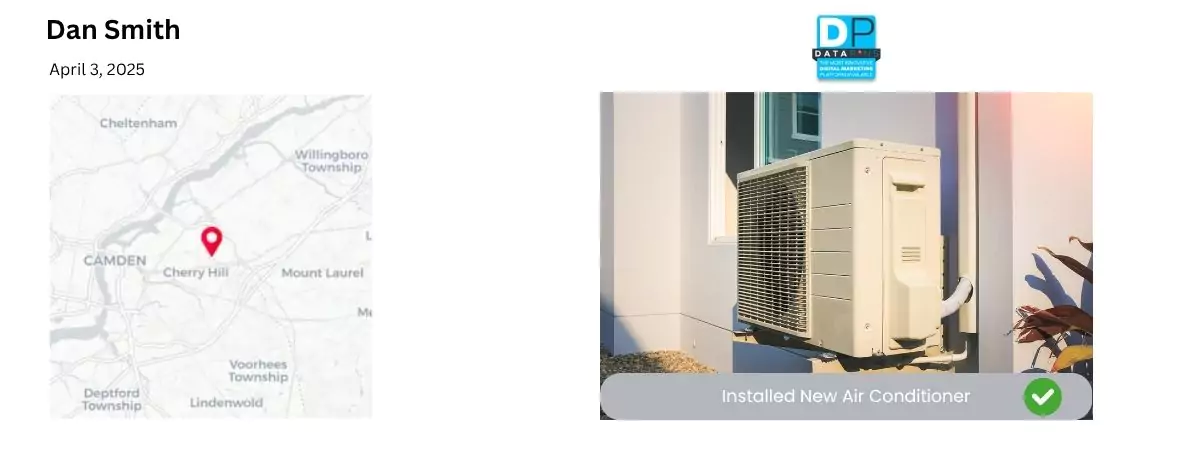
Post Job Pics - Automatically Update Your Service Pages with Pictures from Your Jobs!
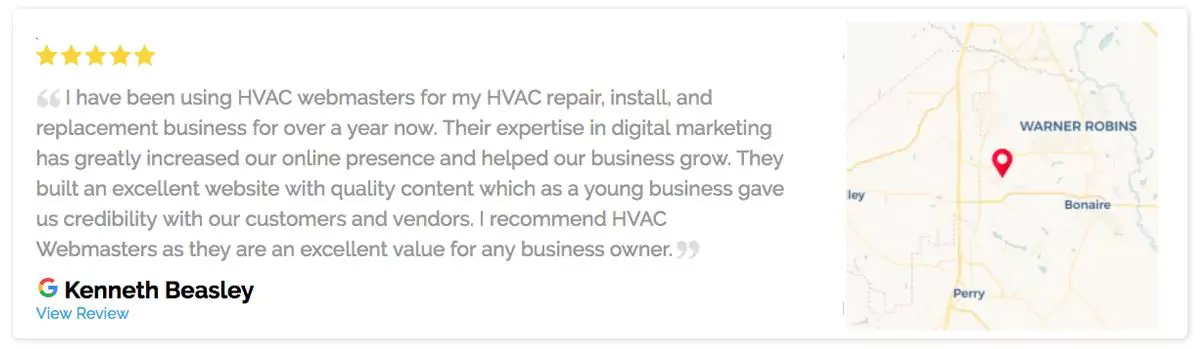
Manage Your Online Reputation - Your Reviews Can Promote and Go to Work for Your Company!
Map Pins - Your Website Can Pin Your Job sites with Geo Coding
Higher Map & Organic Rankings - DataPins Go to Work for You
AI Overview Optimization - Create branded job signals that help you appear in AI answers and AI Mode
Google Responds - Your Reviews, Geo Locations, and Photos Can Help Your Standing with Google
Find out more about why Datapins benefits your business when you CLICK HERE.

Click Here To Buy the Book
Custom SEO Strategies from HVAC Webmasters
Our 16+ years of experience have taught us that top-performing HVAC companies use a tailored SEO strategy that accounts for location, competition, and service offerings. These customized campaigns outperform generic, cookie-cutter SEO approaches. At HVAC Webmasters, we identify what sets each HVAC company apart and use that to maximize their search visibility and performance.
At HVAC Webmasters, we also help contractors avoid common SEO pitfalls, such as mass-producing low-value city pages and blog posts or misrepresenting your business’s identity or location. By focusing on user intent, we craft service pages that attract the ideal customer for your specific company and service area.
GET STARTED!- Industry Keywords The HVAC industry has thousands of keyword opportunities. There are so many specific HVAC services, and an endless pool of consumers looking to find them. As you might imagine, keyword volume can fluctuate by season. The term “ac repair” is more popular in summer, while “heating repair” gains traction in winter. We often say that HVAC has more keyword combinations than Sonic drink flavors.
- Local Keywords As a local contractor, your website and Google Business Profile should target local terms. Most customers search on Google from their mobile devices, and their current location, along with your listing’s relevance and prominence, determines the Maps results. As a result, include local terms in your target keywords. Combining local keywords with industry keywords creates many long-tail keyword variations. These typically have lower volume than broad terms but better align with user intent.
- Topical Authority Building topical authority within a broader category can strengthen your website’s core vector embedding. If you offer specific HVAC services, such as AC coil replacement, your website should mention them. Our DataPins software allows contractors to showcase these services based on real jobs. For example, after you complete an electric furnace repair in a nearby city, DataPins pushes your job information to your website, adding topically relevant content to your electric furnace repair service page.
- URL Structure Creating a website structure that Google can crawl easily helps ensure smooth indexing in search results. Each of our websites includes an XML sitemap to assist with this process. We also use a siloed URL structure with internal linking to make sub-services, such as central heating repair, easily accessible from the heating services page.
- Website Images Publishing high-quality WebP-format photos on your company website speeds up load times, which can boost SEO. Pictures of your employees, facilities, and equipment have the most impact on conversions. These images are easier than ever to capture and upload, with most smartphones now having cameras and the ability to send pictures to others. Most small businesses use images on their social media pages, and those images should also appear on their websites.
- AI Visibility Potential customers now use AI search tools like Gemini, ChatGPT, and Claude, so HVAC companies should aim to be mentioned and cited by these platforms. SEO handles a great deal of the legwork for AI visibility, as Google uses its own search index in AI Overviews and AI Mode. However, HVAC companies can take additional steps to boost AI visibility, such as building authentic, legitimate third-party corroboration by appearing in a local chamber of commerce directory or being quoted in a local newspaper story related to the HVAC industry.
Call the HVAC Webmasters at (800) 353-3409 Today!
HVAC SEO Content That Drives Conversions
At HVAC Webmasters, our case studies show a pattern: authentic job-based content drives increases in clicks, impressions, and queries for our clients. While every company wants to rank for “ac repair near me,” thousands of untapped opportunities exist to rank for long-tail queries that homeowners ready to use your services often search. This measured, targeted approach lets HVAC companies consistently reach their target customers in their target service areas.
Google’s algorithmic advancements and reinforced stance on content quality have raised content standards. For example, their document on creating helpful, reliable, people-first content stresses avoiding “search engine-first content,” which many HVAC companies still produce, either on their own or through digital marketing providers or AI. HVAC Webmasters’ clients receive help with content audits and thin-content removals or consolidations as we work to restore and/or build the site’s core trust and authority.
High-Conversion HVAC Content
- detailed service pages with unique insights
- proof of work (recent jobs, job photos, job descriptions, etc.)
- original case studies or data-driven assets
- authentic location pages with local-specific context
- pages with clear, easy-to-access calls to action
- pages with unique photos of your staff, trucks, and equipment
Low-Conversion HVAC Content
- generic blog posts
- mass-produced city pages
- pages without a target service or location
- slow-loading pages
- pages that are difficult to navigate
- pages that target non-HVAC topics
Google has made it clear that its search quality raters look for content that demonstrates experience, expertise, authoritativeness, and trustworthiness (E-E-A-T) when evaluating its ranking systems. Our agency is focused on ensuring your website meets these content standards to maximize visibility.
LEARN MOREA Proven SEO Process Specifically Crafted for HVAC
The HVAC SEO process has multiple elements that work together to improve your rankings. For example, on-page SEO and off-page SEO both influence your search visibility. On-page SEO focuses on your website and content, while off-page SEO focuses on your business listings, third-party mentions, and social media presence.
Search visibility also includes your visibility and citations on AI platforms such as Google Gemini and ChatGPT. Our agency has integrated this new area of optimization, Answer Engine Optimization (AEO), into our services. We stress that AEO isn’t magic dust; it’s an extension of a strong SEO foundation, with a particular emphasis on authentic third-party corroboration.
CONTACT US!Custom Web Design
A website is the foundation of an HVAC company’s online presence, and it is critical to SEO success. Once potential customers visit your HVAC website, they will form an opinion in seconds. Websites built by professional designers look more appealing than templates, and Google can more easily index them, especially if they utilize schema markup. Aesthetics, display, responsiveness, and navigation are other critical factors in website design.
Calls To Action (CTA)
CTA or calls to action inspire visitors to enter what is known as a sales funnel. A CTA can be anything from a clickable phone number to a sign-up here button. When including CTA on a website, there should be clear urgency and incentive. The action should be as convenient as possible and require little thinking or effort. An example of this is the clickable phone number a mobile user can tap to connect directly to your office line.
Social Proof
Any awards or certifications earned by your HVAC company should be displayed on the website. Certifications include the Better Business Bureau Accreditation and the Angi Super Service Award. Local news publications that have interviewed you can be added to the “featured on” section of your website. Displaying badges is all about instilling trust in your potential customers as they browse your website.
Reviews
As a local HVAC contractor, you probably understand the importance of online reviews, especially on Google and Facebook. On-site testimonials help contractors by filling your company’s site with user-generated content. The DataPins widget from HVAC Webmasters integrates external reviews from reliable sources, helping visitors be confident in the legitimacy of testimonials.
Mobile Optimization
Most visitors find your website on their mobile devices. Knowing this, a website should always be optimized with mobile in mind. Several steps can be taken to enhance a mobile page, including simple navigation, responsive design, and interactivity. In contrast, qualities that might discourage a mobile user include slow site speed, image distortion, and narrow or oversized viewports.
SSL Security
SSL, or Secure Sockets Layer, is a security protocol for website domains. Part of the user experience is the visitor’s feeling of security or lack thereof. Secure URLs use https://, while “insecure” ones use http://. If your website is the latter, most browsers will warn the user that the site is insecure. Since SSL influences user experience, its impact on SEO is legitimate.