Author Archives: HVAC Webmasters

  • plumbing heating and air alliance member
  • contractors of america best digital agency
  • expertise.com best seo agencies in fort worth

Landing Page Optimization Guide for HVAC Companies


When properly implemented, landing page optimization can increase clicks, earn higher advertising ROI, and generate more HVAC leads for your business.

As the founder of HVAC Webmasters, a digital marketing agency that has worked with thousands of contractors over the past decade, I have experience with specific landing page optimization methods and practices proven to increase effectiveness.

By simply implementing some or all of these methods, you can spare yourself the burden of completely overhauling your landing pages and merely make a few tweaks. 


Key Takeaway

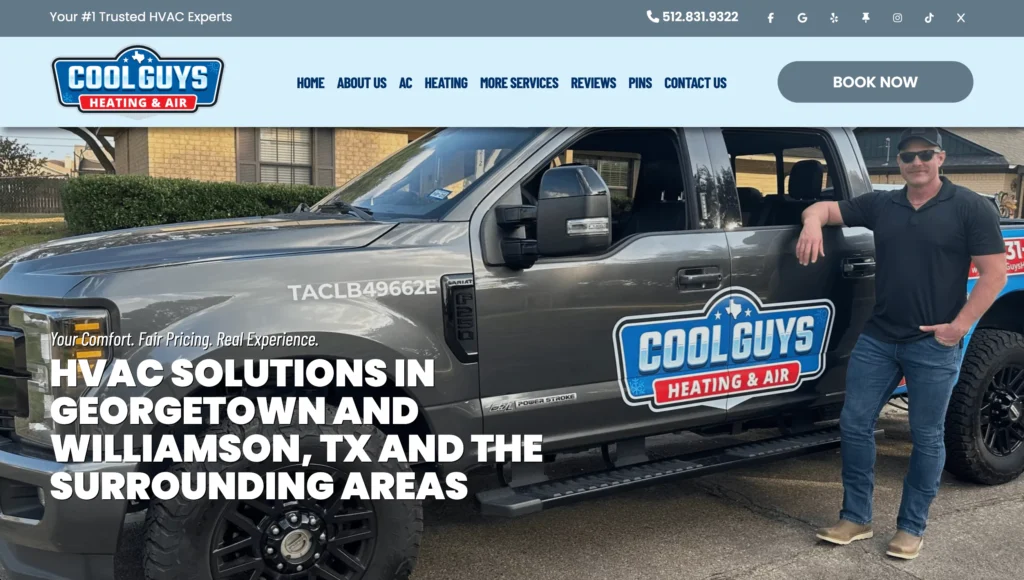
An effective landing page is relevant to the search query and features elements of expertise, authority, and trust, such as a high-quality image of your staff.


HVAC Landing Page Optimization

What is a Landing Page for HVAC Companies?

An HVAC landing page is a standalone, dedicated web page created for a specific advertising or marketing campaign.

For example, the page linked to your Google ad or an email marketing promo is considered a landing page.

For HVAC companies, a landing page promotes your HVAC services and encourages consumers to take action.


Optimizing Your HVAC Company Landing Pages

Many HVAC business owners overlook the vital role that their landing pages play. Your landing pages are responsible for converting visitors into leads.

As a result, it’s essential to monitor your landing pages’ performance closely. 

Specifically, how many leads they generate each month. Most people won’t get landing pages right the first time.


Sometimes it takes several months of testing, tweaking, and monitoring to get everything right. That is the process of landing page optimization. 


Use a Heat Map

The first step in landing page optimization is identifying what is working and what isn’t.

Even if your landing page is performing well (generating new leads every month), there is always room for improvement. A heat map is one of the essential tools you will need for landing page optimization. 

A heat map will show you what people click on your landing pages.


It is a visual representation of your landing pages with numerical data on the number of clicks your calls to action are getting, how far down the page people scroll, what parts they are reading or looking at, and much more. 

A heat map will help you understand what is earning you clicks and what needs to be improved. Our advice is to procure a good heat map tool first. 


Pro Tip: Hotjar offers a very intuitive, helpful heat map and a freemium version


Other Helpful Tools

Visual data analysis tools come in many shapes and forms. Most of them have something very insightful to offer regarding landing page optimization, though.


Here are some more tools you should certainly consider working with to optimize your landing pages:


Scroll Maps

A scroll map is another type of visual data report. In it, you can see the layout of your landing pages superimposed with different colors.

Most tools use red and yellow to indicate where people spend the most time on your landing pages.

Green and blue usually represent the sections getting the least attention or scrolling before they leave the page. 


Pro Tip: Microsoft Clarity offers a scroll map that’s intuitive and easy to use


Bounce Rate Analytics

Your bounce rate refers to the number of people who leave your landing page without completing the conversion or clicking through to another page on your HVAC website.

You want your bounce rate to be as low as possible. So, a bounce rate calculator is valuable because it shows whether your landing pages are effective.

It can provide valuable insight into what pages need adjustment. 


Overlay Reports

An overlay report provides you with similar data to a heat map. It will tell you exactly how many clicks different sections on various landing pages earn and provide in-depth data on individual landing page elements. 


Before You Go Live

This section will discuss things you can do to set yourself up for success before your landing page goes live. Don’t worry if your landing page is already live, though.


The following section is all about current landing page optimization:


Stick to the Point

Many people make mistakes with landing pages when they divert from their original purpose. Remember the page’s goals as you design and develop its copy.

If you are an HVAC contractor, your plan will likely sell your visitors on a specific service—focus on presenting that service positively and how it can make the visitor’s life easier or better. 


Limit Clutter

You may be tempted to load your landing pages with high-quality images, but sometimes less is more. A clean, stripped-down design is usually the best approach for landing pages.


Keep Your Audience in Mind

Think about who is most likely to view your landing pages. Maybe people who require emergency HVAC services, new homeowners, or people seeking a specialized HVAC service.

Make sure your copy speaks directly to the people clicking on your ads. 


Optimizing Live Pages


Add an Exit Popup

An exit pop-up is a prompt that appears when a visitor is about to click out of your landing page or navigate away. Depending on the design and audience, it can help increase conversions by 2% to 4%.


Compelling Calls to Action

Your call to action should engage the reader. Instead of “call now,” try “Get a free A/C efficiency check today.” A compelling call to action will meet the visitor’s needs without being too long or complicated. 

Keep the Most Important Information at the Top – Actionable buttons, offer details, contact information, and other elements that spur a visitor to action should be at or near the top of your landing pages.


Pro Tip: Keep CTAs away from the bottom, where people must scroll down to see them. 


Tweak Headlines

Sometimes, all you need is a simple headline change. Experiment with different texts, but remember that the goal is to grab the visitor’s attention.


A/B Testing

A/B testing is the process of altering a current web page and showing the original and amended one to an equal number of visitors to see which version performs better.

These comparative tests are invaluable for improving your landing pages and gaining key insights. 


Final Thoughts on HVAC Landing Page Optimization

Landing page optimization is not a pump-and-dump operation—I know this as an owner of an HVAC marketing agency who has worked with thousands of heating and cooling companies.

Instead, optimizing your landing pages is an ongoing process that involves testing and adaptation to meet your consumers’ needs.

Over my career, I’ve witnessed firsthand how HVAC companies’ most effective landing pages increase conversions, lower ad spend, and generate qualified, local leads.

These pages unanimously hone in on user experience and user intent while featuring actionable copy and convincing calls-to-action.


Contact me today to learn more about how my agency can optimize your HVAC landing pages.


  • plumbing heating and air alliance member
  • contractors of america best digital agency
  • expertise.com best seo agencies in fort worth

Apple Maps Optimization (Guide) for HVAC Companies


HVAC companies looking to be found on Apple Maps must optimize their Apple Maps listing through Apple Business Connect.

Apple Business Connect (ABC) is similar to Google Business Profile in that it is a free platform on which HVAC companies can create and manage their business listings.

As the founder of HVAC Webmasters, a digital marketing agency for heating and cooling professionals, I will outline how my clients set up their Apple Maps listing in 2025.


Key Takeaway

HVAC Companies can create or claim their Apple Maps business listing through Apple Business Connect (ABC).


Apple Maps for HVAC (Blog Cover)

Creating an Apple ID

To use Apple Business Connect, HVAC business owners must first create an Apple ID (if they do not currently have one).


  • Go to https://appleid.apple.com
  • Click “Create Your Apple ID” on the top right
  • Complete The Form
  • Verify Your Email: Apple sends a 6-digit code

Remember that the email address you use when signing up becomes your Apple ID, so make sure it’s one that you have permanent access to.


Claiming or Creating Your Apple Maps Listing

Once you create your Apple ID, go to https://businessconnect.apple.com/ and log in. 


  • From the ABC dashboard, click on “Locations.”
  • Click “Add.”
  • Search for your HVAC company name
  • Follow the prompts to enter your business information.
  • Select your existing listing or create a new one.

Verifying Your Apple Maps Listing

After claiming an existing listing, you must verify it through one of two options:


  • Phone Call: Instant verification 
  • Document Review: Can take up to 5 days

The phone call verification works best when verifying an existing listing because it’s instant.

For brand new listings, you can only use the Document Review verification option, which means you may have to wait up to 5 days for your listing to be verified.

Apple typically asks for documents like utility bills, insurance policies, and other relevant information.


Optimizing Your Apple Maps Listing

Much like Google Business Profile, your Apple Business Connect listing features the following fields:


  • Company Name
  • Address
  • Phone Number
  • Business Categories
  • Open Hours
  • About (Description)

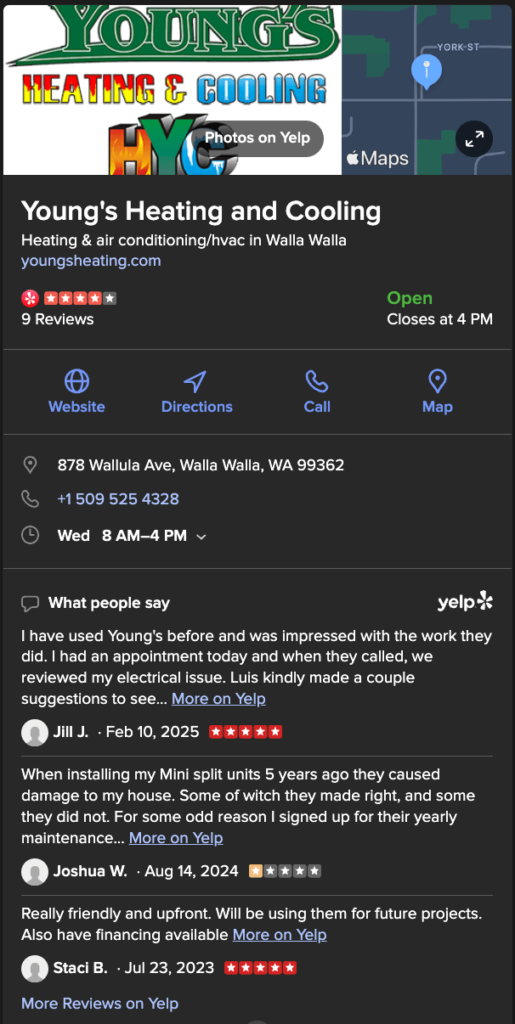
Be mindful that Apple may pull some of this information from other sources, like Yelp, which you cannot toggle on or off. As a result, ensure your Yelp listing is also optimized.

Like with Google Maps, your business category significantly influences Apple Maps SEO, which is why all heating and cooling companies should select “HVAC.”


Apple Maps Reviews

Apple Maps differs from Google Business Profile because users cannot directly submit reviews to the platform.

Instead, Apple Maps pulls your company reviews from other sources like Yelp and Facebook.

Considering this, monitoring your reputation on those specific platforms is essential as they will directly influence how Apple users view your company.


Testing Your Apple Maps Listing Visibility

The fastest way to test if your HVAC Apple Maps listing is live is to search for your company name on an iPhone or through DuckDuckGo.com.

If you don’t see your listing immediately, try searching for variations of your company name; this may bring up your listing.

For example, if you own Bob’s Dallas AC Repair LLC, try also searching for “Bob’s AC Repair Dallas” or “Bob’s HVAC Repair Dallas”


If that still fails to return your listing, try searching your company’s existing phone number, followed by any old phone numbers your company used.

Apple Maps has traditionally had a problem with businesses having multiple listings, hurting your long-term visibility.


If you find duplicate listings for your business, you should claim each listing and contact Apple Maps support to get the older ones removed.

You can do this by clicking your initials in the bottom left corner and then “Contact Support.”


How Much Does Apple Maps Impact SEO for HVAC Companies?

Google Maps dominates local search for HVAC companies, particularly because heating and cooling companies are service area businesses (SABs), meaning customers rarely seek driving directions to an HVAC business office.

As a result, Google Maps‘ actual value for HVAC is ranking within search results, especially in the Map 3-Pack.

That said, Apple iPhone users represent a significant portion of your HVAC company’s addressable market.


With the emergence of ChatGPT and other AI platforms that pull business information from various sources, optimizing your Apple Maps listing is a no-brainer in 2025.

There’s also a tremendous untapped opportunity in your market, as 58% of businesses have yet to claim their Apple Maps listing.


Final Thoughts on Apple Maps Optimization for HVAC

The digital marketing landscape is uncertain in 2025, so HVAC companies must embrace every component of branding and visibility.

Claiming and optimizing your HVAC Apple Maps listing is both free and effective for local heating and cooling professionals.


Though Google Maps will remain the primary source of local HVAC lead generation for the foreseeable future, the emergence of AI platforms like ChatGPT makes diversification increasingly crucial.

We’re all aware of how many consumers are iPhone owners, which makes visibility on this Apple Maps platform an obvious win for business owners.

To learn more about how you can increase your HVAC company’s local visibility through software solutions like DataPins, reach out to my agency today.


  • plumbing heating and air alliance member
  • contractors of america best digital agency
  • expertise.com best seo agencies in fort worth

11 Best HVAC Magazines of 2025


As the founder of HVAC Webmasters, a digital marketing agency for heating and cooling professionals, I’m often asked about the best HVAC magazines for 2025.

Since I’ve been working directly with HVAC pros for 15 years, I frequently discuss with them the best publications for learning new HVAC techniques, industry trends, and technological innovations, whether that’s for contractors, technicians, or engineers.

I’m sharing my list of top HVAC trade publications for 2025, so heating and cooling professionals everywhere can access valuable information and insights that can propel their businesses forward. 


HVAC Magazines (Blog Cover)

Nolen’s List of Best HVAC Magazines

  • The ACHR News
  • HVAC & Refrigeration Insider
  • HVACR Business
  • Supply House Times
  • Engineered Systems
  • HPAC Engineering
  • SNIPS News
  • Thermal Control Magazine
  • Southern PHC
  • Cooling Post
  • HVAC Webmasters Blog

Top HVAC Magazines for 2025


1) The ACHR News

ACHR News or Air Conditioning, Heating, and Refrigeration News is the consensus top publication in the HVAC industry.

Aside from providing the latest news, product reviews, and in-depth articles, it helps HVAC pros stay abreast of industry trends and developments.

Every HVAC business owner I know regularly reads ACHR News, and I recommend that aspiring heating and cooling professionals do the same.


2) HVAC & Refrigeration Insider

HVAC & Refrigeration Insider is similarly essential to ACHR News for those in the heating and cooling industry.

Whether you seek specific business strategies, new product launches, or updated industry regulations, this insider publication provides you with all those insights.

When I speak with my HVAC marketing clients, I tell them to check out this magazine if they haven’t already done so.


3) HVACR Business

I often laugh with my HVAC buddies to not forget the “R,” which stands for refrigeration.

One magazine that captures my sentiment is HVACR Business, which I highly recommend to anyone in the industry.

This publication offers extensive advice on a wide range of topics, from business finances to marketing (my specialty), and also includes valuable case studies and real-world applications.


4) Supply House Times

BNP Media publishes the Supply House Times with support from The American Supply Association, presenting industry trends and market analysis for both contractors and wholesalers in the HVAC industry.

A common theme on my list of best HVAC magazines is recent product reviews, which this publication also includes, helping professionals learn about the latest HVACR tools.

Many of my most successful HVAC clients enjoy reading the Supply House Times for its expert advice, which is tailored to growing businesses.


5) Engineered Systems

All my HVAC engineers out there will adore the Engineered Systems Magazine, which offers intricate articles about building sustainability, energy efficiency, and system integration.

As you can tell by the publication’s name, it is explicitly geared toward engineers, though HVAC business owners can also benefit from its depth of knowledge.

In an era of technological advancements, these insights help businesses stay ahead of the curve, driving growth and prosperity.


6) HPAC Engineering

HPAC Engineering explores new products, solutions, and technological advancements, helping HVAC engineers optimize efficiency.

This publication is highly technical, delving into the details of the American Society of Heating, Refrigerating and Air-Conditioning Engineers (ASHRAE) guidance and building automation systems (BAS), both of which are essential for HVAC engineers.

While this magazine is not geared toward everyone in the HVAC industry, it is extremely valuable for specialists, such as engineers.


7) SNIPS News

SNIPS News is a special section with ACHR News (our #1 ranked magazine) covering metal fabrication, duct sealing, and other aspects of architectural sheet metal.

For HVAC specialists seeking installation tips and techniques relating to metal fabrication, SNIPS is an invaluable resource.

As consumers become more aware of the quality of each HVAC company’s workmanship, investing in specialized knowledge becomes increasingly essential and beneficial for growth and sustainability.


8) Thermal Control Magazine

For contractors specializing in heating and ventilation technology, Thermal Control Magazine is a must-read publication.

The magazine features articles from industry experts who provide in-depth technical insights, empowering technicians to expand their skill set.

My HVAC SEO clients who subscribe to this magazine are highly successful and often accumulate positive reviews from their local customers.


9) Southern PHC

As I tell my marketing prospects, I’m Texas direct and Texas respectful, which shows that I’m from the South.

That’s why Southern PHC, which has been in publication for over 70 years, is one of my favorite HVAC magazines.

The magazine headquarters are located in Greensboro, NC, and it educates readers about industry trends and workforce development.


10) Cooling Post

One of the most underrated HVAC magazines is the Cooling Post, which features special interest stories (much like other magazines outside of the HVAC industry) about heating and cooling.

Bear in mind that the Cooling Post is a global magazine, so some of my HVAC buddies in the United States have less interest in this publication.

However, others are keen on its insights across different cultures, each of which relates to the overarching theme of HVAC development.


11) HVAC Webmasters Blog

My HVAC Webmasters blog is essentially a digital magazine as I provide first-hand insights based on over a decade of direct experience with HVAC professionals throughout the United States.

No other marketing agency has experienced the full scope of HVAC promotion over the past decade and its impact on my clients and the industry as a whole.

I provide free information to help heating and cooling professionals scale their business through marketing, AI, and search engine optimization.


Benefits of Reading HVAC Magazines

Part of the reason HVAC pros trust my marketing agency is that we stay up-to-date with the latest industry trends, which enables us to provide our clients with the best products and services.

As an HVACR business owner, it is your job to do the same for your clients. That’s why reading trusted HVAC magazines helps your business thrive in the long term, even in a competitive industry.


Reading industry magazines provides the following benefits to HVAC professionals:


  • Learn about new products, technologies, and innovations
  • Consume modern tips to grow your HVACR business in 2025
  • Gain a better understanding of certifications, compliance, and energy efficiency
  • Network with HVAC industry peers and influencers
  • Enhance your services and build a sustainable business model

Regardless of whether you are a 20-year business owner or a technician looking to start your own company, reading these magazines can provide valuable insights to spark your growth and success.


  • plumbing heating and air alliance member
  • contractors of america best digital agency
  • expertise.com best seo agencies in fort worth

Instagram Marketing Tips for HVAC Companies


Instagram marketing is an untapped promotional resource for many HVAC companies. While most companies already utilize Facebook Ads for their business, few take full advantage of Instagram.

If you’ve already taken the time to establish an Instagram Business Account, cheers to you! You have the foresight to understand that this social media platform is gaining traction across most demographics.


Instagram Marketing Tips (Blog Cover)

Quick Instagram Marketing Tips for HVAC Companies

  • Create an Instagram Business Account
  • Take Original Photos With Natural Light
  • Experiment With Different Photo Angles
  • Engage With Comments and DMs
  • Write Compelling Captions
  • Ethically Curate Other Posts
  • Share Funny Memes

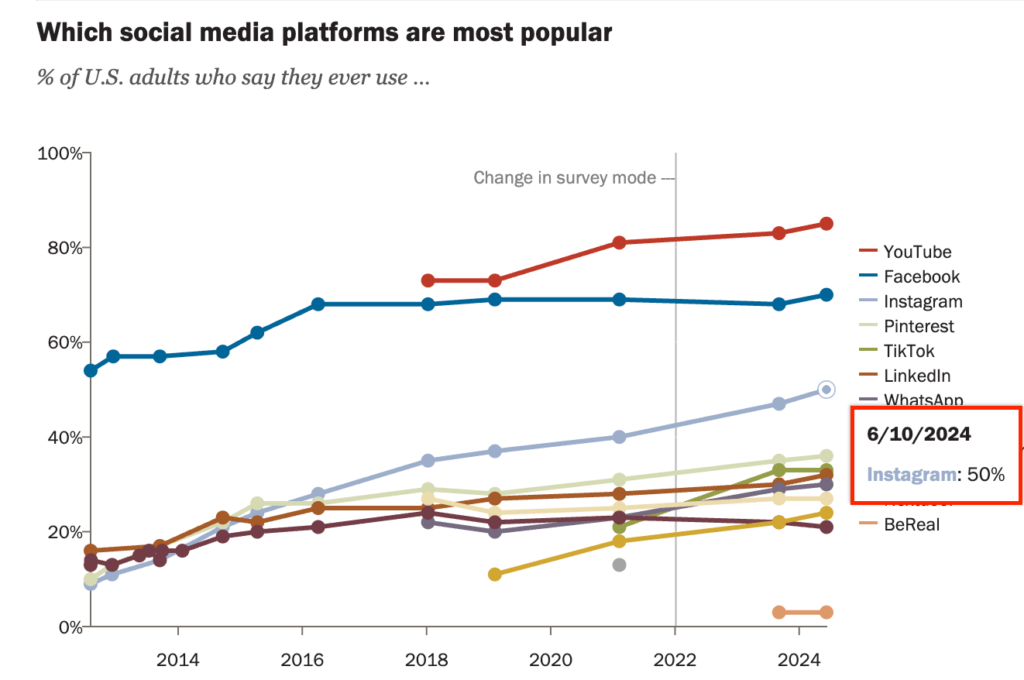
Pew Research Social Media Users Chart

Pew Research Center reports that 50% of U.S. adults use Instagram. This is a tremendous opportunity to connect with potential HVAC clients who frequently engage with social media.


Source: Pew Research Center


Create an Instagram Business Account

The best way to create an Instagram Business Account is to follow this guide from Instagram’s official website. I think you’ll find it easier than you expected.

And since Facebook owns Instagram, you get many of the same great metrics and feedback on posts, and the ability to add pertinent business information to establish your page as an excellent citation for Google rankings.


In the following post, I’ll share some easy tips for stepping up your Instagram marketing for heating and cooling services.

By maximizing your presence on social media for a given platform, you can better allocate your efforts to what is likely to result in more calls and, ultimately, more business for your HVAC company.


Take Great Photos for Instagram Marketing

The visual-heavy aspect of Instagram can make many HVAC professionals groan, imagining it will take a photography background to gain any traction whatsoever. But this isn’t actually the case!

You don’t have to be a natural behind the camera — or even own a fancy DSLR camera — to make your Instagram account pleasing to the eye and a great source of referrals.

Let’s review a few simple tips that you can implement to improve the Posts, Reels, or Stories (videos you can share for a 24-hour period) that you share on behalf of your HVAC business in your Instagram marketing:


Natural Lighting Makes for the Best Photos

Isn’t it great news that you don’t have to keep a small photo studio in the corner of your shop? And aren’t you relieved that my advice isn’t to invest in a bunch of expensive photography lights?

No, you don’t need to do any of that. (Although you can. You do you.) The absolute best, most flattering photos tend to be those that utilize the power of natural light.

Any given consumer camera — and I’m heavily in favor of relying on the camera on your smartphone, to which this still applies —will perform best with plenty of natural light.

You don’t have to understand “manual mode” to take great pictures for your Instagram ads or feed posts, but you’ll benefit from the automatic settings when you let the light hit that lens.

For example, if you’re taking a photo of one of your HVAC technicians (which I highly recommend and will talk more about why in just a second), have them stand near a window during daylight hours and shoot with the window to your back.

Now, direct sun isn’t flattering due to the inevitable squints and overexposure you’ll reap. But daylight coming in through a large window will light your subject beautifully, and the resulting photo will be much more likely to get Likes (that running count below your photos, indicating a user’s appreciation).


Try Different Angles to Get Better Instagram Photos for Your HVAC Page

You may be surprised by how much more interesting your photos are when you try a different viewpoint. For example, it can be flattering for faces to take the picture from ever so slightly above eye level, creating a slimming effect on the face and body.

On the flip side, shooting from below chin level is less flattering. (Most of us have experienced this firsthand and can probably spot our better angles. The truth is, rarely is a flattering angle unique to one person.)

If you’re featuring a specific piece of equipment, a vehicle from your fleet, or a close-up of a recent heating or cooling repair, try framing the focal point in a position other than the center.

It’s our tendency to plop the main thing in the middle, but it’s actually more visually interesting to focus on the person or thing that is more justified to the right or the left.

Think of the frame you’re capturing as a rectangle with three vertical sections broken up into thirds. Imagine where the lines would be separating the rectangle equally.

Take one photo with the focal point in the middle section and another with the focal point in the crease toward the right or left section. In most cases, the latter photo will be more engaging and thus invite more views, likes, and maybe even comments!


Engage with Comments and DMs to Boost Instagram Marketing

I mentioned the algorithm earlier, and engagement is another critical factor that Instagram considers when placing a post on a user’s feed.

Not only does it factor in what that user—or your potential customer—likes and views, but the extent to which you respond to comments and “DMs” (Direct Messages that users can send via the paper airplane icon) can also boost your posts.

Engagement is the name of the game on social media, so staying on top of notifications can improve the performance and visibility of your HVAC company’s Instagram ads.

As is the case with most forms of marketing for HVAC companies, visibility and impressions are essential to driving genuine customers to your business.


Easy Tips for Creating Great Captions for HVAC Instagram Posts

Here’s the key to writing content for your HVAC Instagram posts/ads: Talk to your audience on social media just as you would a potential customer in real life.

Your heating and cooling website content might be more polished and professional. While you should never be borderline unprofessional, you can loosen your tie on Instagram.


  • Remember Your Audience – Never lose sight of the fact that social media is meant to be social. Keep the tone friendly and light, remembering that heavy-handed messaging that looks like an ad will likely be ignored (or even hidden).
  • Technical Jargon is a Buzzkill – You don’t need to “dumb it down” completely, as using industry-relevant terms will make you look authoritative and help your clients feel a little more confident as they pick up on the lingo. But don’t fill captions with a technical description and call it a day; write out a complete sentence, and keep it in layman’s terms whenever possible
  • #HashtagsAreYourFriend – Posts with a gazillion hashtags instantly look like spam. Don’t go overboard; utilizing relevant hashtags is a great way to help drive traffic to your posts. A great way to keep the captions clean is to use a max of one hashtag in the main caption, post it, and then add a few additional hashtags in the comments section. Never use more than five hashtags in total.

When Struggling to Create, Curate!

You don’t have to create every post for Instagram marketing for your HVAC business account from scratch. There is much to be said for tapping into Instagram’s social network aspect and sharing relevant content from other users.


Stealing Instagram Content is NOT the Same as Curating

There is a clear difference between sharing and stealing. If you screenshot a great image from another user and post it as you’re own, you’ve stolen that image. Instead, utilize an app such as Repost to share content on Instagram ethically.

Alternatively, Android, iPhone, and iPad users can utilize Instagram’s native reposting feature to share content without violating copyright or infringing on others’ intellectual property.

Ensure that you review your overall feed and create a balanced mix of your own original content and borrowed/shared content. Incorporate photos of your team, your repairs, and your equipment, as well as images that you find from other logical pages (that aren’t competitors, duh).

Maybe a builder in your service area shares photos of their new development. Repost the image, welcome the builder to the neighborhood, and tag the builder and any associated Instagram pages for the development/neighborhood.


Memes Make People Smile

Now, please don’t let your feed lose its value by cluttering your professional page with silliness; however, sharing a few funnies here and there that are pertinent to heating and cooling issues is a great way to show that you or your company has a personality.

Even with Memes, reposting the right way is essential. If you see an image shared that is linked back to the creator, navigate to the original post and share from there.


Instagram Marketing’s Impact on HVAC Businesses

Instagram reports that over two million advertisers use the platform to drive business results. This is no small figure, and it makes perfect sense for heating and cooling companies like yours to get involved.

As a homeowner, I am far more likely to shift my already-established pattern of checking my Instagram (and yes, I’m one of those 50% adult users) when searching for home service needs, especially if they’re right there in front of me with a beautiful feed or engaging HVAC Instagram marketing ad.


  • plumbing heating and air alliance member
  • contractors of america best digital agency
  • expertise.com best seo agencies in fort worth

Link Building Guide for HVAC Companies in 2025


It’s me, Nolen Walker, the founder and CEO of HVAC Webmasters, a digital marketing agency for heating and cooling professionals. During my 14+ years of first-hand experience working with HVACR businesses, link building is one of the most misunderstood components of a digital marketing campaign.


Key Takeaway

SEO-friendly link building for HVAC companies relies on a combination of local networking and producing unique and high-quality informational content assets.


Business owners come to me confused about the link building process and how it impacts their search results. Unfortunately, there is a ton of misinformation on blogs and social media content regarding backlinks. In addition, Google’s algorithms and policies have evolved to combat link spam.

With so much to unpack, I’ve decided to write a link building guide for HVAC companies based on my 14+ years of first-hand experience launching and managing successful digital marketing campaigns for heating and cooling professionals throughout the United States.


Link Building for HVAC (Guide Cover)

What is Link Building for HVAC Companies?

Link building refers to processes designed to attract inbound links to your HVACR website through outreach, content marketing, and search engine visibility. The ultimate goal of link building is to rank higher on search results for topical keywords.


Impact of Links on HVAC Search Results

Backlinks influence search engine rankings because of website authority (sometimes called Domain Authority or Domain Rating). Of course, not all link building helps websites rank. In fact, black-hat link building tactics can penalize and ban your heating and cooling website from Google search results.

Understanding how to safely build white-hat links is key to succeeding online. Every link should provide helpful information to users.


HVAC Backlink Effectiveness (Graphic)

Authority

Links build a website’s authority. If you’ve used link analysis tools like Moz, Majestic, or Ahrefs, you can observe metrics showcasing a website’s authority.

While each platform has its own metric (e.g., Domain Authority, Trust Flow, etc.), Google does not refer to any third-party metric. However, Google has its own private metrics that likely use similar calculation scores to determine a website’s authority. 


Navigation

Links exist everywhere on the internet, including on your HVAC website. You will link out to external domains and interlink to internal pages on your website.

When users read through a page or article, they may need to refer to another page on the same website. Your job as the webmaster is to create seamless navigation that enhances user experience and validates your topical authority.


Rankings

Make no mistake: link building campaigns exist for ranking purposes. Without a significant end goal like search rankings, businesses would not focus their resources on link building.

While Google’s algorithm considers various other factors, inbound links remain one of the most pivotal ways to gauge a website’s relevance. Of course, white-hat link building requires an understanding of Google’s Quality Guidelines.


Traffic

While rankings are the top priority in a link-building campaign, referral traffic represents another important component. Links from major directory websites like Yelp, Angi’, and HomeAdvisor can lead users from that platform to your website.

Make sure you include your website URL in each directory listing. In addition to directory traffic, HVAC companies can also gain traffic from links on popular blogs. 


Link Quality Factors for HVAC Websites

Though link quantity is a factor in building domain authority, generating random links will not help your website. In fact, Google reserves the right to penalize your website for such behavior.

As part of their algorithm updates through the years, Google has cracked down on link schemes, link spam, and any other variation of manipulative linking practices.

So, how does Google distinguish good links from spam links? Well, they use several indicators that help identify a link’s purpose. For example, a link from a gambling site to your HVAC company website clearly indicates manipulation.

While sketchy links may not get you banned (mostly because any competitor can maliciously build bad links to your website), they certainly won’t help you rank for industry keywords. 


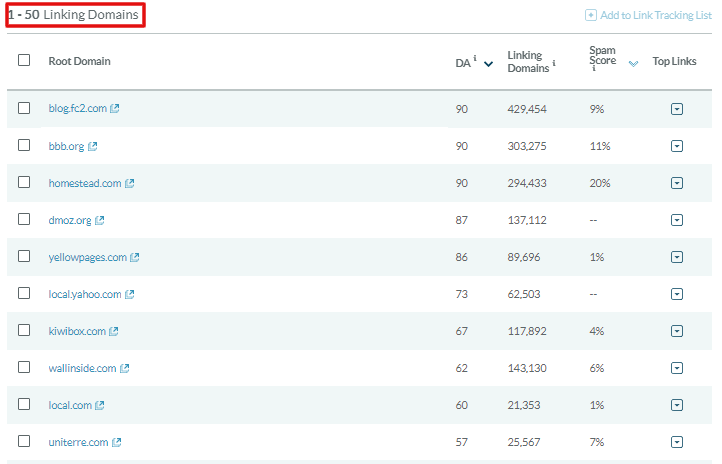
Linking Domains (Moz Screenshot)

Anchor Text

Anchor text is the words or phrases within the linked part of the content. Search engines monitor anchor text for both relevance and possible spam.

Too many instances of the same anchor text indicate link manipulation and may cause a penalty. Conversely, a lack of relevant anchor text may prevent your website from ranking at all. 


Referring Domain

Search engines can often gauge link quality based on the domain from which it comes. If you receive a backlink from a trusted local newspaper, you are far more likely to see tangible results than with a link from a low-level blog. 


Link Relevance

Similarly, a link from a medical website will not transfer as much trust as that from an HVAC resource website. However, the domain itself is not the only relevant identifier.

Getting a link to a blog post about the best HVAC companies in your area is more relevant than getting a link from a blog post about a specific type of air conditioning unit.


Link Placement

Where the content editor places your link partially determines its quality. For example, a link placed in the footer or sidebar of the website holds less weight than one placed within the body content.

Links within body content indicate proper editorial placement and generally enhance user experience, while links in a sidebar or footer generally exist for less relevant purposes.


3rd Party Link Metrics for HVAC Websites

Since Google fails to publicize its link-grading metrics, we must rely on 3rd party platforms like Moz, Majestic, and Ahrefs to gauge a link’s quality. Although Google does not acknowledge such 3rd party metrics, they likely use a similar formula to determine their internal link metrics. Let’s take a look below:


Domain Authority

Moz’s Domain Authority is one of the most widely used link metrics in the SEO industry. It’s easy to measure since Moz offers the MozBar Chrome Extension to all Google Chrome users.

A DA between 20 and 30 is typically great for an HVAC company website. Of course, universally respected brands like Google and Facebook have DAs near or at 100.


Domain Rating

Like Moz’s Domain Authority, Ahrefs uses a Domain Rating metric. Domain Rating is often the most prestigious link metric for hardcore SEO agencies.

Like Moz, Ahrefs offers a free DR checker tool so that any website manager can check their score without paying.


Trust Flow

Majestic uses a Trust Flow metric (TF) to determine a domain’s trust. You can measure TF with a Majestic subscription or use their Free Backlink Checker to get a quick score.

Trust Flows are typically lower than Domain Authority and may be harder to increase using basic link-building tactics.


Types of HVAC Backlinks

Sometimes, website managers lose sight of distinctions between link types. For example, nofollow links transfer less equity than those referred to as dofollow links.

In contrast, internal links transfer more intersite authority than any external backlink. Understanding the different types of links can help you fully optimize your HVAC website


NoFollow Links

Nofollow links come from directory sites like Yelp or social media profiles like Facebook. Any link a user can build manually is considered nofollow.

The tag indicates that search engines should pass less equity from the link since they likely manually built it. While Google does not hold these links in the highest regard, they count as hints for ranking purposes.


DoFollow Links

In contrast, dofollow links pass the most equity from one site to another. Dofollow links refer to links built with editorial control.

For example, a popular HVAC blogger doesn’t have to link to a specific HVAC website within their blog post but instead chooses websites based on their content quality and authority. The best links you can receive are dofollow links with relevant anchor text.


Internal Links

Internal links are links built within your HVAC website. For example, your blog post about the best air conditioners may link to your air conditioner installation page. You’ll notice that pages that topically relate to one another should also naturally link to one another.

Internal links should primarily focus on user experience and help them navigate your website. Anchor text is equally important on internal links since search engines regularly crawl your pages.


Earning Quality HVAC Links

HVAC companies may ask, how do you earn quality backlinks? The answer comes in the form of strategies that generate white-hat links. Remember the difference between acquiring and earning links since there is a clear distinction.

Companies that earn links have a decided advantage over businesses that rely strictly on relationships or even black hat tactics to obtain their links.


Link Earning Graphic

Create Linkable Assets

The best way to earn links is to create content worth linking. When bloggers or reporters write content online, they like to cite authoritative content that supports their premise.

One way to achieve such authority is to rank on search engines for data-driven keywords. For example, ranking for a phrase like How much do HVAC services cost will get you lots of natural white-hat links. 


Network With Local Businesses

Networking offline can result in valuable links pointing to your business website. Whether you sponsor a Little League team or build an organic relationship with other businesses in your community, these connections can be reflected digitally through links.

Ask local entities with a live website to link to you as an endorsement of your company. Of course, you should only ask those who know your business well enough to vouge for its quality and professionalism.


Share Content on Social Media

One of the best ways to earn links is to share your content on social media. You never know who may see your article on Facebook or LinkedIn or who may share it on their own account.

While the chances of going viral with HVAC content remain thin, getting your content in front of the right eye is how you earn quality backlinks.


Establish Your HVAC Company Brand

External websites feel most comfortable linking to established brands for several reasons. First, they don’t have to worry about your credibility since they recognize your brand from afar. Second, they can trust that users who leave their website to yours will have a favorable user experience.

With so many websites published daily, bloggers and other online writers want the convenience of a trusted brand when creating links.


Backlink Monitoring for HVAC Websites

Although backlinks help websites rank, they can also have the opposite effect. We discussed how black-hat link-building tactics can ban your HVAC website from Google.

Similarly, malicious negative SEO attacks are designed to accomplish the same result. For this reason, many websites monitor their backlink profile so they can submit a disavow file if and when they get spam links from external domains.


Excessive Anchor Text

One thing to monitor is your link’s anchor text. If you start seeing dozens of instances of the same anchor text, your links might harm your website.

It’s important to note that weird links will sometimes pick up your title tag and use that as the anchor text. You don’t need to worry about disavowing in these cases since those links have no malicious intent. 


Shady Domains

Look for links from shady gambling, medical, or drug industry domains. These kinds of links can cause immediate red flags and are often used by spammers in negative SEO attacks.

You can also check each site’s spam score using Moz’s MozBar Chrome Extension. Spam scores above 50 typically indicate a problem, although Google does not acknowledge Moz’s spam score internally.


Moving Forward With Link Building

Most SEO agencies will lure HVAC companies into buying links or creating “link bait” to attract backlinks from various websites. Based on my 14+ years working with HVAC companies, I advise them to focus on relevant, local partnerships, like the Chamber of Commerce or their nearby Little League baseball team.

These links, which I sometimes call “Community Links,” are the most powerful for small businesses. Google can use these types of backlinks to assess your authority within the context of your city and your industry.

While I wish I could give everything away for free, rest assured that my agency, HVAC Webmasters, has mastered the link earning process for heating and cooling professionals. If you want to discuss my services in detail, please contact me by filling out a form.


  • plumbing heating and air alliance member
  • contractors of america best digital agency
  • expertise.com best seo agencies in fort worth

Ultimate HVAC PPC Guide: How To Get Leads and Boost ROI


HVAC PPC campaigns are an obvious way to expose potential customers to your company and services, especially during the peak winter and summer seasons.

PPC Ads sound great. They ensure your company appears above organic search results for a litany of HVAC keywords that historically drive business to local contractors.

But where do you start as a local heating and cooling contractor investing in pay-per-click in 2025? And what challenges will inevitably arise?


As the founder of HVAC Webmasters, I’ve been helping local companies like yours generate qualified leads online for 15+ years.

The following guide outlines the keys to HVAC PPC success, including how to generate high-quality leads and boost ROI.


Key Takeaway

PPC for HVAC companies works best as part of a broader strategic marketing campaign.


HVAC PPC (Guide Cover)

What is HVAC PPC?

PPC, or pay-per-click, is a digital advertising model that empowers local HVAC companies to promote their services and/or products through clickable ads.

Advertisers bid on a click’s monetary value (via platforms like Google) and are charged a fee each time a user clicks through their advertisement.


Types of HVAC PPC Ads & When to Use Each

Google offers a range of PPC ad formats, each with unique benefits and drawbacks. Below, I’ll outline the specific ad types and explain how your HVAC company can take advantage of each.


Search Ads

Search ads emulate a standard SEO result and include a URL on your landing page. Search Ads may appear above organic results and toward the bottom of the search engine results page (SERP).

While search ads are intended to resemble traditional organic search results, they do include the word “Ad” to notify searchers that they are not, in fact, organic results.


When to Use: You are a newer HVAC company without many reviews or organic rankings.


Display Ads

Display ads combine text and images and appear throughout Google’s display network, reaching people “where they are” as they browse the web.

Examples of areas in which display ads appear include Google-owned platforms like YouTube and Gmail.


When to Use: You are somewhat established and ready to start growing your consumer base.


Local Service Ads

Local Service Ads, or LSAs, are technically outside the scope of PPC because they utilize a pay-per-lead model.

However, HVAC companies often view LSA through the lens of pay-per-click advertising and appreciate its added emphasis on local consumers.

Consumers tend to trust Local Service Ads more than search or display ads because the listed businesses have been screened, and searchers can quickly view their Google reviews alongside the ad.


When to Use: You’ve accumulated a substantial number of Google reviews and are looking to generate more leads efficiently.


Retargeting Ads

Retargeting or remarketing ads utilize browser cookies to reengage with previous website visitors on other platforms, such as Google, Facebook, Instagram, YouTube, and TikTok.

These ad types tend to convert at a higher rate than others because the prospect has already demonstrated some level of interest in your services, making them a warm lead rather than a cold one.


When to Use: Your website receives a significant amount of relevant monthly traffic based on your Google Analytics and Google Search Console data.


Video Ads

HVAC companies can incorporate video ads into their PPC strategy using YouTube’s various video ad options, which are:


  • Skippable In-Stream Ads
  • Non-Skippable In-Stream Ads
  • In-Feed Ads
  • Outstream Ads
  • Masthead Ad

If you’ve ever browsed YouTube (which most of you have), you’ve probably seen each of these ad types on your screen. 

For video ads to produce a positive ROI, they must quickly identify a consumer pain point and provide an appealing solution.


When to Use: As an owner (or your staff), you have the ability and savvy to capture appealing video content for your business.


Paid Social Media Ads

Paid social media ads often involve video ads (as noted above) but expand beyond YouTube to Facebook, Instagram, TikTok, and other platforms.

While video ads have emerged as the most popular form of social advertising, platforms also allow ads with still images.

Since Meta owns both Facebook and Instagram, HVAC companies can advertise on both platforms through a single Meta Ads account.


When to Use: Your company has established a digital presence on Google and multiple review sites and wants to expand to reach more users.


Setting Up a High-Converting HVAC PPC Campaign

A profitable HVAC PPC campaign requires a strong foundation of goal setting and a complementary marketing strategy.

After establishing that foundation, understanding the nuances of keyword research, budgeting, and landing page optimization will dictate your ultimate success or failure.


Goals and Budgeting

What are your PPC goals, and how will you maneuver your budget to reach them? Start by selecting one of the following goals:


  • Awareness
  • Website Traffic
  • Lead Generation
  • Sales
  • Retargeting

Once you identify your primary goal, set a budget for how much you are willing to spend per click, day, month, and campaign.

A monthly HVAC PPC budget typically ranges from $100 to $5,000, but it varies significantly based on your specific financial benchmarks.


Keyword Research

While keyword research is essential to SEO success, it’s even more influential on the quality of your PPC campaign. Effective HVAC PPC campaigns target high-conversion keywords that lead to new customers.


High-Intent HVAC Keywords

High-intent keywords come from homeowners actively seeking heating and cooling services from a local provider. Here are some examples:


  • AC Repair Near Me
  • HVAC Installation Dallas
  • Emergency Furnace Repair

Keyword Research Tools

HVAC companies must use tools to estimate the cost per click on specific keywords and their estimated search volume and difficulty.


The best keyword research tools for PPC include:


  • Google Keyword Planner
  • SEMRush
  • Ahrefs

Negative Keywords

Unlike SEO, PPC also introduced “negative keywords,” which are terms and phrases in which you don’t want your ad to appear.

Identifying negative keywords helps reduce ad spending, optimize your budget, and prevent wasted clicks from reaching your landing page.


Examples of negative HVAC keywords include:


  • HVAC Jobs
  • DIY AC Repair
  • Cheap Furnace Repair

Creating Effective HVAC PPC Ads

Even with a flawless strategy, your campaign depends on the quality of your ads. Considering this, it’s essential o write copy that converts, utilize ad extensions and perform A/B tests.


Ad Copy That Converts

Your ad’s copywriting requires an actionable headline accompanied by a compelling description and a user-friendly call to action (CTA).


Some of the best practices include:

  • Actionable Headlines
  • Compelling Descriptions
  • User-Friendly CTAs
  • Sense of Urgency

Leverage Google Ad Extensions

Ad extensions serve two purposes: to expand visibility and to increase engagement. Your options for ad extensions on Google include:


  • Sitlelinks
  • Callouts
  • Phone Numbers
  • Locations

HVAC companies can use multiple extensions on a single ad to maximize visibility and engagement.


A/B Tests

I cannot stress enough that ongoing A/B testing is the key to maximizing PPC ROI for HVAC companies.

You might wonder which components of your ad should be included in an A/B test. I will list them below:


  • Headlines
  • CTAs
  • Ad Copy
  • Landing Pages

Remember that these components must be tested separately in what are called single-variable tests. Otherwise, you won’t know which of these levers changed the response to your ad.


Optimizing PPC Landing Pages

Users who click through your ad reach a landing page, which can make or break your entire campaign. Imagine targeting the perfect keywords with an optimized budget, only to have your users drop out on your subpar landing page.

Below, I’ll detail how to optimize your landing page for conversions.


Landing Page Design

A landing page should be promotional and “in your face” so that users will make quick decisions. You don’t want anything that resembles an SEO article or a standard business website homepage.

Instead, you want to quickly hook the user by addressing their pain point and offering a swift, time-sensitive solution.

The length of your landing page will depend on which keywords you target. For example, “emergency ac repair” should lead to a concise landing page.

Alternatively, the keyword “ductless mini-split installation” is better suited for a more extended landing page as it requires more user consideration.


Speed and User Experience

One way SEO and PPC landing pages overlap is their shared need for speed and positive user signals. A slow landing page will cause immediate dropouts, allowing your competitors to steal your would-be customers from under your nose.

Similarly, poor user experiences, especially in the case of landing pages that are ill-designed for the mobile smartphone user (which is the majority), will plummet your conversion rates.


Here is how you can optimize for speed and user experience, especially on mobile devices:


  • Fast Hosting
  • Mobile-First Design
  • No Pop-Ups or Interstitials
  • Compressed, WebP format images
  • Clean Codebase

Optimizing your landing page is crucial for maximizing your ROI and qualified lead generation from your previous PPC campaign efforts.


Advanced HVAC PPC Optimization Strategies

PPC has been around for decades, and some of the more experienced heating and cooling companies I speak with are sick of the basic advice provided in guides like these.

As a token of my appreciation for my 15+ years of working with thousands of HVAC contractors, I’ve decided to include some more advanced HVAC pay-per-click strategies in this guide.

Below, I will cover concepts like Google’s Quality Score, AI-driven smart bidding, and measuring landing page relevance.


Improving Quality Score

When dealing with Google Ads, Quality Score significantly influences your cost per click (CPC). Google grades ads based on the keyword, expected click-through rate, ad copy relevance, and landing page user experience.

Higher Quality Scores naturally reduce cost per click (CPC), resulting in superior ad placements for your HVAC company.


  • Landing Page User Experience: Google evaluates your landing page’s user experience based on metrics such as bounce rate, time on page, and other interaction signals. Page speed, CTAs, and mobile usability all impact Quality Score.
  • Expected CTR: Google anticipates the chances of a user clicking on an ad, influencing Quality Score. The urgency of your ad copy and CTAs helps determine the expected CTR.
  • Ad Relevance: Google knows the intent of each PPC keyword and grades your ad based on how precisely it meets that intent. Using descriptive and precise language can increase relevance.

AI-Driven Smart Bidding

HVAC companies can manually bid on individual keywords, but they must constantly monitor their campaign and its data.

The alternative to this is AI-driven smart bidding, which uses machine learning to automatically optimize cost per acquisition (CPA) and maximize conversions.

Google’s AI-driven smart bidding looks at user location, search history, device type, time of day, and other factors to remove guesswork and optimize bids.


Tracking & Measuring HVAC PPC Performance

For consistent ROI, HVAC companies should track and measure PPC campaign performance while monitoring key performance indicators (KPI) to evaluate areas for improvement or adjustment at scale.


PPC metrics that HVAC companies should track include:


  • Click-Through Rate (CTR)
  • Cost Per Click (CPC)
  • Cost Per Acquisition (CPA)
  • Return on Ad Spend (ROAS)
  • Conversion Rate

Businesses can aggressively utilize Google Analytics and Google Tag Manager in conjunction with the Google Ads platform to track campaign performance.


How to Adjust Campaigns to Improve ROI

What should HVAC businesses do if their campaigns fail to hit specific metric benchmarks? Consier the following:


  • Pause Keywords: Stop spending on low-conversion keywords and put those resources toward top-converting terms.
  • A/B Testing: Test ad variations to identify the highest-converting copy and CTAs.
  • Expand Service Areas: Utilize geo-targeting to extend your ads into nearby cities.
  • Adjust Landing Pages: Look for innovative ways to improve the landing page experience.

Common HVAC PPC Mistakes & How to Avoid Them

While PPC has a great deal of upside, its downside is jarring. I’ve seen countless HVAC businesses go bankrupt due to ill-conceived PPC campaigns, often initiated by HVAC marketing agencies that employ black-box billing techniques.


Here are some of the mistakes I see and how you can avoid them:


Ignoring Negative Keywords

When HVAC companies or their advertising agencies think they are above excluding keywords from their campaigns, they are in for a humbling experience.

Draining your budget with irrelevant keywords like “free,” “cheap,” or “DIY” saps your budget and lowers your conversion rates.


Overbidding

Overbidding results from a lack of budgetary discipline and an ignorance of Google Quality Score. Google will increase costs per click (CPC) for ads it projects will fail.

Conversely, a highly relevant ad with an applicable user intent is the key to driving down CPCs.


Funneling Clicks to Website Homepage

Directing Google Ads clicks to your website homepage is a waste of money because it is too general to convert highly targeted users.

While you may still convert some of your clicks, you will lose out on a high percentage of those seeking content tailored specifically to their user intent.


Incorrectly Tracking Conversions

Tracking conversions is essential to a successful PPC campaign, but if set up incorrectly, it can also generate false positives.

Only use trusted tracking tools, such as Google Analytics and Google Tag Manager, and ensure they are tracking the right actions.


Thinking PPC Agencies are a Secret Sauce

I’ve worked with HVAC companies for over 15 years, and almost all of them have been taken advantage of by a PPC agency or company.

Blowing your money on ad spend is not a long-term solution. It keeps your business in the gig economy, and you become a contractor instead of a company. You also neglect your digital brand.

While PPC can work with proper oversight, it is best used in conjunction with a digital branding strategy using my software tool, DataPins.


Next Steps for HVAC PPC Marketing

Successful PPC campaigns are built on strategic keyword targeting, engaging ad copy, strong landing pages, and continuous campaign adjustments.

Whether you are manually running PPC campaigns for your HVAC business or outsourcing to an HVAC PPC agency, the goal is to generate qualified leads for your company and maintain a significant ROI.

As the owner of a digital marketing agency that has worked with HVAC contractors for more than 15 years, I’ve seen the successes and failures of PPC investments.

I know that digital branding must expand beyond the scope of paid advertising, which is why I invested millions to develop software called DataPins.


If you are ready to leverage pay-per-click marketing as part of your broader digital marketing efforts in 2025, contact my agency, HVAC Webmasters, to discuss your options.


  • plumbing heating and air alliance member
  • contractors of america best digital agency
  • expertise.com best seo agencies in fort worth

150 Outstanding HVAC Blog Topics & Ideas for 2025


Best HVAC Blog Topics for 2025

So, you can’t think of any topics for your HVAC blog? Do not worry; HVAC Webmasters will present 150 great blog topics you can use on your HVAC company website.

These topics may also spark additional ideas for new topics that you can use as future blog posts.


HVAC Blog Topics (Blog Cover)

Take a look at our top five blog topics below:


HVAC SEO Webmasters Logo

Steal These 5 HVAC Blog Topics

  • 4 Great Advantages of Preventative A/C Maintenance
  • 7 Healthy Ways To Reduce Home Allergens
  • 9 Refreshing A/C Tips for Summer
  • 6 Best Heating Units for Energy Efficiency
  • 3 Tips for Choosing The Right HVAC Contractor

1) Advantages of Preventative A/C Maintenance

Urging people to invest in preventive a/c maintenance can help drive business to your company. If people understand the risks of ignoring their HVAC units, they may feel inclined to pay more attention and spend on regular services.

The goal is to convince readers that short-term maintenance costs less annually than waiting for major HVAC repairs. 


2) Ways To Reduce Home Allergens

Part of blogging is casting a wider net than your specific service pages. People know when they need AC repair, but what about other cases where they could benefit from your services? One of the most popular is reducing home allergens.

Homeowners want to live a better lifestyle, and declining home allergens can help them achieve that goal. Outline how HVAC services can help them combat allergies.


3) A/C Tips for Summer

Seasonal blog posts can help keep your content fresh and readers engaged. Summer, in particular, is a great time to post about air conditing tips. For scorching climates, posts like these can lead to readers investing in your AC repair services.

If nothing else, you can generate excellent seasonal traffic that tells search engines how users engage with your content.


4) Best Heating Units for Energy Efficiency

Remember when we said that readers want to save money? The same notion applies to any blog post about energy efficiency. Aside from younger homeowners being more environmentally conscious, all homeowners want to save money.

So write your post introducing them to the most energy-efficient heating units, and you may find yourself with some new customers.


5) Choosing The Right HVAC Contractor

For the most part, blog posts should serve the reader and not blatantly endorse your own business. However, you can craft a post about choosing the right HVAC contractor. Explain what should go into their decision-making, whether they choose you or another business.

If you can subtly indicate how your company meets its needs, they will likely pick your services over competitors.


Full List of 150 HVAC Blog Topics


TopicSearch Volume
how to get rid of drain flies18,100
how to reset honeywell thermostat6,600
how to clean HVAC ducts yourself5,200
signs you need a new furnace4,800
best HVAC systems for cold climates4,500
winter fan direction4,400
how to choose an energy-efficient AC4,300
reasons your AC is leaking water4,200
how to improve indoor air quality4,100
benefits of zoning your HVAC system4,000
what size HVAC system do I need3,900
how often to change HVAC filters3,800
how to save on heating costs in winter3,700
furnace blowing cold air3,600
difference between gas and electric furnaces3,600
how to prevent frozen pipes in winter3,500
why is my thermostat not working3,400
how to install a smart thermostat3,300
how to reduce HVAC noise3,200
signs of a failing heat pump3,100
why is my AC not cooling3,000
heater blowing cold air2,900
how to seal air leaks in HVAC ducts2,900
benefits of regular HVAC maintenance2,800
how to balance humidity levels at home2,700
best HVAC systems for allergies2,600
how to clean your AC condenser2,500
what does freon smell like2,400
cost of replacing an HVAC system2,400
how to troubleshoot furnace problems2,300
what to do when your AC stops working2,200
how to prepare your HVAC for winter2,100
signs your AC unit is too old2,000
pex vs copper1,900
benefits of upgrading to a programmable thermostat1,900
how to fix uneven cooling in your home1,800
how to safely clean HVAC vents1,700
best attic insulation1,600
common HVAC installation mistakes1,600
pros and cons of ductless mini-splits1,500
how to prevent mold in HVAC systems1,400
how to tell if your AC needs Freon1,300
why is my heater making noise1,200
what is a dual fuel HVAC system1,100
how to maintain an HVAC system in a rental property1,000
what is the lifespan of an HVAC system900
what is refrigerant880
how to improve AC efficiency850
how to reduce energy costs in summer800
when to replace HVAC filters750
benefits of an HVAC tune-up700
how to fix high humidity indoors650
what is SEER rating in HVAC600
ac keeps turning on and off590
do you have to use distilled water in a humidifier590
how to tell if you have a heat pump590
how to winterize an HVAC unit580
cost of HVAC duct cleaning550
how to choose the right HVAC contractor500
why does my ac keep turning off480
reasons for high electricity bills in summer480
best thermostats for HVAC systems460
how to fix a broken thermostat440
why is my AC freezing up420
how to check your furnace filter400
ac compressor cycles on and off every 5 seconds390
what is a blower motor390
how does geothermal heat work390
vented vs ventless gas fireplace390
what to do when your heater won’t turn on380
how to reduce drafts in your home360
what is an HVAC zoning system340
how to replace thermostat battery320
indoor ac coil freezing up320
how to clean HVAC evaporator coils320
how to increase air circulation in your home300
when to schedule HVAC maintenance280
how long does pex pipe last260
furnace fan not turning on260
ac vent temperature chart260
cost of replacing AC coils260
how to insulate HVAC ducts240
benefits of upgrading to a high-efficiency furnace220
thermostat types210
how to fix low air pressure from vents200
why is my AC compressor not working180
ice build up on ac unit170
how to clean reusable air filters160
how to detect gas leaks in HVAC systems140
how to avoid HVAC scams120
weak air flow from vents in house119
air conditioner smells like sewer110
top 10 ac problems110
best time of year to replace HVAC system100
air conditioner blowing white mist90
how to clean HVAC drain line90
signs of clogged HVAC vents80
what size filter for my furnace70
how do i know if my ac is broken70
ac condenser submerged in water70
how to tell if pilot light is out on furnace70
outside ac unit makes loud noise when stopping70
how to prevent HVAC breakdowns70
how to troubleshoot air handler issues60
can you replace just the inside ac unit50
ac tips for summer50
how to calibrate a thermostat50
will a bad thermostat cause the ac not to work40
can an ac unit explode40
smoke coming from air conditioner40
difference between furnace and air handler40
how do i stop my heater from tripping the breaker40
how to reduce allergens in HVAC systems40
can i turn on my ac when it’s raining30
how long should a window ac unit last30
ac thermostat not getting power30
how do you know if your central air needs freon30
outside ac unit not turning on30
most efficient heating and cooling system for a house30
cost of upgrading to a geothermal HVAC system30
how to reduce allergens in your home20
best heating units for energy efficiency20
how to choose an hvac contractor20
how to replace HVAC ductwork20
benefits of UV light in HVAC systems15
benefits to preventative ac maintenance10
how to handle HVAC emergency repairs10
how to select the right HVAC filter5

Download The 150 HVAC Blog Topics PDF


Blogging Guide for HVAC Companies

Most successful HVAC companies don’t have time to publish regular blog posts while managing their HVACR business.

As a result, contractors often ask questions like, how do you find blog topics? How do you find time to write blogs?

The solution for most companies is to hire a content marketing agency to write and publish blog content.


Choosing Additional Blog Topics for HVAC Companies

HVAC Webmasters provided five can’t-miss topics for your heating and cooling blog, but eventually, you’ll need more posts. That’s why we will outline how anyone can find vital blog topics that bring in traffic through Google search. 


HVAC Informative Blog (Screenshot)

Keyword Research

The best way to find blog topics is through keyword research tools like MOZ and SEMRush. You can find your competitor’s blog topics by seeing what keywords their domain ranks for. You can also research primary keywords like HVAC and AC Repair to see which related keywords come up.

Some of them may spark an idea for a new blog topic. If you have a general idea in mind, search for the phrase and try to identify the highest-volume keyword relating to that topic. 

Enter your competitor’s website URL into a tool like Moz Keyword Explorer to see which informational queries they rank for on Google. You can find lots of potential blog topics using this method.

Make sure to add unique value to the topic rather than merely rehashing a competitor’s blog.


Blog Topic Keyword Research (Screenshot)

Keyword Cannibalization

One thing to avoid is keyword cannibalization. For example, if you already have a service page titled AC repair in Dallas, TX, you don’t want to write a blog post with the same title.

Generally speaking, your blog posts should not offer services but rather explain different aspects of your services or answer common questions. 


Topical Clusters

Blog posts should be more conversational than specific service pages. However, if you find yourself covering a topic similar to one of your service pages, be sure to link from the blog post to the service page to build topical authority.

Google will then choose which of your pages to rank based on the user’s query. For example, AC repair services should bring up your service page, while something like AC problems during summer should bring up one of your blog posts.


The Purpose of HVAC Blog Posts

You may ask yourselves whether blogging is even worth it for HVAC companies. After all, limiting your content to service pages would require much less effort.

However, to answer that question, you must first understand the function of a blog for a website, specifically a service-based company website. 


Blogs Serve as Linkable Assets

You may or may not know much about link building for HVAC, but it can influence your website rankings on Google search. Building links without blog posts may be dangerous since most websites aren’t going to link to a page about AC repair.

More sites will, however, rank to a post about common AC problems, for example. With this in mind, blog posts can serve your website with links, regardless of whether they bring customers directly.


Blogs Keep Your Website Fresh

For years, the SEO industry harped on Google’s freshness ranking factor, which gauges how frequently a website is updated. While the initial craze was misleading, blog posts can freshen your website and encourage regular crawling from search engines.

While this won’t guarantee you a specific ranking position, it will showcase activity and likely increase user engagement. Thus, blog publishing has a minimal downside as long as you steer clear of repetitive content and keyword cannibalization.


Blogs Are Worth Sharing on Social Media

Another excellent benefit of blog posts is their shareability on social platforms. You wouldn’t want to share a service page on your Facebook timeline, but you would like to share an informative blog post.

Users are more likely to engage with blogs on social media because of their catchy headlines and conversational tone. Who knows, one of your posts may even go viral.


More HVAC Blog Ideas

Still not convinced that blog posts will be worth their trouble? We understand your concerns. After all, if you review competitor blogs, you might find several thin posts that seem like a waste of space and energy.

Not all blog posts are worthwhile, but consider some ideas to ensure your posts make a difference.


Embed Videos Within Your Posts

Consider embedding YouTube videos within your blog posts if you want to catch people’s attention. For example, recording videos of your jobs may be realistic with modern phone technology.

You might even outline a specific job in one of your blog posts and keep users engaged with the attached video. Google loves rich media, and when combined with informative text, it can boost search rankings.


Create Funnels Using Blog Posts

Another great idea is to use a blog post at the top of your sales funnel. You can think of a blog post as casting a wide net on potential customers. The post itself won’t create a sale, but it may place the reader in a funnel that results in an eventual sale.

Creating internal links to your service pages from within the post is one way to build a great funnel.

Another option is to install a pop-up plugin that launches a pop-up on your blog posts. Users will then submit their contact information in exchange for a discount code or something to that effect.


Blog Post Alternatives for HVAC Companies

Since the SEO value of blog posts has decreased over time, HVAC companies should look for other content types to enhance their website’s SEO. The best option is DataPins, which enhances EEAT (experience, expertise, authority, and trustworthiness) and increases on-site conversions.

DataPins showcases recent jobs from your service and routes them to the appropriate website page. For example, your furnace repair service page will showcase your most recent furnace repair jobs.

The more pins you drop (which include schema markup, geo-coordinates, captions, and photos), the higher you can rank for relevant keywords.


Demonstrating E-E-A-T Through Blog Posts

Google’s Helpful Content Update was designed to favor content produced for users rather than search engines. Unfortunately, traditional HVAC blogging has been geared towards “tricking” search engines into indexing more of your website pages. This strategy is now a detriment to your site’s overall rankings.

To create blog topics for users, first, you must demonstrate E-E-A-T, which stands for expertise, experience, authoritativeness, and trustworthiness. In simpler terms, your posts must provide original insights that only you can provide based on your experience in the heating and cooling industry.

Examples of tangible E-E-A-T include statistics from internal data, images of recent jobs, “pins” from the DataPins app, and embedded YouTube videos of you and your staff. In many cases, your blog post titles will be similar to traditional HVAC blogs but will incorporate veritable E-E-A-T that helps the users first.


  • plumbing heating and air alliance member
  • contractors of america best digital agency
  • expertise.com best seo agencies in fort worth

The Essential HVAC Google Ads Guide (2025 Update)


Google Ads (formerly known as AdWords) is an online advertising platform for HVAC companies and other businesses to promote their services through ads on Google Search, YouTube, and other web entities within Google’s Display Network.

Below, HVAC SEO Webmasters outlines everything you need to know about Google Ads for HVAC.  


Key Takeaway

Google Ads are a quick way for HVAC companies to reach local customers on Google search results (and other Google-related platforms)


Google Ads for HVAC (Blog Cover)

Google Ads Basics for HVAC

One of the essential assets that Google Ads affords its customers is audience targeting. This is crucial for HVAC customers who run a local business.

After all, what good would it do to have your ads run in New York when you operate in Kentucky?

Understanding Google Ads’ basics prevents your HVAC company from overspending on advertising campaigns.


Google Ads Dashboard (Screenshot)

Geo-Targeting

The first thing you need to know about Google Ads for HVAC is that you can pinpoint a specific display location for web surfers. Geo-targeting will help you reach people that you can reasonably service. 


Keyword Research

The second thing you need to know is which keywords you choose and bid on are very important. We will get to the bidding process in a bit. You must ensure you have a list of keywords you want to rank.

For example, if you want an ad that promotes your A/C tuneup service, you would choose keywords that are directly related to A/C tuneup, like “AC tuneup services,” “AC efficiency,” “Air conditioner maintenance,” and the like. 


Ad Appearance

Next, you can choose how your ads appear on actual searches and which keywords to use.

For example, you can display your ads only when the exact keyword used to search matches the keyword(s) you selected for your ads.

You can also set the broad match option to display your ad for specific keywords and search queries. one or more of the keywords you have selected for your ad. 


Bidding

Lastly, you should know that Google Ads works on a bidding system.

You can’t simply pay for an ad based on a specific keyword you want to target and hope it will reach the top rankings.

Google Ads show up at the top of search engine results pages. But you will have to bid for the top spot. 


A Primer on Google Ads for HVAC

Now that you know some of the basics of Google Ads for HVAC, let’s consider how you can maximize your investment.


Headline Practices

First and foremost, your headlines must align with the content visitors will read or hear about when they click the ad.

So if your ad headline reads “Furnace Repair,” you better ensure the landing page is at least chiefly about furnace repair. Also, it helps to include the keyword in your headline. 


Free Extensions

If you pay for Google Ads, you can access free ad extensions. Ad extensions allow more information to be displayed along with your basic ad.

This information can include specific links to pages on your website, contact information, a link to your location or service area via Google Maps, promotional offers you may be running, and more.

Google also offers you tools to track the effectiveness of your extensions. 


Remarketing Ads

Remarketing or retargeting ads display ads to people who have interacted with your website in the past, or have demonstrated interest in your services.

Ads can appear on any site within the Google Ads network and are very effective.

Retargeting ads give businesses an average boost of 43% in conversion rates


Use Conversion Tracking

Conversion tracking is another Google tool, and it’s invaluable if you use Google Ads for HVAC.

Conversion tracking gives you critical insights into how well your ads are performing.

The data it provides can help you tweak your ads as necessary and allow you to calculate your advertising ROI accurately. 


The 5 Google Ad Types


There are five main types of Google Ads.


  • Search Ads: show up on relevant Google search engine results pages. 
  • Video Ads: Run before, after, or during YouTube videos. 
  • Display Ads: These are seen on many Google partner websites.
  • App Ads: Appear on various mobile apps within Google’s marketplace. 
  • Shopping Ads: Displays pricing information and ads on relevant Google search engine results pages. 

AI for Google Video Ads

The emergence of AI empowers Google video ad campaigns to auto-optimize for users viewing YouTube on various devices and placement areas.

Google’s AI feature can convert existing assets like text and images into video ads and then adjust them for various formats (i.e., vertical dimensions for YouTube Shorts).

The “Trim video” feature converts long-form videos into reduced bumper ads (six seconds) and allows voiceover audio to highlight a specific HVAC service.


The video AI feature can prioritize one of three goals:

  • Awareness: Maximize the visibility of video ads
  • Consideration: Increase the number of engaged views of video ads
  • Conversion: Optimize video ads for a conversion goal like lead generation or website traffic


Quick Google Ads Tips for HVACR

It’s essential to understand every keyword your ad campaign targets and why. Blindly bidding on recommended keywords is a common pitfall for novice HVAC companies.

Here are a few extra tips to help you get the most out of Google Ads for HVAC companies:


Target Less Popular Keywords

If your advertising budget is scant, bidding on less competitive keywords that are still relevant to your services may be more beneficial. 


Invest in Good Copy

No matter how much you pay for your ad, it will be worthless if your landing pages have a poor headline or poorly written content.


Take the time to write compelling ad copy or hire an agency/freelancer.


Closely Monitor Performance

Keep a watchful eye on how many new HVACR leads you get from your Google ads.

Google Ads can be highly effective when properly analyzed. However, it’s essential to monitor their performance regularly.

You can even tweak high-performance ads for better conversion.


Google Ads Management Services

At HVAC Webmasters, we specialize in PPC ad campaigns for HVAC contractors. We can help you advertise on Google, Bing, and mobile platforms.

We can ensure your ads reach the right audience, support your ads to rank higher, and increase your sales.

Learn more about how our PPC ad services can bolster your conversions by talking to us.


  • plumbing heating and air alliance member
  • contractors of america best digital agency
  • expertise.com best seo agencies in fort worth

HVAC Facebook Ads: 11 Suggestions To Consider in 2025


HVAC Facebook ads offer intriguing benefits for growing your business and getting more heating and cooling customers in 2025.

Generally, HVAC contractors want to target homeowners in need of home services. You can achieve this with Facebook Ads for HVAC.

For example, Facebook allows you to utilize its AI-driven Advantage+ audience targeting to reach potential customers for an affordable cost.


Cost of Facebook Leads for HVAC Companies

The process of putting up your ads on Facebook may not be as time-consuming or expensive as you think, either. Nowadays, clicks from Facebook ads cost an average of just $0.69 per click.

That’s a paltry price when you consider the sheer number of people who use Facebook daily and the number of people your ad can reach. 


Facebook Ad Tips for HVAC Companies

The HVAC industry is very technical, and as a contractor, you may not have the time or expertise to devise an effective Facebook ad campaign. But that doesn’t change the fact that HVAC Facebook ads can hugely impact your business. 

If you have never considered using HVAC Facebook ads, now is certainly the time. If you are interested or already have a social media advertising campaign in place, we want to help you make it more effective.

In the following guide, HVAC Webmasters will highlight tried and true Facebook ad strategies to help you get the highest ROI on your social media ad campaign. 


HVAC Facebook Ads Cover

1) Invest in Facebook Video Ads

Five hundred million people watch 100 million hours of video content on Facebook daily. 100 million hours! That’s an astounding figure, but ask yourself this question: Is your HVAC business getting a piece of that pie?

Facebook video ads can be beneficial as the medium steadily takes over static ads. However, you must be careful about the kinds of video ads you post on Facebook.

We suggest including captions for anything said in your advertisement because 85% of people watch video ads with the volume turned off. You may not need anyone speaking at all.


Videos displaying infographics with narrative captioning and some affordable, public-domain music playing in the background can be beneficial for getting your point across. 

The best HVAC Facebook Ads examples incorporate a video that engages users while they scroll through the popular social media platform. Remember, users don’t log in to Facebook with the intention of buying things but will engage with content that entertains them.


2) Keep Your Ads Short

Did you know that Facebook allows you to create video ads that are as long as 240 minutes? That’s a lot of creative freedom, but when was the last time you watched an ad that was longer than a movie? The best practice is to keep your video ads short.

The American attention span is getting shorter almost every year. Nowadays, you can get your point across in just a few seconds without losing your target audience’s focus. GIF (Graphics Interchange Format) is an excellent tool for creating cheap, short, and compelling ads for your HVAC business. 

Concise Facebook Ads perform better for HVAC companies than long and complicated advertising.


3) Optimize for Mobile

People watch Facebook video content on their phones more than half the time. Nowadays, you must optimize every aspect of your online presence (your website, landing pages, etc.) for mobile. The same goes for your static and video HVAC Facebook ads.

Be aware that just because your ad has earned you many clicks on a desktop doesn’t mean it will play well on mobile devices. Smaller file ads usually work better for mobile users, but test all your Facebook ads on a mobile device. 

Most Facebook users access the social media platform from their mobile app, making optimizing smartphone ads imperative.


4) Use the Facebook Ads Manager App

The Ads Manager app is an excellent tool for any HVAC technician or contractor who doesn’t have much time to create Facebook ads.

While you should always do your best to craft thoughtful and compelling ads, sometimes you just need the ability to implement your ad ideas from wherever you are.

The Facebook Ads Manager app comes in very handy. It allows you to create basic ads right from the app.


Within the app, you can create new ads, delete old ones, see how your current ones perform, and manage your Facebook ads budget and payment. It even allows you to select a target market for your ads.

While some ad creation features are still unavailable on the mobile app, it’s still a convenient tool. 


Source: FB Engineering


5) Leverage Remarketing

Facebook ads offer an excellent opportunity for remarketing, as the platform enables targeting potential leads across five distinct categories.

These include individuals who have engaged with your business through in-person interactions, phone calls, website visits, or Facebook connections, among other means.

Retargeting provides a valuable chance to convert undecided leads by targeting them directly with your ads. 


6) Conduct Simple A/B Testing

A/B testing is a method of gauging what is working in your ad campaign and what isn’t. You can easily and quickly apply this method to your HVAC Facebook ads. 

The A/B testing method involves making a small but definitive change to your current ad(s) and observing how your audience responds.

In the case of Facebook ads, you can track whether your change increases or decreases the ad’s click-through rate. It’s a great way to refine your current ads and make them more effective, while also identifying what message, image, or font isn’t connecting with your target audience. 


Data reveals more than our cognitive bias ever can, so performing A/B tests on your HVAC Facebook Ads is critical to maximizing your ROI.


Facebook AB Testing Example

7) Utilize Ad Templates 

Whether you are creating a static ad or a video Facebook ad, it can help you take advantage of the templates they offer. These templates allow you to choose the intent of your ads.

For example, Facebook has templates for advertisements geared towards customer acquisition, selling products, and showcasing your business.

Customer acquisition and business showcase ads would be the most effective for HVAC business owners. You may sell products like filters, but the chances are that’s not a massive part of your business.


Facebook offers advertising templates that are proven to work within its algorithm. While crafting your own message is essential, working from a template foundation gives you a significant head start. 


Source: https://www.facebook.com/business/help


8) Make Lead Acquisition Easy

Facebook Lead Ads is another mobile-centric tool that can help you generate more leads. However, people won’t become leads if the process is too complex.

In terms of HVAC, becoming a lead usually entails providing a name, phone number, and email address or requesting further information about your services or a quote for services.

For mobile users, doing all that from their phone can be a huge chore, and they may choose not to do it at all.

However, Facebook Lead Ads make it easy for people to fill out an instant, mobile-optimized form to divulge information that will qualify them as leads. 


Facebook Lead Ads for HVAC companies speed up the nurturing process that normally takes place with traditional lead generation methods. Facebook delivers their contact information immediately.


Source: FB Developers


9) Use Data and Analytics

Analytics can be a bit technical, so you may want to enlist some help. However, if you can manage it independently, Facebook Analytics provides powerful tools to help you define your target audiences and craft better ads.

One of the most valuable tools is Facebook Pixel. It allows you to attribute conversions back to actual Facebook ads, so you will know exactly how effective an ad is and whether or not it is making you money.


Source: https://business.facebook.com/


10) Know The Specs

Understanding specs goes hand in hand with our point about optimizing your ads for mobile users, but this is more inclusive of desktop users.

Facebook sets the required specs for its ads, including the kind of files it accepts, the size they can be, the word count, and even the aspect ratio.

And different types of Facebook ads have additional spec requirements. For example, Facebook Canvas ad specs vary from Lead Ad specs.


So why should you be aware of these figures? If you don’t adhere to them, people may only see half of your ad. And a cluttered, disjointed ad smacks of an unprofessional business. 


11) Target Your Local Market

Finally, focusing on your local market would be best since any HVAC business will undoubtedly be local. Luckily, Facebook allows you to display your ads specifically to users in your area.

You can further refine your audience based on age, gender, interests, and more, but localizing your ads should be your priority as an HVAC contractor.

In other words, if you don’t use any other targeting criteria, at least use local market targeting. Facebook’s Advantage+ audience targeting will take care of the rest.


Facebook Advertising Services for HVAC Contractors

Running a successful heating and cooling business goes well beyond Facebook ads for HVAC. We want to help you manage your business’s marketing and advertising.

We are HVAC Webmasters and work with people in your industry, specifically, providing them with lead generation services, local SEO services, web design, and more. Contact us and find out how we can earn you more customers.


  • plumbing heating and air alliance member
  • contractors of america best digital agency
  • expertise.com best seo agencies in fort worth

HVAC Flat Rate Pricing Explained in Simple Terms


You might have heard about HVAC flat rate pricing from industry chatter or browsing various websites and publications.

Here’s the deal: HVAC companies can increase profit margins with flat rate pricing.


Key Takeaway

Flat Rate Pricing creates a consistent price for each HVAC service, allowing companies to set client expectations, streamline payments and billing, and scale their businesses in 2024.


HVAC Flat Rate Pricing (Blog Cover)

HVAC Flat Rate Pricing Formula

The flat rate formula is straightforward:


(Standard hourly rate x typical job time (in hours)) + (standard cost of materials) + (standard cost of materials x credibility/reputation markup) = Flat Rate

Your company’s flat rate will vary by service type since different jobs take longer and require more expensive materials.


Benefits of Flat Rate Pricing for HVAC Companies

Adopting a flat rate pricing structure presents several benefits:


  • Generate more HVAC leads
  • Solidify customer expectations
  • Foster greater employee morale
  • Increase business scalability
  • Streamline collections and billing

Generate More HVAC Leads

Pricing consistency creates more clarity for the consumer, increasing lead generation. Prospects who view the pricing beforehand are more likely to inquire about your services. 

Research shows that transparent service prices can also increase consumer’s overall trust in your company and brand.

As a result, publishing a price book on your website or Google Business Profile can increase HVAC leads exponentially. 


Of course, other factors will determine how frequently prospects view your price book, which makes marketing and search engine optimization particularly beneficial.


Solidify Customer Expectations

Hourly + materials pricing models, often called time and materials (T&M) pricing, are the culprit for most negative reviews.

We’ve all experienced those Google reviews where customers spew anger and hatred while threatening your company. The concrete price structure eliminates the concept of “haggling.”

The negativity surrounding traditional HVAC pricing stems from not setting the proper expectations for the client. Flat rate pricing ensures they are aware of the costs upfront.


You might get pushback after completing the job, but they cannot refute expectations. In addition, an estimated 92% of homeowners prefer flat rates.


Foster Greater Employee Morale

Your techs will also benefit from the flat rate pricing because they will be appropriately compensated for each service and deal with fewer customer tirades. 

Furthermore, techs won’t have to deal with “haggling” from homeowners while on the job because the terms are already established.

Having a clear vision of each service’s payout helps organize employees’ minds and perform at a higher and more consistent level.


This can also help recruit new employees for your business, incentivize workers to seek jobs with your company, and help your hiring team project salaries.


Increase Business Scalability

Much like HVAC marketing, flat rate pricing removes your business from the gig economy and allows you to scale your business.

Charging an hourly rate makes projecting future earnings nearly impossible, while flat rate pricing makes it straightforward.

As you grow your business from a startup to a powerhouse, these financial implications make a significant difference.


The flat rate model also helps you refine and adjust pricing to match market trends and take advantage of boosts in business credibility and reputation.

It can even be used in marketing materials like emails, direct mail, and conversion-ready website landing pages.


Streamline Collections and Billing

Flat rate pricing streamlines collections and billing, making it more digestible for customers and easier to collect.

Furthermore, it reduces the complexity of your invoices and fulfills the client’s pre-set expectations. Moving your heating and cooling company into the digital age is a win-win for everyone.

Flat rate pricing, in combination with HVAC invoice software, can change the scope of your business.


Customers view your company as modern and progressive, while your collections become smooth and quick. Furthermore, you don’t have to worry about unpaid invoices from previous jobs.


Potential Downsides of Flat Rate Pricing

Business decisions come with potential risks, and you should know about them regarding flat rate pricing.


While it is the consensus choice for scaling HVAC companies, here are potential downsides:


  • Miscalculations: Incorrectly calculating a flat rate price for a specific service can blow your margins and lead to bankruptcy
  • Customer Complaints: Some customers are likely to complain about the cost, especially when the job takes less time than expected.
  • Monitoring Competitors: Requires consistently monitoring competitor prices so that you don’t price yourself out of the market.

What Others Are Saying About HVAC Flat Rate Pricing


Sample Pricebook PDF


Final Verdict

Flat rates can benefit HVAC companies and is the consensus choice for selling your business. Traditional T&M models lead to more negative reviews and on-the-job negotiations.

Conversely, flat rates allow HVAC companies to project future earnings and set realistic client expectations upfront.