HVAC advertising is no longer just about “getting your name out there,” it’s about earning consumer trust and converting high-intent prospects.
As more companies invest in digital advertising, consumer standards have risen simultaneously. Homeowners expect instant results and quickly evaluate whether a company presents verified authority and user-friendly scheduling.
The companies succeeding with paid advertising aren’t relying on luck. They are establishing their companies as the most visible, vetted, and easiest-to-hire option in their given service area.
Regardless of whether you’re a newer company or well-established, your modern advertising strategy must evolve alongside Google’s tightening verification standards and AI-driven consumer behavior.
From earning a Google Verified badge to deploying predictive neighborhood farming, here are a dozen can’t-miss HVAC advertising ideas to help you stand out from competitors.
Idea #1: Leverage Seasonal Conditioning
Timing is not merely a factor in the HVAC industry; it’s the whole game. Modern technology enables Predictive Seasonal Marketing to capture entire markets before major temperature shifts.
Capturing high-margin maintenance and system replacements reduces the stress on your emergency-only calls. By launching a seasonal campaign 6 weeks before summer or winter hits, you secure your spot as the first-to-mind provider when the fluctuations become highly noticeable.
Seasonal success depends on the following three pillars:
- Pre-Season Tune-Ups: Target high-intent queries like “AC Tune Up (City)” in March and April to fill your schedule with low-stress, high-conversion maintenance bookings.
- Membership-Driven Retention: Convert seasonal customers into year-round service agreements, creating recurring revenue and reducing overreliance on one-time emergency calls.
- Hyper-Local Weather Targeting: Deploy automated ad scripts that increase bidding the minute weather forecasts reach a predefined temperature threshold.
Idea #2: Use Precise Neighborhood Farming
Direct mail traditionally casts a wide net, which ultimately wastes dollars. Today, HVAC companies can use data-driven predictive analytics to send mailers only to homes with HVAC units over 10 years old or to neighborhoods recently hit by notable temperature changes.
By layering your mailing list with real-time data, you hit homeowners with solutions for problems they are already worried about. This can increase direct mail response from a 1% gamble to a high-ROI strategic targeting strike.
Using data can benefit your bottom line and help generate HVAC leads more efficiently without overspending on broad direct mail campaigns.
Idea #3: Balance High-Intent Search Marketing
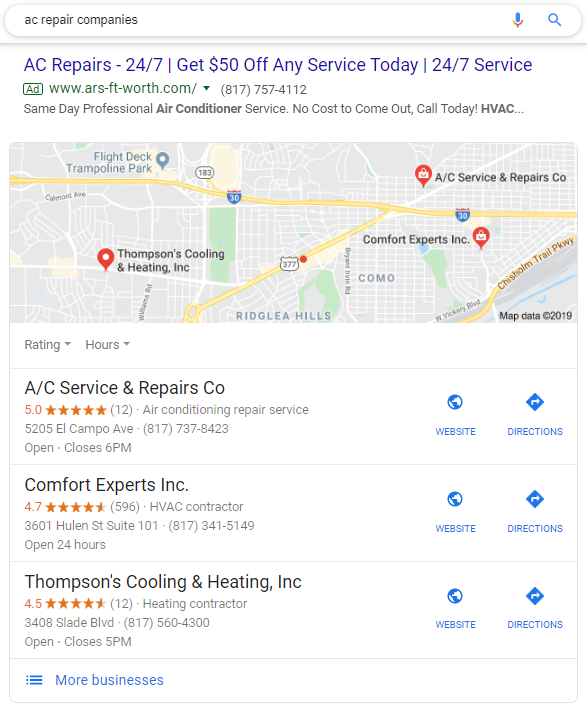
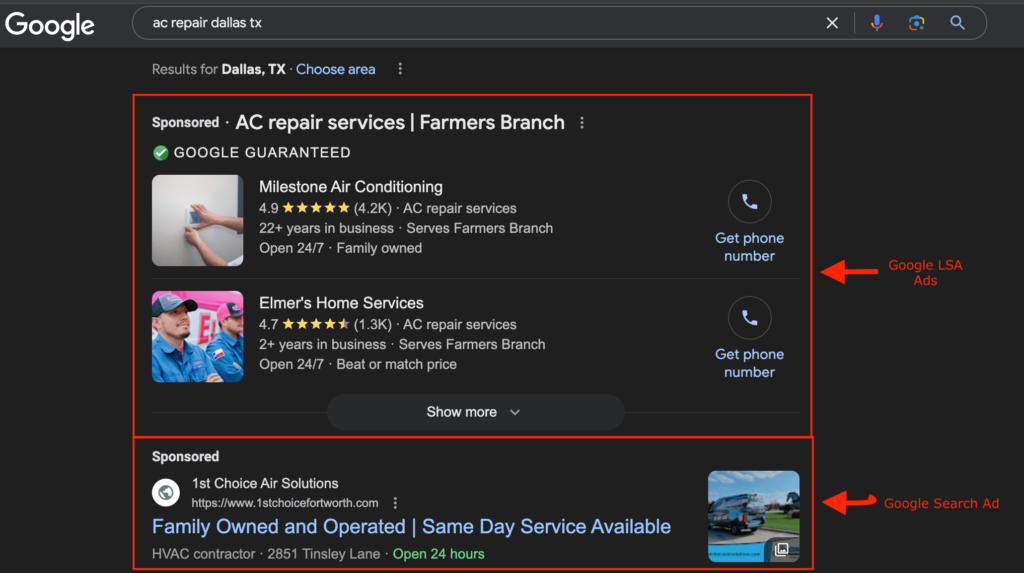
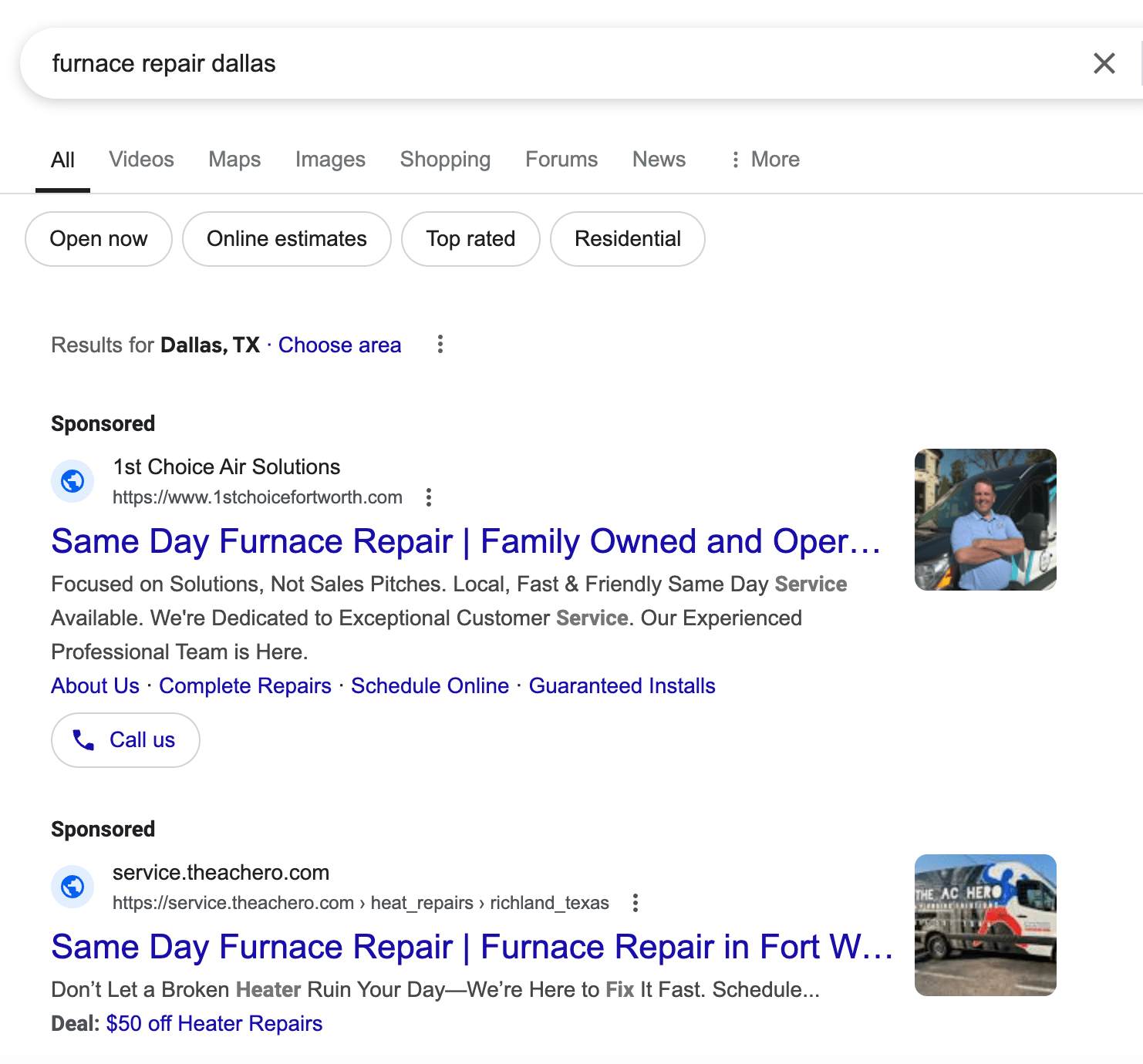
Modern HVAC advertising has expanded beyond traditional Pay-Per-Click (PPC) into Pay-Per-Lead through Google Local Services Ads (LSAs).
Google’s LSA program eliminates the frustration of traditional search ads, which require you to pay for clicks that never take the next step.
Today, a balanced strategy works best, which combines LSA, organic SEO, and traditional Google Ads for specific high-ticket keywords such as “AC Replacement” and “Heat Pump Installation.”
Here is my recommended strategy:
- Organic Foundation: Don’t choose between Paid Ads and SEO; your goal is to show up in both organic and paid positions.
- Conversion Over Clicks: Prioritize your budget on buying a lead instead of buying traffic
- Negative Keyword Scrubbing: Use advanced AI-driven negative keyword lists to eliminate queries like “HVAC jobs” and “How to fix my AC,” which drain your ad budget.
Not every company is ready to dish out a massive ad spend. You can gradually strengthen your online visibility with targeted, hyper-local campaigns, which help bridge the gap as your HVAC SEO campaign materializes.
Idea #4: Invest in Your Business Website
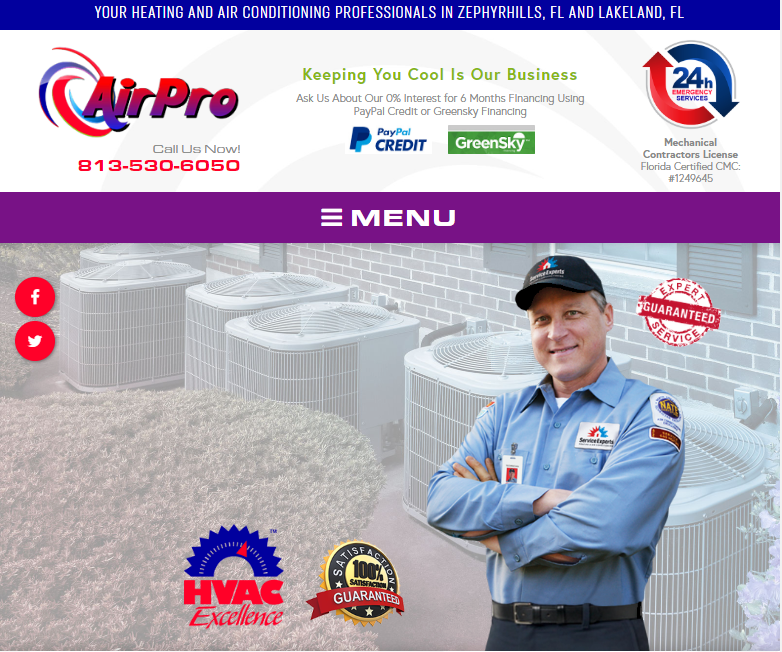
Homeowners are on high alert for lead-generation websites that sell their data. If your site looks outdated, spammy, and uses stock photos, it’s lowering your conversion rate in real time.
Here are the qualities of effective and contemporary HVAC websites:
- Original Photos: Stock photos of smiling models in pristine jumpsuits are a red flag. Modern websites feature high-resolution photos of staff members, technicians, branded trucks, and office signage.
- Sticky Headers: Your phone number and Book Now button should be pinned to your website’s header, keeping visitors one click away from converting.
- Dynamic Lead Capture: Instant quote estimators and other dynamic tools are more effective at capturing the user’s information than static contact forms. The immediate value proposition inspires homeowners to take action.
Idea #5: Optimize Landing Pages for Mobile Users
Since most homeowners find your ads on their mobile devices, your ads and corresponding landing pages must provide an excellent user experience.
Sites or pages that take more than 2 seconds to load or require pinching or zooming to find critical contact information are giving leads to nearby competitors.
HVAC companies often make the mistake of setting their website homepage as their landing page, which increases bounce rates and decreases conversions. Instead, you’ll want to publish a dedicated page for the corresponding ad so users find the most relevant information when they click through.
High-conversion landing pages are stripped down and hyper-focused on conversion. Each landing page should feature one clear offer, one specific service area, and one primary call to action
Idea #6: AI-Driven Instant Scheduling
Modern HVAC websites should implement AI scheduling agents that integrate directly with your CRM (e.g., ServiceTitan or HouscallPro), allowing customers to see your availability in real-time and secure a time slot without speaking to a human.
Too many HVAC websites still rely on chatbots, which create too much friction for visitors and thereby prevent the high conversion rates achieved with integrated scheduling.
Idea #7: Secure The “Google Verified” Badge
The blue (or green) Google Verified checkmark has become a gatekeeper for HVAC leads. Contractors who pass Google’s rigorous background, license, and insurance checks earn a spot in the Local Service Ads (LSA), which appear at the very top of search results.
Unlike standard PPC (Google Ads), which uses a pay-per-click model, LSA ads use a pay-per-lead model. In addition, the Google Verified badge gives consumers great confidence in calling your business, especially when they are in the midst of an emergency, such as a failing AC in 100+ degree weather.
Idea #8: Deploy Automated Lifecyle Nurturing
Prospects who fill out a form on your landing page but don’t book can be immediately hit with a multi-channel sequence. This is known as an Automated Lifecycle Nurting System.
It sends an automated SMS within 60 seconds of the form submission, followed by an email featuring a video testimonial from a recent customer. Long-term, it reengages the homeowner with 90-day check-ins to keep your brand top of mind, so when the AC or furnace fails, they think of you first.
There’s a fine line between persistence and annoyance, but modern technology lets us exist right up against it. By providing reassurance and consistency, you stop chasing leads and start building predictable revenue that strengthens your business over time.
Idea # 9: Build Trust With Reviews and Social Proof
Reviews directly influence your Google LSA performance. The algorithm favors contractors with a high review velocity and demotes those who stop receiving reviews, driving up their cost per lead. The algorithm also considers the text and keywords in reviews to gauge relevance for specific ad auctions.
From a user perspective, review count absolutely influences conversions. Homeowners will almost always choose a company with 800 reviews over a competitor with 50, even if both have an identical 4.9-star rating.
The best way to get more reviews is to set up an automated review request system that sends messages via SMS and email to customers after you complete a job. In the long run, this will lower your customer acquisition cost and help insulate you from emerging competitors.
Idea #10: Lower CAC With a Digital Referral Engine
A referral program isn’t merely a nice gesture; it’s a strategic advertising tool that helps you bypass bidding wars and secure high-conversion leads for a fraction of the cost.
According to Nielsen, 88% of consumers trust recommendations from people they know more than any other channel.
Many HVAC services are high-ticket and require technicians to enter people’s homes. That’s why a personal recommendation serves as a pre-vetted trust signal and something a referral program can scale.
Referral links work best because members can text or email the link to friends and neighbors, or even post it in a Facebook Group. Consider structuring it so the referring neighbor gets $50 toward their next maintenance visit and the new customer gets $50 of their new repair.
Idea #11: Create Multiple Consumer Touch Points
A one-and-done approach is insufficient in the modern advertising landscape. Homeowners are bombarded with options and rarely commit to the first ad they see.
However, when prospects see your brand across multiple platforms, you transition into a local authority. That’s why syncing your ad channels across Google, Meta, and physical mailers can make all the difference.
One option is to use pixel-based retargeting to show specific ads to people who’ve previously visited your landing page. Over time, your click-through rates will increase while your customer acquisition cost lowers.
Idea #12: Master Hyper-Local Geo-Fencing
Broad geographic targeting is a leading cause of budget bleed for HVAC companies. Ads targeting homeowners 45-60 minutes away lead to high travel costs and low margins.
Hyper-Local Geo-Fencing solves this problem. Most modern ad platforms allow advertisers to draw a circle around the specific zip codes and neighborhoods they want to target, eliminating that weasted ad spend.
You can use your CRM data to hone in on high-density neighborhoods and prioritize your budget accordingly. This also allows you to tailor your landing page and ad copy to that specific market.
Maximizing Your HVAC Advertising Campaign
The landscape of advertising for local HVAC companies has shifted from rewarding the loudest to favoring the company that best balances trust with ease.
To dominate your service area, you must approach advertising as an essential component to your business infrastructure. That starts with gaining Google Verified status to run Local Services Ads and extends into automating lead nurturing, accumulating reviews, and building a scalable revenue machine.
HVAC companies that can remove friction, establish authority, and become a local staple are positioned to achieve impressive ROI through digital advertising.
For help with your advertising campaign, contact HVAC Webmasters for a free consultation.