
Tag Archives: Website Design

  • plumbing heating and air alliance member
  • contractors of america best digital agency
  • expertise.com best seo agencies in fort worth

2020 Communication & Reviews Survey

Consumer Research · 2020
Communication & Reviews Survey:
What Homeowners Want From HVAC Contractors Online

We surveyed more than 1,200 homeowners and property owners across the continental US to understand how they find, evaluate, and choose HVAC contractors — and how they prefer to make contact. Four surveys examined website features, contact preferences, device usage, and first-impression behavior.

1,200+ respondents 4 surveys conducted Ages 35–65+ Continental US Via Google Surveys Male & female
43%
Ranked Customer
Testimonials #1
75%
Would Use Mobile
to Contact HVAC Pro
58%
Prefer a Direct
Call for First Contact
42%
Prefer Email, Form,
or Direct Message
81%
Of Americans Research
Before Deciding (Pew)
91%
Of Decisions Influenced
by Positive Reviews
Survey Process & Questions
How the research was conducted and what we asked

Using Google’s survey platform, we deployed four separate surveys to a sample of 300+ respondents each, targeting homeowners and property managers aged 35 and older across the continental United States. Respondents were split into four age groups — 35–44, 45–54, 55–64, and 65+ — and results were analyzed by both age and gender.

Question 1
You discover a new, well-rated heating/AC company on Google Search. The company’s phone number and website are both listed. Would you immediately call, or visit their website first?
Question 2
You’re on the website of a heating/AC company you’ve never used. Which feature makes you feel most comfortable choosing their services?
Question 3
You’re about to contact a heating & cooling service for the first time. Which contact method would you prefer most?
Question 4
Which device are you most likely to use when you contact a heating/AC service?
Finding 1: Testimonials Take Priority
43% of respondents ranked happy customer testimonials as the most important website feature
43%
Of polled consumers ranked customer testimonials as the #1 comfort feature when evaluating an unfamiliar HVAC company’s website — outpacing clear service descriptions, HomeAdvisor badges, owner photos, and project videos combined. 2020 HVAC Webmasters Consumer Survey — Question 2, n=300+

When asked which website features made them most comfortable choosing an unfamiliar heating and AC company, respondents consistently ranked testimonials and clear service descriptions at the top — across all age groups and both genders. The margin for testimonials widened further among women surveyed.

Website Feature Overall Rank Women’s Rank Men’s Rank Pattern
Testimonials from happy customers #1 — 43% #1 (wider margin) #1 Dominant across all segments; widest gap for women
Clear descriptions of services #2 #2 #1 / #2 Especially important to men and younger demographics
Approval badges (e.g. HomeAdvisor) #3 #3 #3 Recognized but not decisive for most respondents
Pictures of company owner & crew #4 #4 #4 Valued but secondary to social proof and information
Videos of recent projects #5 #5 #5 Lowest-ranked feature; consistent across groups
10
Reviews read before trusting a business — the average US consumer reads through 10 reviews before deciding whether to trust a local service company. Younger consumers tend to read even more. Statista research cited in original study
  • Keep collecting reviews. Every new review adds to your credibility with consumers who haven’t used your service yet — and Google weights recency.
  • Feature testimonials prominently on your website, not just on Google. Even curated site testimonials boost conversion confidence for first-time visitors.
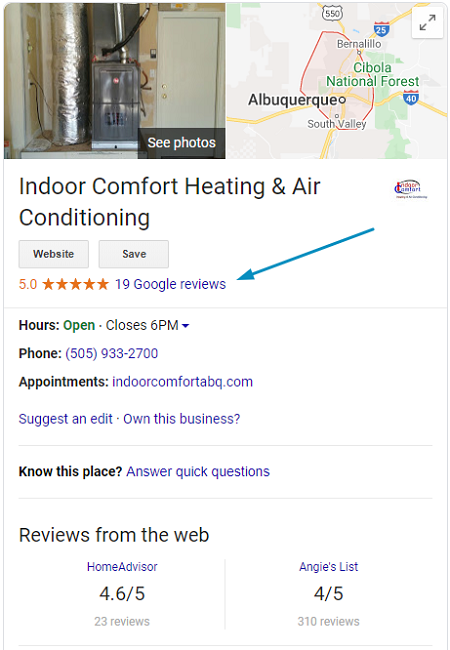
  • Don’t neglect your Google Reviews profile. Map pack listings display aggregate star ratings, and those numbers are part of the first impression before a visitor even lands on your site.
Finding 2: Consumers Research Before They Call
The majority of surveyed consumers said they’d visit the website before calling — even with a phone number right in front of them

When given a scenario where they’d discovered a well-rated HVAC company on Google Search — phone number and website both visible — the majority of respondents said they would visit the website before picking up the phone. This held true across all age groups studied.

Majority
Would visit website
before calling
Minority
Would call
immediately
81%
Of Americans rely on
own research first (Pew)
81%
Of Americans say they rely on their own research before making an important decision — more than they rely on friends, family, or industry professionals combined. Pew Research Center, 2018
What this means for your website: A map pack listing with a strong star rating is not the finish line — it’s the starting gun. The majority of prospects clicking through want to read about your services, verify your legitimacy, and form an impression of your company before they pick up the phone. A website that fails at that job loses those leads before they ever become a call.
  • Write full service pages for every solution you offer. Bullet lists on a homepage homepage don’t satisfy a consumer doing real research — and they don’t support SEO either.
  • Keyword-optimized service pages do double duty: they improve rankings for specific search terms and give prospective customers the detail they need to convert.
  • Treat your website as a first-impression tool, not just a contact card. The consumer who visits before calling is looking for reasons to trust you — make sure they find them.
Finding 3: Mobile Is the Contact Device
3 in 4 respondents said they’d use a mobile phone to contact an HVAC company
Mobile phone
75%
Desktop / laptop
~13%
Tablet
~9%
Voice assistant
4%
Gender split on desktop: Men were nearly twice as likely as women to reach out via desktop — approximately 17% of men vs. 8% of women. Tablets were used by 8–10% of respondents. Voice assistants came in last at 4%, though this was an emerging category in 2020 and the landscape has since shifted.

Google recognized this shift when they moved to mobile-first indexing in July 2019. These survey results confirm the real-world behavior behind that decision — HVAC consumers are searching, researching, and contacting service providers on their phones.

  • Clickable/tap-able phone numbers on every page — a mobile visitor shouldn’t have to copy and paste your number to call.
  • Hamburger / sandwich menus that work cleanly on small screens without obscuring content.
  • Large, legible font sizes — small text on mobile is a conversion killer, especially for a 35–65+ audience.
  • CTAs that are visible without scrolling — on mobile, above-the-fold real estate is limited and critical.
Finding 4: 42% Want Something Other Than a Phone Call
More than 4 in 10 respondents preferred email, contact forms, or direct messaging for their first interaction

Direct calls are the plurality preference — but a 58% majority still leaves a significant segment of prospects who want to reach out differently. Contractors offering only a phone number are creating friction for the 42% who prefer written contact.

Direct call
58%
Email link
20%
Contact form
14%
Direct message / DM
8%
Age note: The 8% who preferred direct messaging were concentrated in the 35–44 age bracket — the youngest segment surveyed. This preference for asynchronous contact methods is likely to grow as that cohort ages into the core homeowner demographic over the next decade.
58%
Prefer Direct Calls
Still the clear plurality. A prominently displayed, click-to-call phone number remains the single most important conversion tool on any HVAC website — especially on mobile.
34%
Email or Contact Form
Email links (20%) and contact forms (14%) together account for a third of respondents. Both channels should be easy to find and functional across all devices.
8%
Direct Messaging
Primarily among younger respondents (35–44). GBP’s messaging feature and live chat tools directly address this segment — and this number is likely higher today than in 2020.
  • Make contact options visible — don’t bury your email or contact form in the footer. Consumers who prefer these methods won’t hunt for them.
  • Enable GBP messaging on your Google Business Profile. The 8% who wanted direct messaging often expects the ability to text or message before calling.
  • Test and monitor each channel. Knowing which contact methods your customers actually use lets you optimize for the ones that work — and identify gaps in your current setup.
Summing It Up
Four findings, two themes: comfort and contact

The data from these four surveys consistently points to two underlying consumer needs. The first is comfort — consumers need to feel confident in an unfamiliar contractor before they’ll take action, and they build that confidence through testimonials, service detail, and visual credibility signals. The second is contact — once comfortable, they need frictionless, device-appropriate ways to reach you in the format they prefer.

Finding Key Number Core Implication Primary Action
Testimonials #1 comfort feature 43% Social proof drives first-time trust more than any other website element Build a systematic review request process; display testimonials prominently
Consumers visit website before calling Majority Your website is doing sales work before any human interaction begins Write full, detailed service pages; treat website content as a conversion tool
Mobile dominates contact devices 75% Most HVAC consumers contact you from a phone — your site must work flawlessly on mobile Tap-to-call numbers, mobile menu, large text, visible CTAs throughout
42% prefer non-call contact 42% A phone number alone isn’t enough — a meaningful share of prospects wants other options Enable email, contact forms, and GBP messaging; make all options easy to find

Methodology & Notes

This research was conducted by HVAC Webmasters using Google’s consumer survey platform. Four separate surveys were released to a combined sample of 1,200+ respondents across the continental United States. Each individual survey targeted 300+ participants. Respondents were limited to ages 35 and older to represent the primary homeowner demographic likely to require HVAC services.

Results were segmented by four age brackets (35–44, 45–54, 55–64, 65+) and by gender.
  • plumbing heating and air alliance member
  • contractors of america best digital agency
  • expertise.com best seo agencies in fort worth

HVAC Marketing On The Cheap (Podcast)

Almost every business begins with little to no funds for marketing. As a result, even experienced companies can experience a dry season. However, a few steps could make all the difference in the coming years instead of battening down the hatches and doing nothing.

Today, Jason and Nolen discuss how to start up your HVAC marketing plan even if you don’t have lots of funds. They’ll focus primarily on growing your search presence, which gradually creates a steady influx of HVAC leads for your business. So if you’re operating on a tight budget, be sure to listen in.

HVAC Marketing Tips for Professionals:

  • Always begin by setting up your Google My Business account.
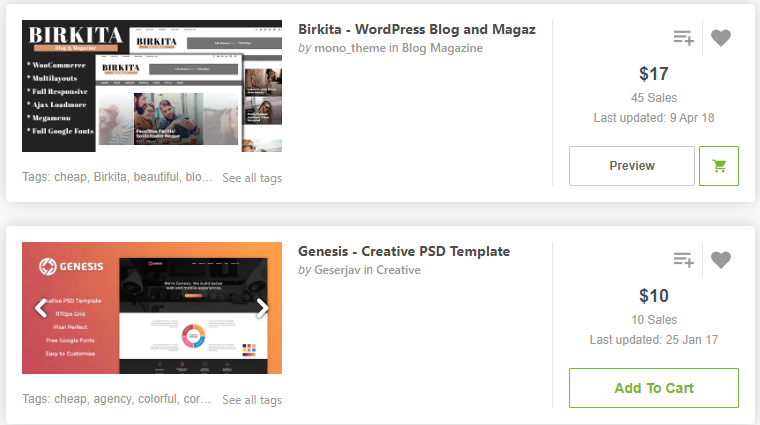
  • Buy a cheap template site to start developing your online presence.
  • Start asking for client reviews, and never stop!
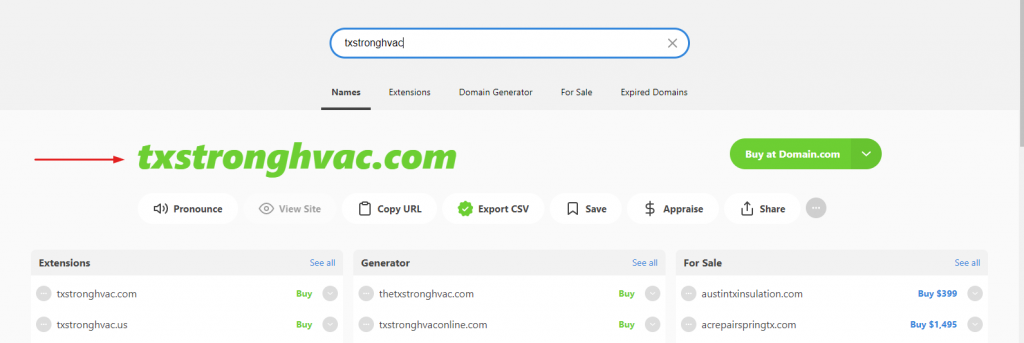
  • Register your domain as close to your name as possible. Avoid generics.

Low Budget Marketing

Let’s not waste time. There’s an ideal way to do online search marketing, but sometimes a tight budget prevents people from choosing the best. That’s life. Thankfully, you don’t have to sit on your hands and hope that business will pick up enough to start getting online clients one day!

The following HVAC marketing plan focuses on free and extremely low-cost solutions that will build a foundation for your brand. We need to be extremely clear: you (probably) will not notice tremendous results from the start. However, your business will be in a much better place six months from now if you faithfully follow this process.

Here we go.

Step #1: Get Listed in GMB

Google My Business (GMB) offers free listings to help your business get started in local search. These listings are essential if you want any organic leads. According to a recent publication by Search Engine Journal and extensive research by Merkle, “Organic search produced 23% of all site visits in Q2 2019.” However, without registering your company with GMB, your company is unlikely to earn any leads from Google.

Steps for Registering Your GMB Account

  1. 1. Go to google.com/business/ and get started.
  2. 2. Submit your company name, location, and industry information.
  3. 3. Set your service radius from your business address (or home).
  4. 4. Submit your contact information.
  5. 5. Choose a method to confirm your listing with Google, then confirm.
Picture of HVAC GMB

Step #2: Build a Cheap Website

There’s a couple of sweet spots for getting the biggest bang for your marketing budget (or lack thereof) when it comes to website design. On the low end of the spectrum, we’ve found that it’s usually better for startups to begin with a free template design or something dirt cheap. There’s no illusion of fanciness or complicated optimization.

Many HVAC companies start experiencing problems when they move beyond the $100 threshold. Of course, you’d expect somewhat higher results and capabilities from a $300 website, but most companies who offer those design packages use a cheap template anyway. So you might as well save the money and invest it in another part of your business.

Cheap Website Templates for HVAC Marketing

Source: ThemeForest

Step #3: Register Your Domain

Your domain name (the address or URL) is one of the most crucial branding assets your company will ever claim. Of course, you must protect it at all costs, but most businesses don’t even know how to pick a compelling name. There are a few basic rules to follow when it comes to selecting and claiming your domain.

Aim for a very memorable and non-generic domain name!

Generic names are harder to rank for in search. Business listings with ultra-generic names (dallasheatingandcooling.com, for instance) may not even show up in search. People should remember your name and laugh, then for them not to remember your name at all!

On an equally important note, make sure that you own the domain name, not a hosting company. You don’t want any complications with your host trying to sell the domain to another business. Believe us; it’s happened too many times!

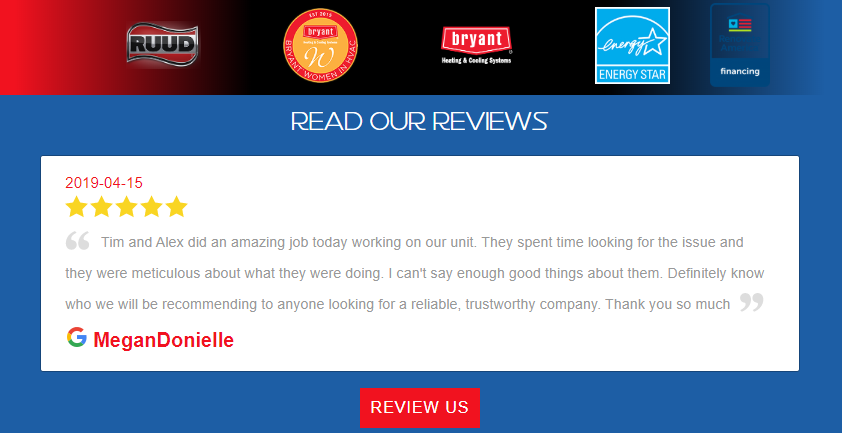
Reviews Can Make or Break Your Reputation. So always Ask Happy Customers for Feedback!

Domain Name Search

Step #4: Ask for Reviews

Reviews are a form of online currency, but they’re so much more. Client feedback is a testament to your team’s capabilities and your customer service. Unfortunately, most people forget to provide reviews unless they’ve had an awful experience. 

That’s why you and your team must consistently ask your clients for reviews. Don’t wait either! Ask immediately after concluding services. At the very latest, you might wish to wait a couple of days (say after an installation) to follow up and ask for reviews. Asking in person creates goodwill with the existing client and trust with prospective consumers.

Google prefers reviews to come from various resources, so try to spread out the feedback between Google, Facebook, and other citations. By routinely asking happy clients for reviews, you’ll easily drown out any different sort of negative complaints from that odd customer.

Review Management Tool on an HVAC Website

Step #5: Review Your Progress

Once you gained some ground in local search, leads should start to come in at a much faster rate. That steady stream of business to your website means you’ll have better funds for future marketing ideas! You can even take some time to upgrade your website and strengthen your brand.

When that day comes, we hope you’ll partner with the HVAC Webmasters

  • plumbing heating and air alliance member
  • contractors of america best digital agency
  • expertise.com best seo agencies in fort worth

Why We Can’t Use Your Old Website (Podcast)

One of the most challenging life lessons is learning when to let go. Unfortunately, dropping an unproductive website proves more than they can bear for many HVAC contractors, even if that site is harming their bottom line. Nolen and Jason discuss why starting from scratch is usually the best approach for getting your SEO and online marketing back on track in our latest podcast.

If your business has struggled to earn leads through your current website design, be sure to listen in closely.

Key Points to Listen For:

  • Visuals do not drive website performance.
  • Patchwork efforts from multiple vendors waste time and money.
  • Quality website design utilizes coding, content, and visuals.

Ditching the Old Website Design

Imagine the prettiest, high-dollar air conditioning unit money can buy. Your customers call asking about the installation process and how soon they can buy their system. Orders pile in, and these exciting projects start filling up the calendar. Then, weeks into installing these brand new (and expensive) appliances, you receive startling news: they don’t work. The blower motors can’t summon enough power to drive air through the duct lines due to a previously unknown design flaw.

Ideally, this situation would never happen in real life. After all, contractors take time to make sure their inventory performs as designed. But what if you heard of a contractor that knew of the part flaw and continued selling the system without warning customers? You’d probably be pretty angry, and rightly so.

Digital marketers have been selling flawed website designs for years

Various marketing agencies sell template websites that discourage high rankings on SERPs. We previously talked about the untold dangers of website template designs, which offer impressive visuals but lack the power of SEO. The type of templates that most heating and cooling professionals invest in (especially the bargain variety) doesn’t produce the traffic level businesses need for sustained growth.

Escaping from Stagnant Online Performance

As our team at the HVAC Webmasters has found over the years, the vast majority of online-active HVAC contractors have yet to grasp this truth. As a result, when shown concrete analytical data that their websites are underperforming, some companies cling all the more fiercely to their old website designs. As a result, they continue to earn a fraction of the leads they could achieve if they switched to a more optimized site.

What’s keeping these professionals from letting go?

Below, we will tackle some complex facts about website design and why templates don’t provide the results HVAC companies need. If any of these points hit home, it might be time to dig into your Google Analytics and see if your website is due for a change.

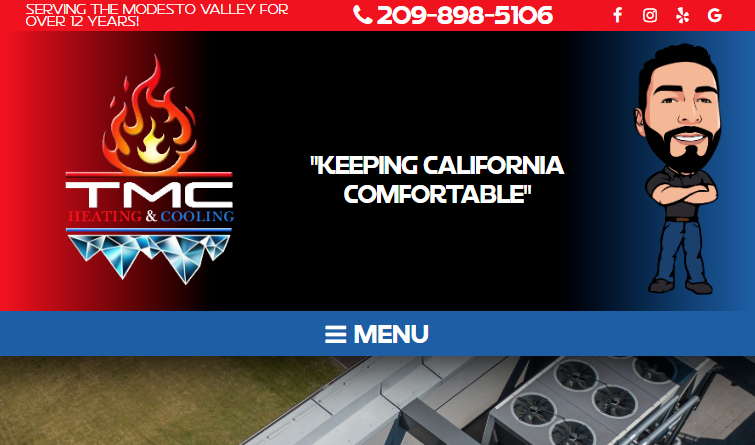
Nice Visuals for a HVAC Site's Website Design
Visuals Improve the User Experience, But They Don’t Create Traffic.

Fact #1: Your Visuals Don’t Drive Performance.

All the professional graphic design and eye-catching templates do almost nothing to drive your HVAC SEO performance. While they certainly add to the user experience (UX), visuals don’t draw people to your website. To put this in perspective, let’s consult the typical process of how someone finds your website.

Google Search Process (The Basics)

  • Step #1: A user enters a phrase and begins a search.
  • Step #2: Google examines keywords in the phrase.
  • Step #3: The search engine recalls related pages from its vast index.
  • Step #4: Google arranges entries by order of relevance in a SERP.
  • Step #5: The user browses the list and chooses a listing.
  • Step #6: The user arrives on your website.

The rest is history. Either the user likes what they see and investigates the site further, or they “bounce” and examine other sites. Your graphic design and other site visuals are essential during this phase, but most people don’t make it that far. No matter how gorgeous the design template a site may have, Google Search users will never even see it if the website fails to draw traffic in the first place. 

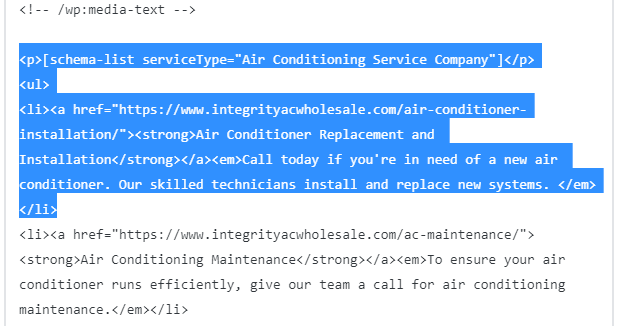
Schema Coding in a Custom Website Design
This is Simple Text Coding, But it Provides Helpful Information for Google.

Fact #2: It’s All Tied Together.

“Okay,” you might think. “I’ll add in all the elements that I need to draw people to my site. How hard can that be?

HVAC SEO (search engine optimization) involves many facets of website design. One crucial portion of the optimization process comes from keywords and their integration into the content throughout the site. That plays a massive role in how Google categorizes your services and ranks them for search.

Then there’s coding. Perhaps the most under-acknowledged driver behind local search performance, schema coding tells Google how to interpret the content inside your website. Unfortunately, most site templates come from graphic designers who attended art school but probably had minimal experience coding a website.

There are many other elements of site optimization, such as navigation, page structure, image attributes, and more. Unfortunately, these are tied directly to the template’s design and can’t easily be changed (effectively). The result is an attractive but underperforming site that doesn’t drive traffic.

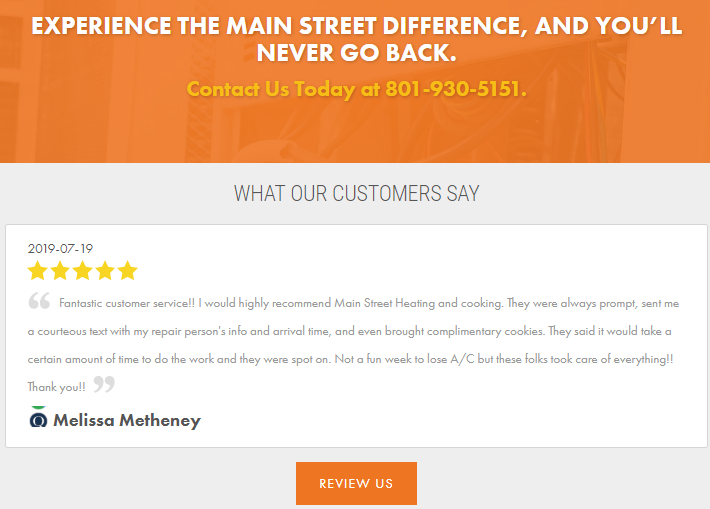
Content and Reviews Management Parts of a Custom Website Design
Content and Geotagged Reviews Seamlessly Integrated in a Custom Design.

Fact #3: It’s (Usually) Cheaper to Start Fresh.

Let’s say you’ve purchased an attractive template that seems to represent your HVAC company well. We’ll even say that your design company input your logo and slightly altered the template theme so that coloring matches. That’s pretty typical for a cheaper service.

You paid a couple of thousand for the site, but it’s underperforming. What are the options?

  • Option #1: Let the site stay as-is.
  • Option #2: Patch in missing SEO elements.
  • Option #3: Choose a website redesign.

Option #1: Let it Stay

If you’re not satisfied with the performance of your website as it is now, there’s very little chance of significant change happening on its own. Keep in mind that even the most highly optimized websites take a few months to get results when they first launch. However, older websites won’t spontaneously jump from page 10 to page 1. There has to be a dramatic change in the site’s optimization, which is hard to achieve with a template.

End Result: You have to rely on other forms of marketing to compensate, so you’re still spending extra money.

Option #2: Tack on Additional SEO Elements

Enhancing a given website template may take more time, money, and effort than you’d like. For one, site updates often require input from multiple specialized marketing vendors. One adds a reviews tool; another rewrites the content. Even if all these facets find their way into the site, you’ll need to ensure they work together (and not against each other).

End Result: Multiple site projects and vendors makes managing the site extremely frustrating. There may be performance improvements in local search, though.

Option #3: Ditch the Template

A fresh start sometimes offers the cheaper path of least resistance. Even if it takes thousands of dollars for a trusted company to design your new custom site, the resulting traffic influx will more than compensate. Plus, you won’t have to worry about spending additional funds for patches, redesigns, or getting multiple vendors to fix random bugs.

End Result: Your company earns lasting traffic improvements to your site, and you can start ranking up in local search. No significant update costs are needed.

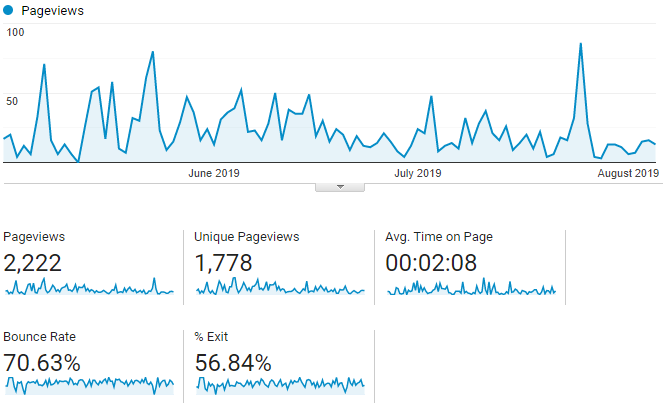
What if Your Site Could Earn Thousands of Pageviews in a Few Months?

An Analytical Snapshot Showing the Effectiveness of a Custom Website Design
What if Your Site Could Earn Thousands of Pageviews in a Few Months?

Team Up With HVAC Webmasters

You can probably tell which website design option we prefer at HVAC Webmasters. Our team produces custom-coded, highly optimized websites for companies all across the country. As a result, clients earn enormously better traffic volume, deeper customer interaction, and more substantial lead generation in their local service area. If your business has struggled with gaining ground in online search, we’d love to team up with you to change that.

  • plumbing heating and air alliance member
  • contractors of america best digital agency
  • expertise.com best seo agencies in fort worth

Buying Leads Can Be a Pitfall for HVAC Companies (Podcast)

Buying a lead is not the worst idea for an HVAC contractor. After all, leads drive your business. Unfortunately, in our experience, when HVAC contractors do buy leads, the leads are expensive, and the contractor is unhappy. But the issue with purchasing HVAC leads expands even further beyond the negativity surrounding them. Buying leads can be a pitfall for your company and might discourage you from investing in marketing resources that increase your brand visibility and generate sales sustainably.

Finding a Lead Source for HVAC Companies

If you are a heating & cooling contractor, who struggles to find a solid lead source, you aren’t alone. Although buying leads as a concept is not foolish since every business’s goal is to profit, the practice presents challenges. Low-quality distributors who offer “shared” leads rather than exclusives are the most common problem. But even with so-called exclusive prospects, HVAC companies are climbing uphill to secure the sale.

Getting More Leads

Despite well-documented disgust with lead sources many contractors continue to buy them. Why? Because at the end of the day they still want more leads. Securing a sale brings money to their business and becomes a cyclical process. The profit is just enough to seem like it’s worth it for the heating & cooling business. Getting more leads can be a challenge especially with sources offering shared leads. Worse yet, it often distracts contractors from other forms of marketing, like SEO, that will actually end up producing more sales over the long run.

Investing in Your HVAC Company

When you purchase a lead from a 3rd party platform, their brand benefits most. Next time the customer needs HVAC services, they will probably go back to the source instead of your HVAC company. Your goal should shift towards investing in your brand and growing the allegiance of consumers. This way, you will generate sustainable business for your company and not shell out hard-earned funds to 3rd parties.

Custom Websites

The first thing you’ll need is a custom website with schema markup. A website can be the central hub of your HVAC company and create a foundation for sales. Unfortunately, today, most websites use templates, either from a WordPress theme market or from DIY website builders like Wix, Weebly, and Squarespace. While they have their advantages, of course, they don’t have the type of long-term potential that custom sites do. As a result, they limit ROI in terms of organic optimization and the long-term control of your brand, which we want to avoid.

Google My Business

Nobody will take your company seriously without a Google My Business listing. You might ask how GMB is different from a 3rd party lead platform. First, you are not investing money. Google My Business listings are free and allow you to rank in the Local Map 3-Pack. Second, you can link your website URL to your GMB listing so that your web property becomes associated with the Google listing as well as the Google Reviews. All of this is free of charge for companies.

Search Engine Optimization

The best leads come from organic clicks on Google. For example, ranking for terms like “ac repair” and similar phrases can drive searchers to your website or Google My Business Listing. In either case, with websites optimized for conversions, you can earn most of your profit organically. SEO is the best long-term strategy for online marketing since it is an investment in yourself and becomes a sustainable profit generator for years and decades to come. 

A Full-Scale Approach

A single strategy may not always work out, but the combination of several techniques helps HVAC companies earn sales online. Investing your marketing dollars in leads only or ads only discourages long-term growth. You can still buy HVAC leads, but only if you optimize your brand at the same time. Using SEO, you can reap the long-term rewards of a complete and robust web presence. Try partnering with a full digital marketing agency like HVAC Webmasters, the top-rated agency in 2021.

  • plumbing heating and air alliance member
  • contractors of america best digital agency
  • expertise.com best seo agencies in fort worth

How You See HVAC SEO vs. How Google Sees It (Podcast)

Sometimes, contractors have a false perception of a quality website. What you see as a website that looks good to your eyes might not even rank in the top 20 for its target keyword. The best websites can be easily crawled by Google and rank on page one of SERPs for relevant terms. SEO for HVAC contractors is about many factors, and Google considers them all.

Here’s what you’ll learn in today’s podcast episode:

  • Visual Appeal Doesn’t Always Translate to SEO
  • SEO Myths vs. Reality
  • The Primary Function of a Website for HVAC Companies

Visual Appeal Doesn’t Guarantee Rankings on Google

The best-looking HVAC websites don’t consistently rank on page one of Google. Great-looking sites often fail to rank at all. Since many websites neglect SEO, they do not rank for keywords and rely 100% on direct traffic or branded search. In the worst cases, websites might not rank for their brand name after failing to optimize their homepage correctly. While good-looking sites might convert those who visit based on your business card, word of mouth, or a truck wrap, you still lose more customers than you gain by failing to optimize your website. So next time you see a competitor bragging about their websites’ design, ask them how much traffic they get from organic search results.

SEO Myths Vs. Reality

Some HVAC contractors mistakenly believe in SEO myths. For instance, one of our clients asked if they can insert more keywords on their homepage. Since the page already had several cases of the target word, adding more would hurt its ranking and disappoint readers. Antiquated SEO strategies that worked in 2007 no longer work now in 2021. Another myth some companies believe in is the branding myth. While it is crucial to brand your company for Google, it is not as important in a traditional sense. Google wants to see that your company is listed on reputable directories and has a consistent name, address, and phone number. They don’t care about the philosophical brand notions of your logo colors, etc.

The Primary Function of HVAC Websites

As a home service provider, you shouldn’t want to enter your website into an art contest. The function of your site is to generate HVAC leads and grow your company online. Inserting calls-to-action is a great way to achieve your goals, but some companies think it makes their site look bad. Some even believe it hurts their SEO efforts. The reality, however, is that CTAs are essential for online success and don’t hurt SEO when adequately implemented. The pros at HVAC Webmasters handled hundreds of client accounts and used our data to create the top-performing sites on the web. Ask about our web design services and contact us today.